
Adsterra scores 4.6 out of 5 in our review, making it a strong option for small and mid-sized publishers looking for an accessible alternative to Google AdSense or a way to monetize Tier 2 and Tier 3 traffic. Its quick approval process, no minimum traffic requirement, and low payout thresholds make it particularly appealing to growing publishers.
Adsterra Reviews & Product Details

Adsterra is a global ad network that helps publishers monetize website and social traffic through formats like Popunder, Social Bar, native ads, banners, and Smartlink. It offers flexible monetization and low payout thresholds, but ad quality and earnings can vary by traffic type and format.
Pros
- No minimum traffic requirement and quick approval.
- Low $5 minimum payout on Paxum and WebMoney
- Smartlink supports social and app traffic without a website
- 100% fill rate and Anti-AdBlock technology
- 5% lifetime referral earnings
Cons
- CPMs can fluctuate with advertiser demand
- Popunder-heavy formats may affect user experience
How We Rated Overall Adsterra: 4.6/5
We evaluated Adsterra across 14 key areas, including ad formats, Smartlink, Anti-AdBlock technology, fill rate, publisher accessibility, payment options, payment frequency, etc giving Adsterra an overall average rating of 4.6/5.
Adsterra Feature-Wise Assessment
Ad Formats – ⭐⭐⭐⭐⭐ 5/5
Adsterra offers Popunder, Social Bar, Native Ads, Banners, and Smartlink formats.
Smartlink – ⭐⭐⭐⭐⭐ 5/5
Smartlink lets publishers monetize traffic through a simple link, including social and app traffic.
Anti-AdBlock Technology – ⭐⭐⭐⭐½ 4.5/5
The technology is designed to recover advertising opportunities from users with ad blockers.
Fill Rate – ⭐⭐⭐⭐½ 4.5/5
Adsterra promotes a 100% fill rate, although actual results can vary by traffic and advertiser demand.
Publisher Accessibility – ⭐⭐⭐⭐⭐ 5/5
There is no minimum traffic requirement, making the platform accessible to smaller publishers.
Payment Options – ⭐⭐⭐⭐½ 4.5/5
Adsterra supports multiple payment methods, including Paxum, WebMoney, PayPal, bank transfers, cryptocurrency, and wire transfers.
Payment Frequency – ⭐⭐⭐⭐½ 4.5/5
NET15 and biweekly payment processing provide relatively frequent payout opportunities.
Real-Time Reporting – ⭐⭐⭐⭐ 4/5
The reporting dashboard provides performance data across placements, formats, and geographies.
Advertiser Targeting – ⭐⭐⭐⭐½ 4.5/5
Advertisers can target campaigns using factors such as country, device, operating system, language, and connection type.
Campaign Optimization – ⭐⭐⭐⭐½ 4.5/5
Custom Bid, Smart CPM, and CPA Goal provide additional tools for campaign optimization.
Fraud & Security Protection – ⭐⭐⭐⭐½ 4.5/5
Adsterra uses automated fraud detection and manual review to help protect its advertising ecosystem.
Partner Support – ⭐⭐⭐⭐⭐ 5/5
Publishers get account support and live chat assistance.
Referral Program – ⭐⭐⭐⭐ 4/5
The referral program provides an additional earning opportunity for users who refer new publishers.
Pricing Models for Advertisers – ⭐⭐⭐⭐⭐ 5/5
Advertisers can choose from CPM, CPC, CPA, CPL, and CPI pricing models.
Overall Feature Rating – ⭐⭐⭐⭐⭐ 4.6/5
Based on the features covered in the review, Adsterra receives an overall feature rating of 4.6/5 from Jitendra.co.
Adsterra at a Glance
Adsterra is an ad network for publishers and advertisers, founded in 2013 and operated under Ad Market Limited, Cyprus. The platform reports over 36 billion monthly impressions, with more than 36,000 direct publishers and around 15,000–16,000 advertisers across 248 countries and territories.
For publishers, Adsterra has no minimum traffic requirement, and approval generally takes around 5–10 minutes. Publisher payments are processed on NET15 terms and biweekly, with the minimum payout starting at $5 through Paxum and WebMoney. For advertisers, the minimum deposit is $100 for cards and wallets and $1,000 for wire transfers.
Adsterra is particularly suited to small websites, Tier 2 and Tier 3 traffic, and social traffic. The platform offers several monetization options, including Popunder, Social Bar, Native Ads, Banners, and Smartlink.
What Is Adsterra and Who Is It For?
If you’re looking for a way to monetize website or social media traffic outside the Google ecosystem, Adsterra is one of the ad networks you’re likely to come across.
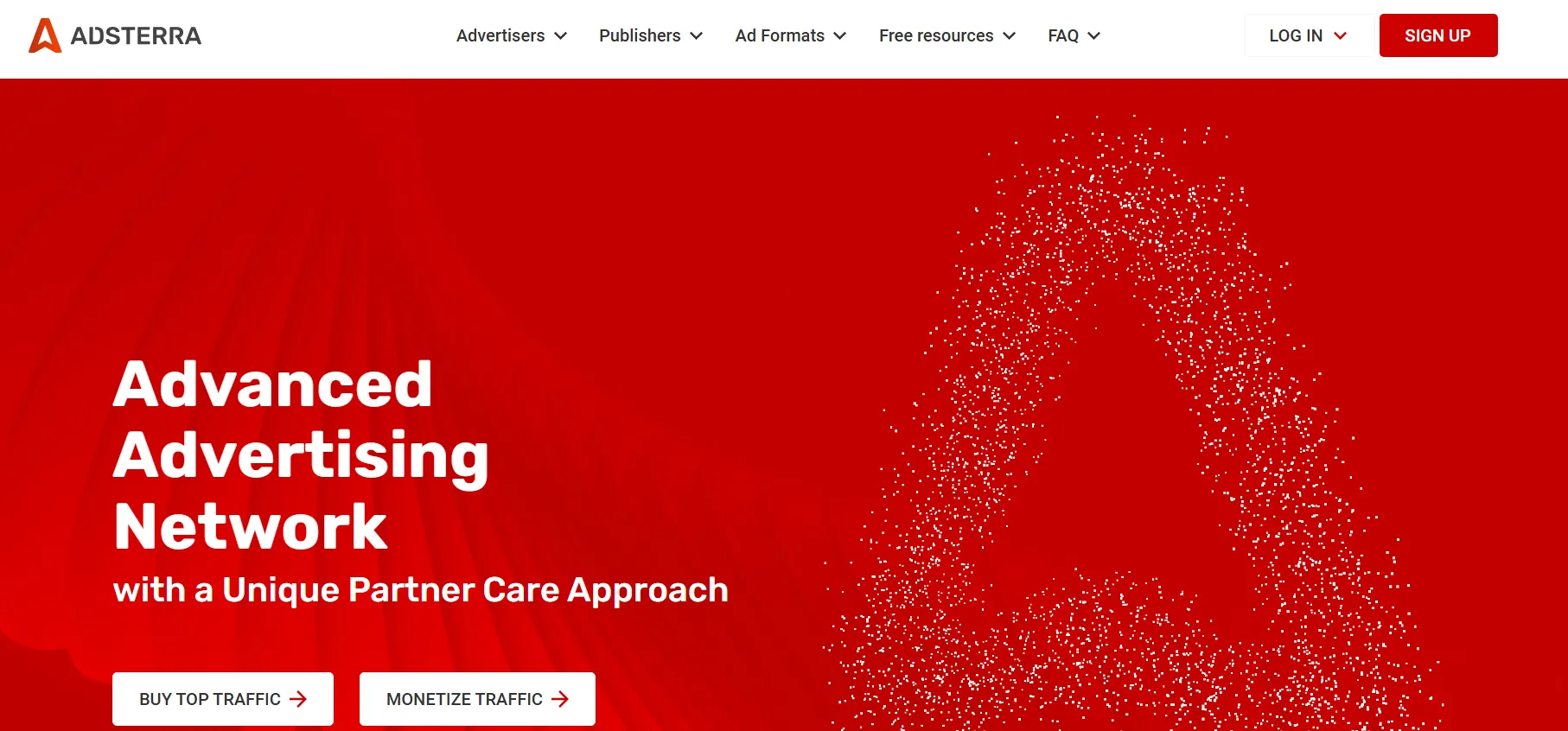
Founded in 2013, Adsterra connects publishers with advertisers running performance-focused campaigns and now serves more than 36 billion ad impressions per month across 248 GEOs.
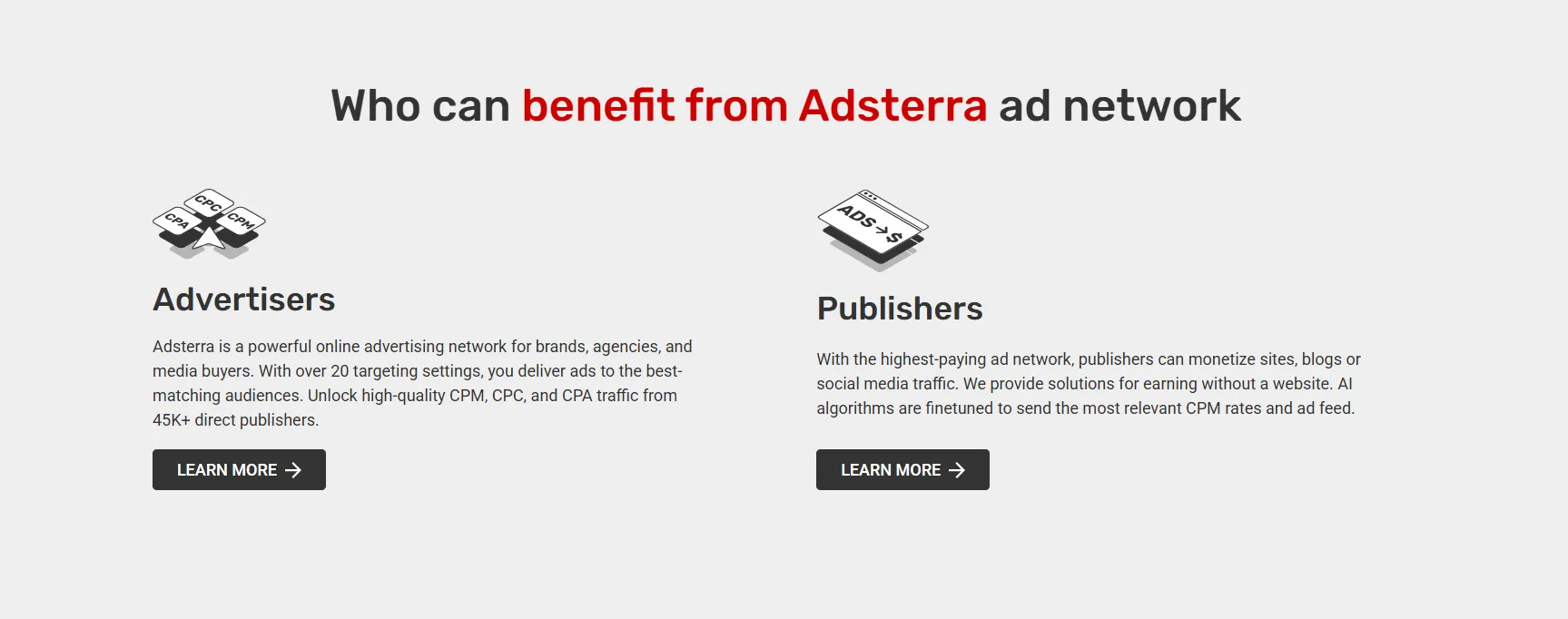
The platform caters to both sides of the advertising market.
As a publisher, you get access to multiple ad formats, a dedicated dashboard, and biweekly payouts.
If you’re an advertiser, you can run campaigns through Adsterra’s self-serve tools, choose from 20+ targeting filters, and work with pricing models such as CPM, CPC, CPA, CPL, and CPI.

So, who is Adsterra actually a good fit for?
If AdSense has rejected your site or you simply want a faster route to monetization, Adsterra is worth considering.
It can also make sense if most of your visitors come from Tier 2 and Tier 3 markets such as Asia, Africa, Latin America, or Eastern Europe, where traditional ad rates may be lower.
And if you don’t have a website at all, Adsterra’s Smartlink gives you another option: you can monetize traffic from platforms such as Facebook, X, or Telegram through a single link.
There are some situations where you may want to look elsewhere. If you’re an advertiser focused on highly polished, brand-safe placements, run a premium editorial site in a niche such as education or parenting, or expect the contextual ad quality associated with Google AdSense, Adsterra may not be the closest match for your requirements.
Adsterra Company Background and Network Size

Adsterra launched in 2013 under Ad Market Limited, a Cyprus-registered company, and initially focused on popunder and display advertising. Over the years, it expanded into formats such as Social Bar, native ads, and push notifications, building a broader publisher and advertiser network.
Adsterra reports more than 36 billion monthly impressions, around 36,000 direct publishers, and 15,000+ advertisers running over 200,000 campaigns annually. This scale gives publishers access to a broad pool of advertisers and monetization opportunities.

The company also claims that Social Bar can deliver 33% higher CTR than standard web push, while its Anti-AdBlock technology can recover up to 35% of otherwise lost revenue. These two figures are company claims, so treat them as marketing rather than gospel.
But the underlying reality matches independent reporting: Adsterra’s anti adblock and 100 percent fill rate claims are consistent across every review we cross checked, and fill rate is one of the genuinely verifiable advantages of a network this size.
How Adsterra Works for Publishers In 2026
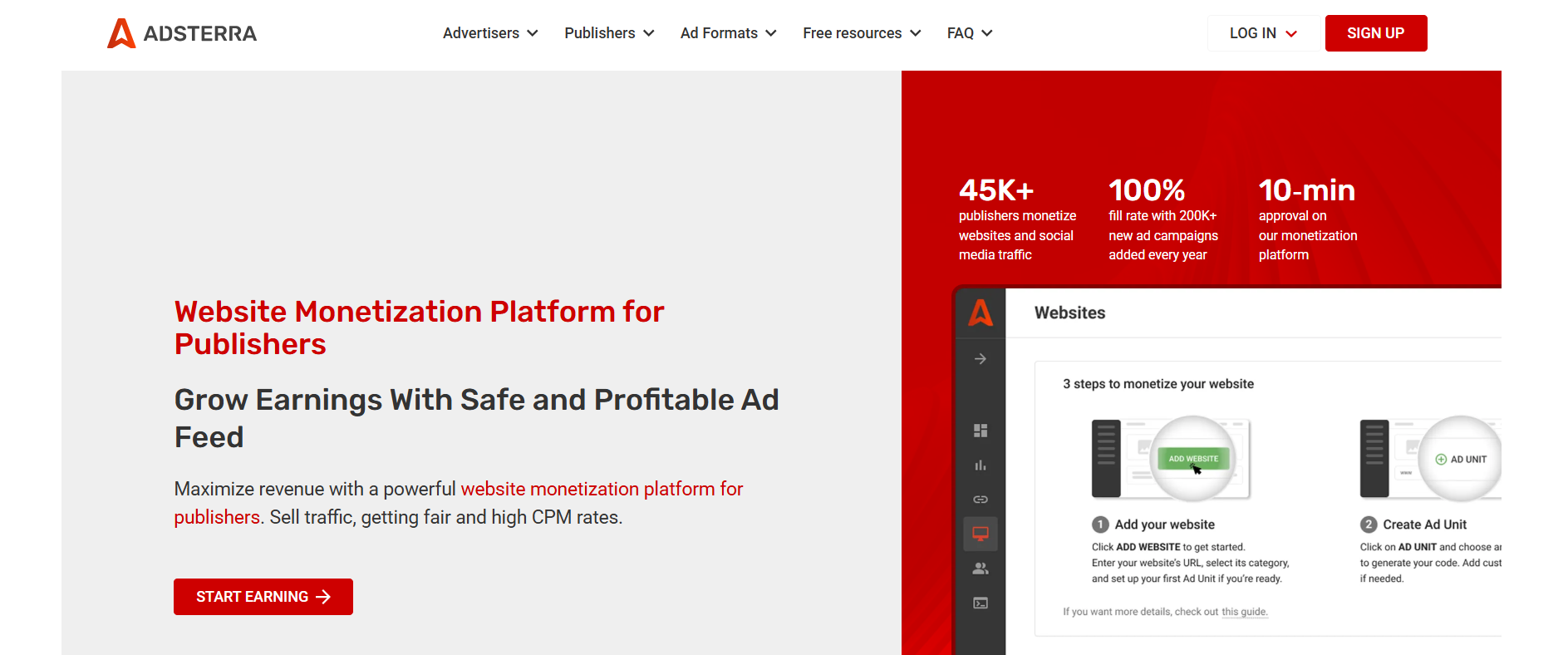
Getting started with Adsterra is relatively straightforward. You register as a publisher, submit your website, and approval typically takes around 5 to 10 minutes. There’s no minimum traffic requirement, so even a newer website can apply. The main requirements are that your traffic must be genuine and human, while adult and illegal content is not permitted.
Once approved, you pick an ad format, copy a code snippet onto your site, and earnings start accumulating.
Payouts run on NET15 terms, meaning money earned in the first half of the month arrives by the middle of the following month, with payments processed biweekly.
The Smartlink deserves special mention. It is a unique URL with no visual ad unit attached. You place it anywhere: a Facebook page, a Telegram channel, a mobile app, even a link shortener.
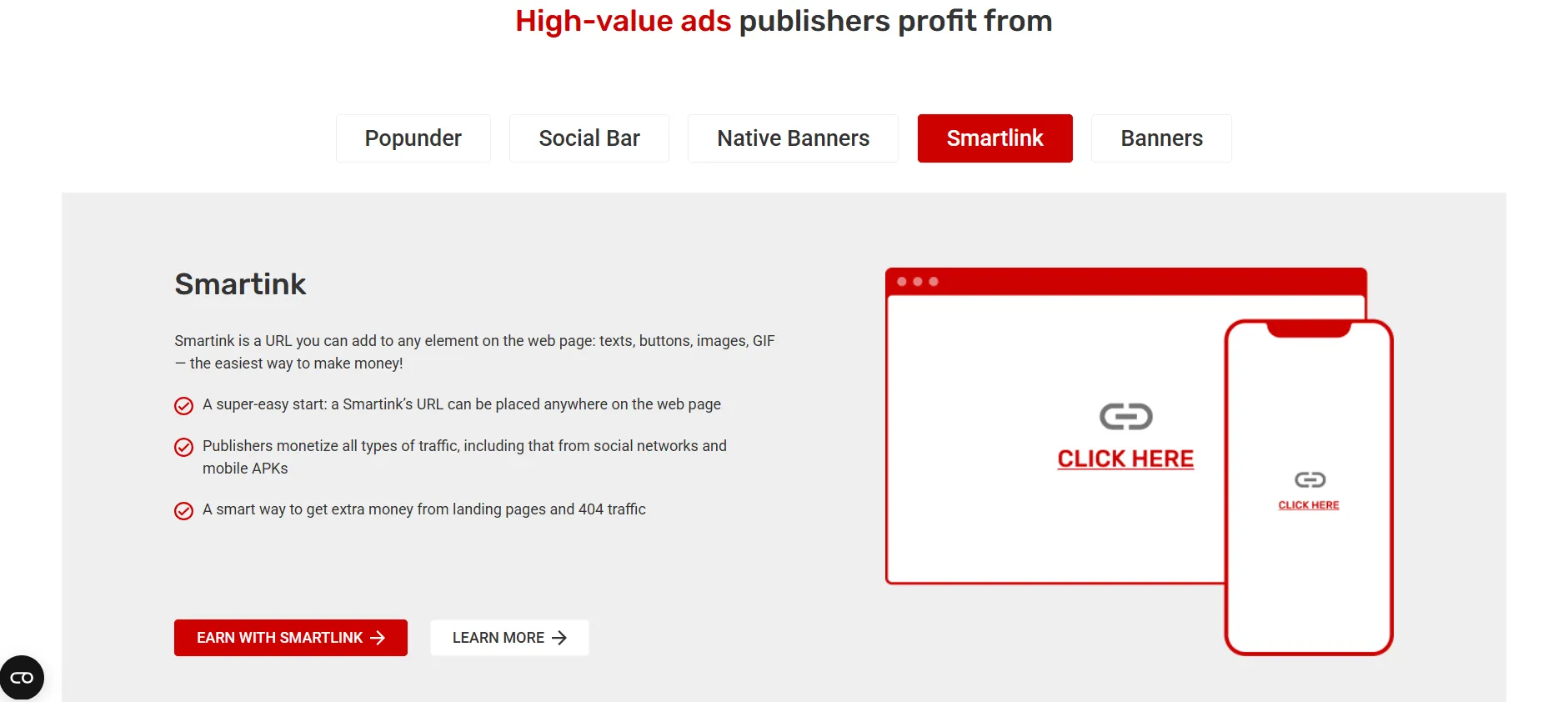
Clicks on that link monetize through the highest bidding campaign for each visitor. For publishers whose traffic comes primarily from social platforms rather than websites, Smartlink is one of Adsterra’s more useful monetization options.
Adsterra Ad Formats Explained October 2026
Popunder
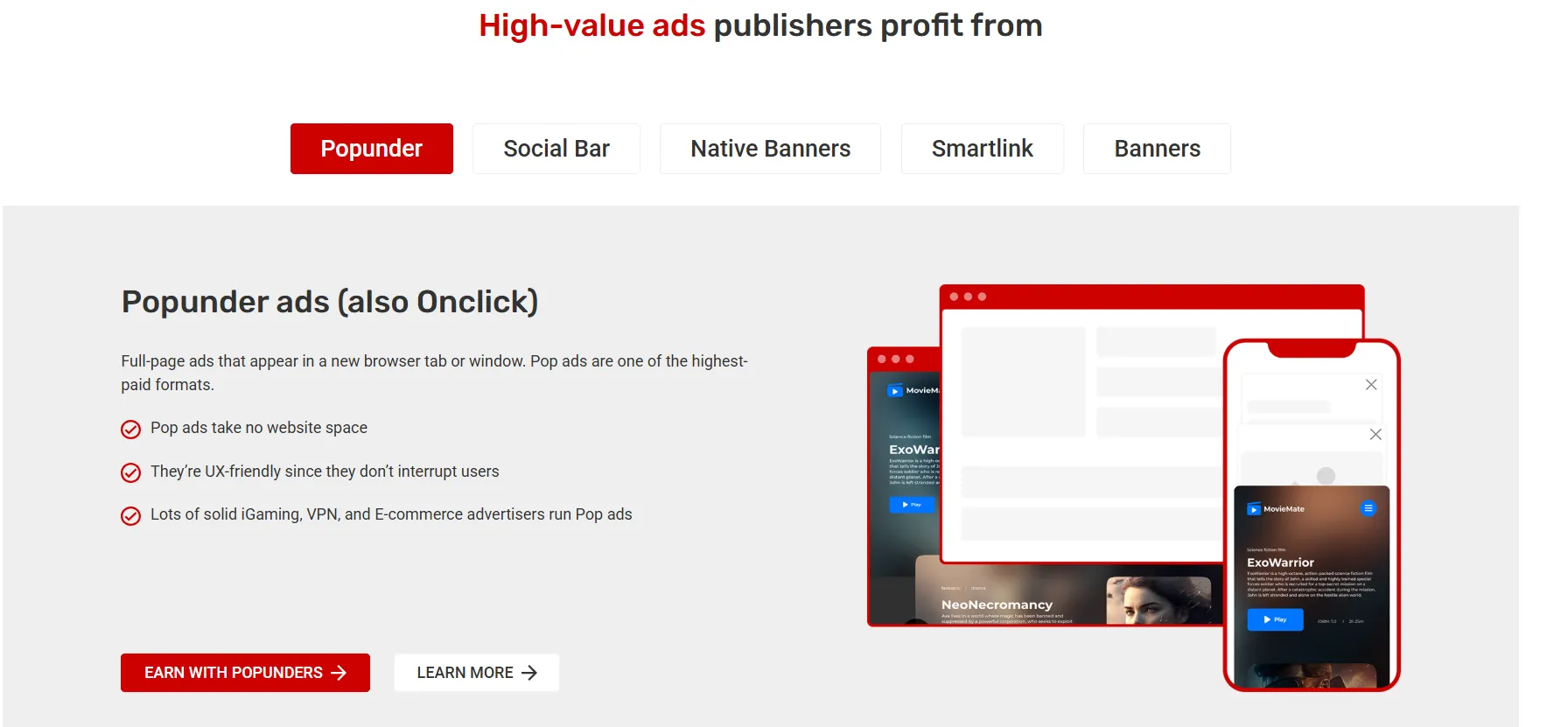
A full page ad that opens behind the current tab. It earns well and needs no space on your page, which is why it remains the volume driver for most Adsterra publishers. It is also the most aggressive format for user experience.
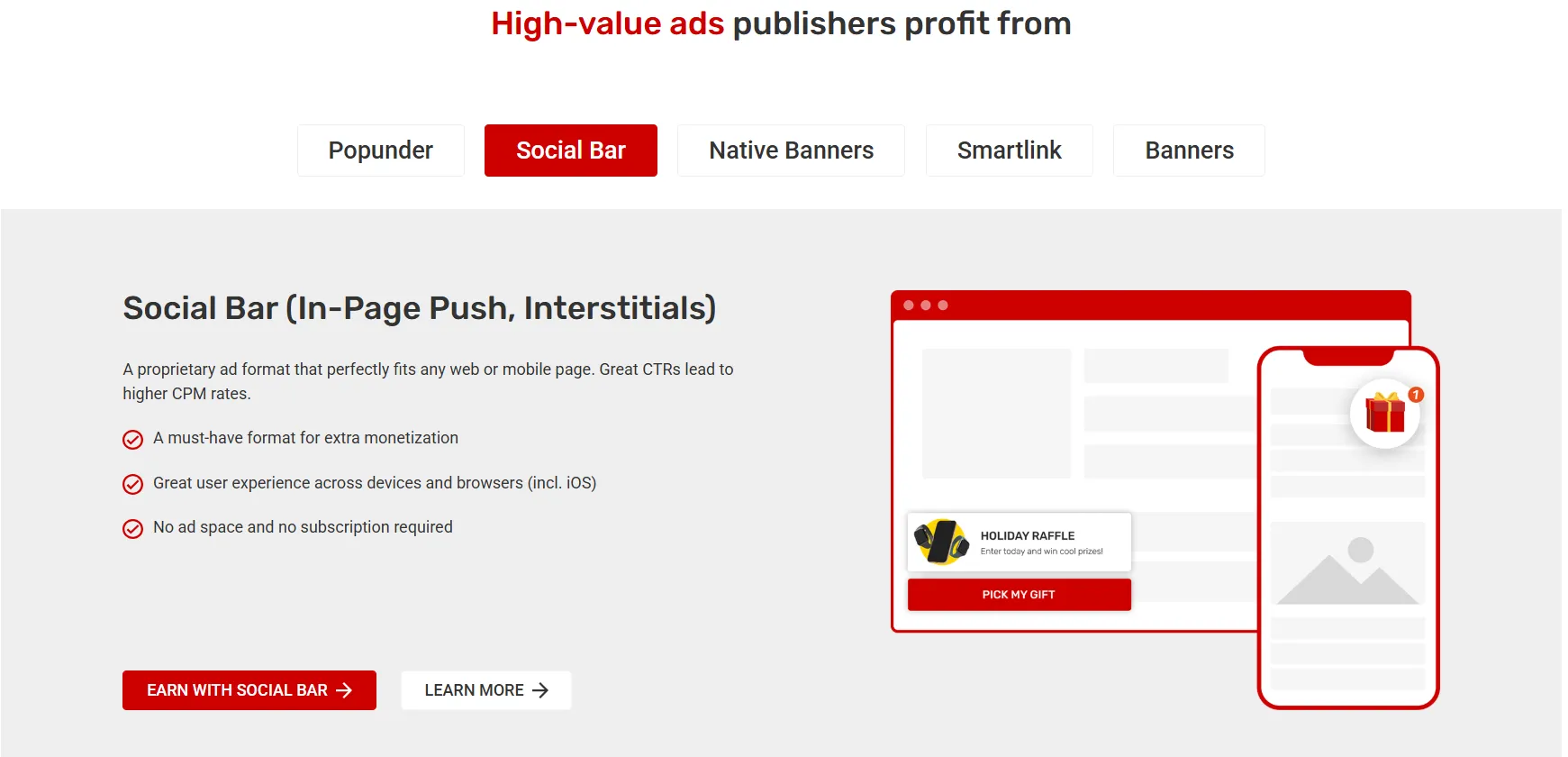
Adsterra’s flagship, a customizable floating unit blending in page push, interstitials, and animated creatives. Company data claims 33 percent higher click rates than standard push, and multiple independent reviews rate it the network’s best revenue per visitor format.
Native ads
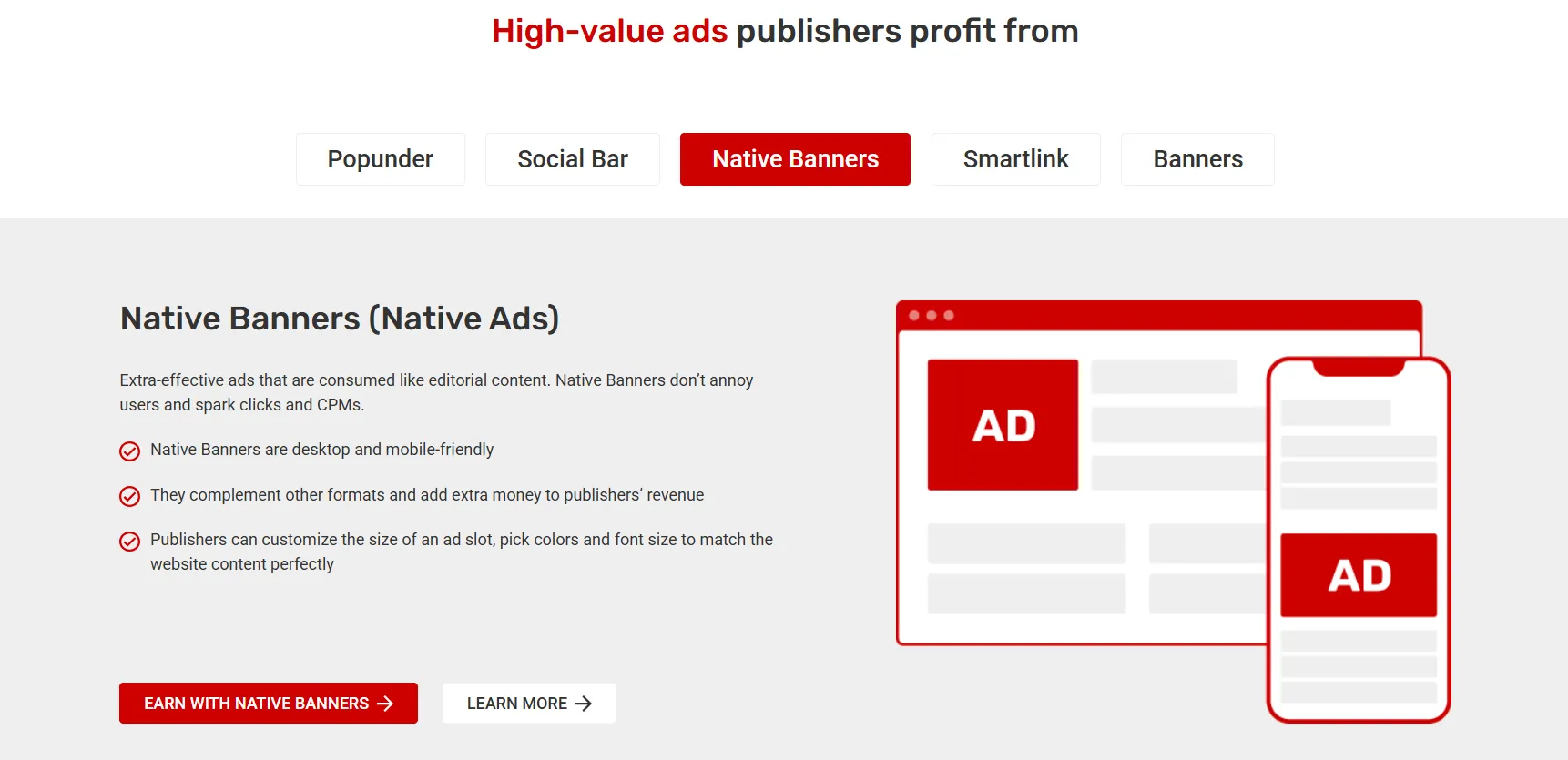
Units designed to blend with your content, consuming like editorial. Lower intrusion, decent rates.
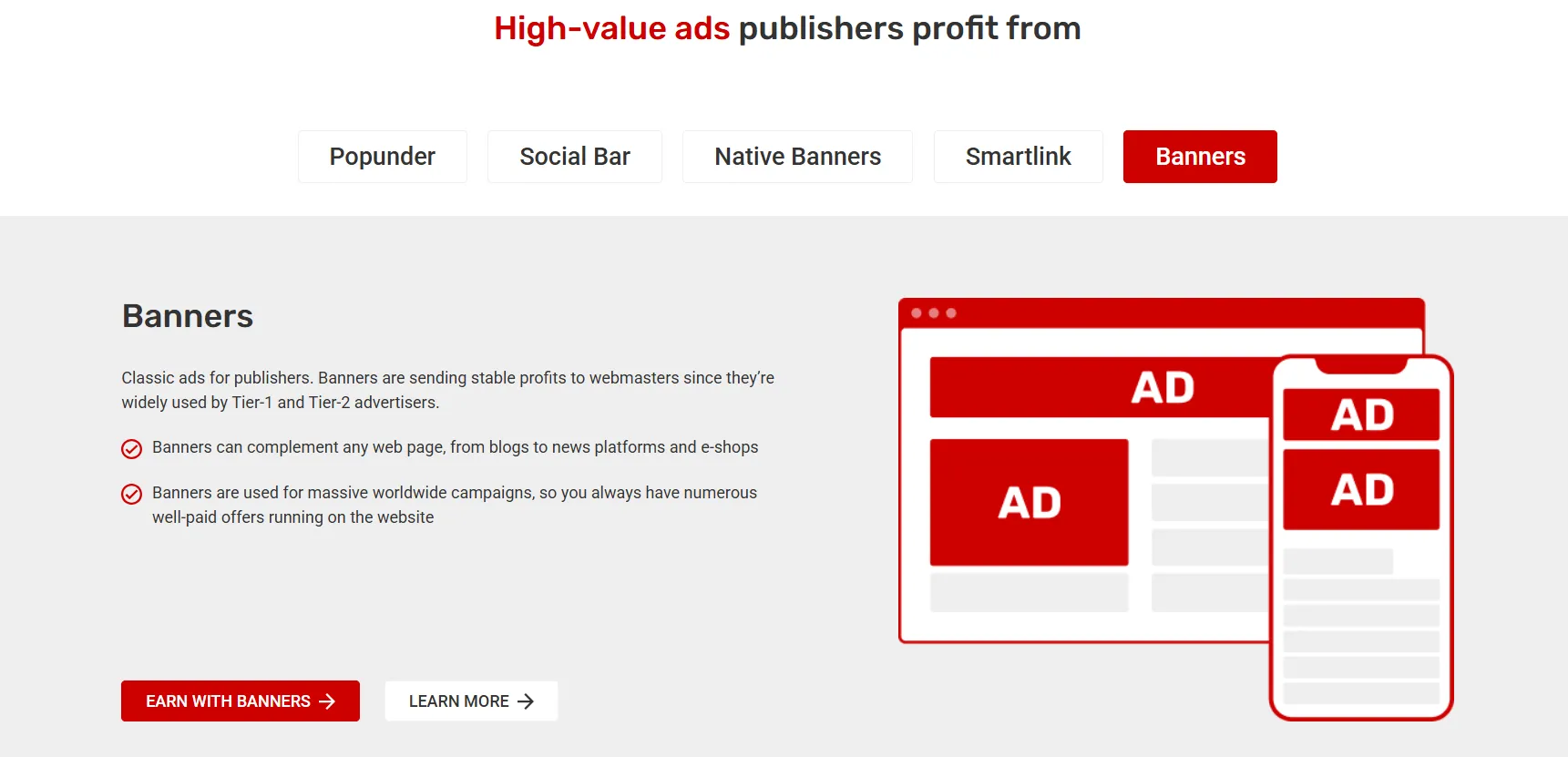
Classic display units in standard sizes. Reliable, moderate rates, best paired with other formats.
Smartlink
The formatless URL for social and app traffic described above.
Adsterra Payouts, Rates, and Payment Methods
This is where Adsterra genuinely shines against rivals, so let us be precise.
Adsterra offers NET15 payment terms, with payments processed biweekly once you reach the required threshold. This means publishers generally don’t need to request invoices or manually chase payments.
Here are the minimum payout amounts mentioned in the article:
Method | Minimum Payout | Notes |
Paxum | $5 | Lowest threshold, popular with small publishers |
WebMoney | $5 | Similar to Paxum, limited regional support |
PayPal | $25 | Widely available, moderate threshold |
Local Bank Transfer | $25 to $50 | 40 plus local currencies, $7 fee versus $50 for wire |
Cryptocurrency | $100 | Varies by coin availability in your account |
Wire Transfer | $1,000 | $50 fee, only for large publishers |
The $5 minimum through Paxum and WebMoney makes Adsterra accessible to smaller publishers. The article also compares this with other networks, noting that AdSense and Media.net have higher payout thresholds, while Monetag offers a $5 threshold with weekly payments.
How Much Can Adsterra Pay?
There isn’t one fixed CPM for Adsterra. Earnings can change significantly depending on traffic location, niche, ad format, traffic quality, and advertiser demand.
Based on the 2026 ranges discussed in the article, Tier 1 popunder traffic can typically generate around $3–$5 CPM, while Tier 2 traffic may fall around $1–$2 CPM. Tier 3 traffic can sometimes earn below $1 CPM.
Individual results can be considerably different. One cited case study reported an average of $5.30 CPM for a Pakistani publisher, showing that traffic quality and niche can influence earnings alongside geography.
Overall, publisher earnings can range from under $1 to more than $20 per 1,000 impressions, depending on the traffic and monetization setup. These figures should be treated as indicative ranges rather than guaranteed rates.
Adsterra also offers a 5% referral commission on the earnings generated by referred publishers, providing an additional earning opportunity.
How Adsterra Works for Advertisers :
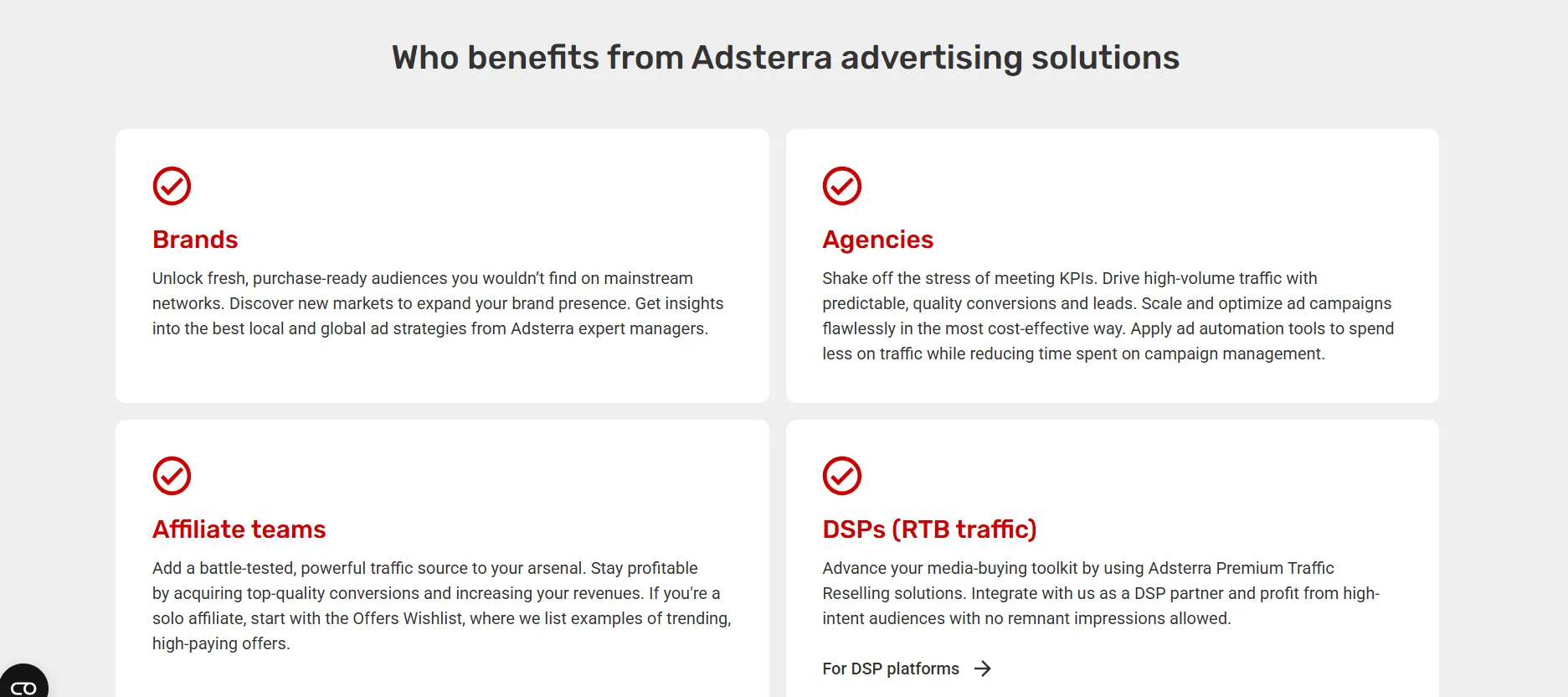
Adsterra is designed more for performance campaigns than premium brand advertising. Here’s what advertisers get:
Starting Budget: Deposits start at $100 for cards, PayPal, and Paxum, while wire transfers require $1,000.
Pricing Models: Supports CPM, CPC, CPA, CPL, and CPI campaigns, with some CPA tests starting from $10.
Targeting: 20+ filters covering country, device, OS, language, connection type, and more.
Traffic Estimator: Helps estimate available traffic volume and competitor bids before launching a campaign.
Optimization: Custom Bid, Smart CPM, and CPA Goal tools help manage bids and campaign performance.
Campaign Approval: New campaigns are typically reviewed within an hour.
Best For: Affiliate, app-install, lead-generation, and other performance-focused campaigns where traffic volume and cost matter more than premium placements.
My Favorite Adsterra Features as an Affiliate Marketer
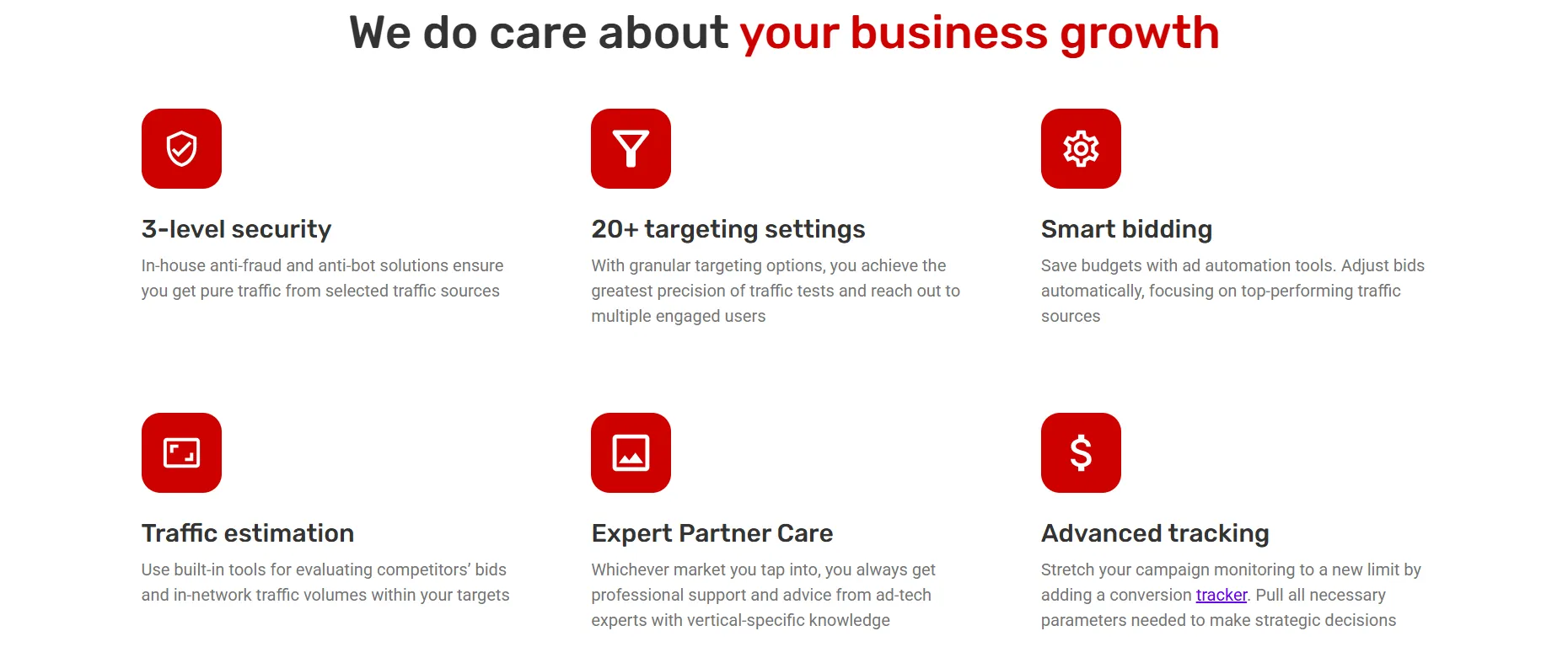
- Anti-AdBlock: If your audience uses ad blockers, Adsterra’s Anti-AdBlock technology can help you recover some of the ad revenue you might otherwise lose. Adsterra claims the technology can recover up to 35% of lost revenue, although the actual results can vary by traffic.
- 100% Fill Rate: One thing that can make a difference for smaller publishers is Adsterra’s claimed 100% fill rate. In simple terms, the network aims to match available impressions with ads, giving you more opportunities to monetize your traffic instead of leaving ad spaces empty.
- Three-Level Security: You don’t want questionable ads damaging your website or visitor experience. Adsterra combines automated fraud detection with manual review to filter bot traffic and malicious ads. It also prohibits malware, forced redirects, and unsolicited downloads.
- Partner Care: If you need help with setup, monetization, or an account issue, Adsterra provides account-manager support along with 24/7 live chat. Having a direct support channel can make it easier to get answers when you’re managing your campaigns or ad placements.
- Real-Time Reporting: Adsterra also gives you performance data by placement, ad format, and GEO. This is useful when you want to see which traffic or ad placements are performing well and make optimization decisions without waiting for a long reporting cycle.
Adsterra vs Competitors: Which Ad Network Fits Your Needs?
Adsterra is not the only option for publishers looking to monetize their traffic. The right choice depends heavily on your traffic GEOs, preferred ad formats, payout requirements, and how much control you want over the user experience.
Adsterra vs Google AdSense
Google AdSense remains particularly relevant for publishers with strong Tier 1 traffic and a preference for contextual advertising.
Its approval process and policies are stricter, however, which can make it less accessible to newer or smaller publishers.
Adsterra takes a different approach, with no minimum traffic requirement and support for traffic that may be harder to monetize through AdSense.
The tradeoff is user experience: AdSense’s contextual placements are generally less intrusive than formats such as popunders.
Best fit: AdSense for publishers prioritising contextual ads and premium Tier 1 traffic; Adsterra for broader GEO coverage and alternative monetization formats.
Adsterra vs Monetag
Monetag, formerly PropellerAds, is one of Adsterra’s closest alternatives.
It offers low entry requirements and multiple monetization formats, making it relevant for small and mid-sized publishers.
Adsterra has a broader network and emphasizes high fill rates, while Monetag’s automated format testing is designed to help publishers optimize monetization across different visitors.
Best fit: Both are worth testing if you’re focused on international traffic. Comparing identical placements and traffic sources can give you a more useful answer than relying on network-wide revenue claims.
Adsterra vs PopAds
PopAds focuses heavily on popunder advertising, while Adsterra offers a wider selection of formats, including Social Bar, native ads, and push notifications.
If you want a simple setup centred around pop traffic, PopAds may be sufficient. If you’re looking for more formats and room to test different monetization approaches, Adsterra offers a broader toolkit.
Best fit: PopAds for straightforward popunder monetization; Adsterra for publishers who want more format flexibility.
Adsterra vs HilltopAds
HilltopAds is another alternative for publishers looking for relatively accessible monetization and direct publisher support.
Its smaller network can be an advantage for publishers who prefer a more personal account-management experience.
Adsterra, meanwhile, operates at a larger scale and offers a broader range of formats and traffic opportunities.
Best fit: HilltopAds if direct support is a priority; Adsterra if network scale and format variety matter more.
Adsterra vs RevenueHits
RevenueHits takes a more performance-oriented approach, with CPA-based offers where publishers earn when visitors complete specific actions.
That can work well when the offer matches the audience, but earnings may vary significantly depending on conversion rates.
Adsterra offers CPM and other pricing models, giving publishers more ways to monetize impressions rather than relying entirely on conversions.
Best fit: RevenueHits for publishers comfortable with CPA monetization; Adsterra for publishers looking for a broader mix of monetization models.
Who Should Use Adsterra In 2026
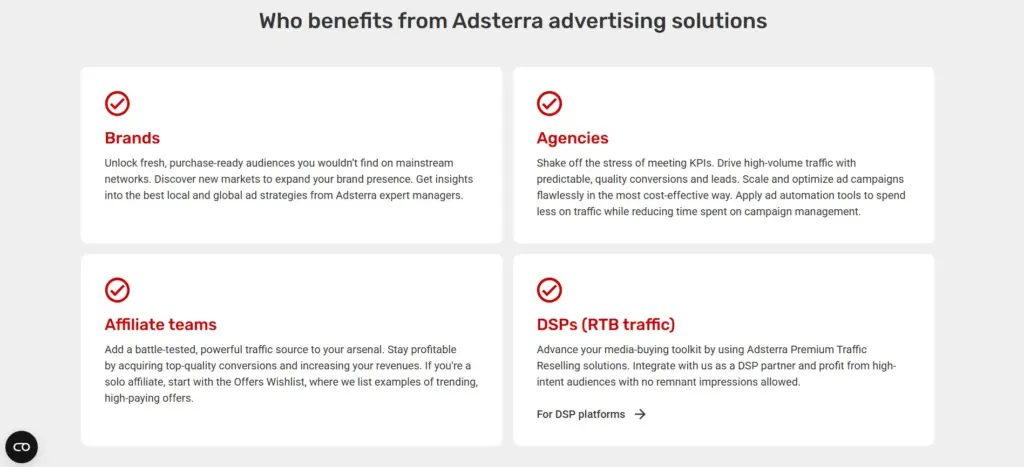
Join if you were rejected by AdSense, your traffic is mostly Tier 2 and Tier 3, you want to monetize social media followers without a website, or you are a new publisher who wants money flowing within weeks rather than months.
Advertisers should join if you run affiliate, app install, or lead campaigns on performance budgets.
Skip it if you run a premium editorial site where user experience is the brand, your traffic is overwhelmingly US and UK where AdSense and Mediavine pay more, or you need brand safe placements for a corporate client.
Adsterra Through Real User Experiences
Adsterra’s features, ad formats, and payout terms give you the platform-level picture. But user feedback can add another layer to the review. We looked at recent reviews on Trustpilot to see what publishers and advertisers are saying about their actual experience with the platform.
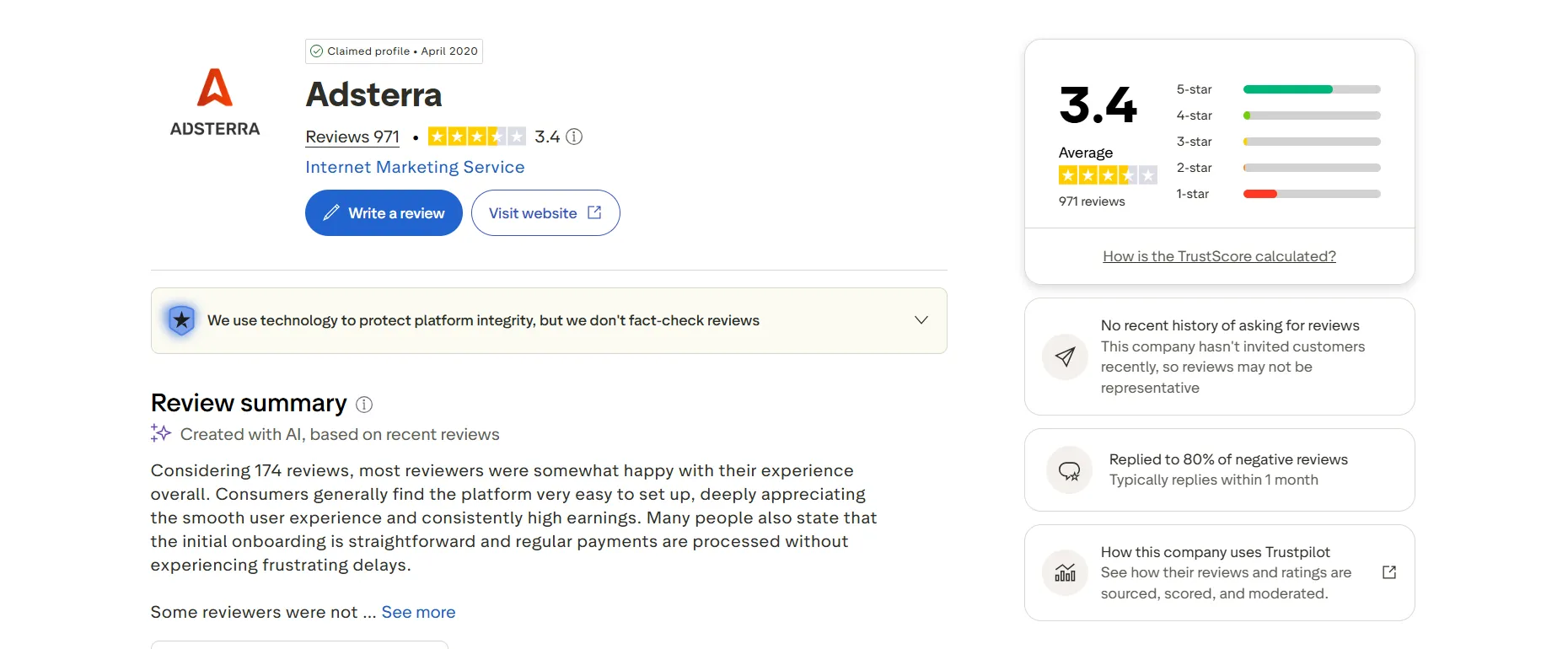
What users like: Easy setup, user-friendly dashboard, helpful support, regular payments, and good earning rates are some of the positive themes appearing in recent reviews.

What users complain about: Other reviewers mention unexpected redirects, account restrictions or suspensions, changes in CPMs, and concerns around support or ad quality.
What this tells us:
The feedback is mixed, which is useful context when evaluating Adsterra. These are individual user experiences, so they shouldn’t be treated as a guarantee of what every publisher will experience. Instead, they give you a practical view of the areas users commonly appreciate as well as the issues some reviewers have reported.
Why Trust Jitendra.co for Adsterra Review?
We don’t rely on Adsterra’s marketing claims alone. For this review, we examined its published information alongside available third-party sources and evaluated key factors including payouts, approval requirements, ad formats, CPMs, targeting, and publisher limitations.
We also separate company-reported figures from independently supported information and cover both the advantages and drawbacks. That means you get a practical view of where Adsterra works well, where it may fall short, and what to consider before using the network.
Our focus is on transparent, useful information so you can make an informed decision based on your own traffic and monetization goals.
Quick Links :
Frequently Asked Questions about Adsterra
Yes. Founded in 2013, it is an established global adtech company with over a decade of payment history, around 36,000 publishers, and verifiable payment proofs across years of publisher communities.
$5 on Paxum and WebMoney, $25 on PayPal, $25 to $50 on local bank transfers, $100 on crypto, and $1,000 on wire transfers.
Biweekly on NET15 terms, processed automatically once you cross your payout method's threshold.
No. Sites of any size are accepted provided traffic is real and human. Approval typically takes 5 to 10 minutes.
Yes. The Smartlink format monetizes social media traffic, apps, and any clickable link, with no site required.
It varies from under $1 to over $20 per 1,000 impressions depending on geography, niche, and traffic quality. Tier 1 popunder traffic typically earns $3 to $5.
For Tier 2 and Tier 3 traffic, rejected publishers, and social traffic, yes. For premium Tier 1 editorial sites, AdSense or Mediavine usually pay more per visitor.
$100 for cards, PayPal, and Paxum. $1,000 for wire transfers. The first $100 card deposit requires no KYC.
Yes. The referral program pays 5 percent of referred publishers' earnings for life.
CPMs track advertiser demand, which shifts by season, geo, and campaign budgets. Several reviewers report strong first months followed by declines, which makes testing formats and geos continuously important.
The network prohibits malware and forced redirects and runs three level fraud screening, making it broadly safe. However, popunder and push formats are inherently more intrusive than contextual ads, so visitor sentiment will vary by audience.
Yes, provided placements comply with AdSense policies. Many publishers pair AdSense display units with Adsterra popunders or Smartlinks on the same property.
Final Verdict: Is Adsterra Worth Trying in 2026?
Adsterra is a practical option for publishers who need accessible monetization, particularly those with international traffic, lower-volume websites, or social traffic that is difficult to monetize through traditional networks.
Its low payout threshold, multiple ad formats, and Smartlink make it flexible, while CPM variability and more aggressive formats remain important tradeoffs.
For the right traffic profile, Adsterra can be worth testing alongside other networks rather than replacing your existing monetization setup immediately.

Jitendra Vaswani is a well-known expert in SEO and AI-driven digital marketing. He has spoken at international events and founded Digiexe, a digital marketing agency, and AffiliateBooster, WordPress plugin designed specifically for affiliate marketers. With over 10 years of experience, Jitendra has helped many businesses succeed online. His bestselling book, Inside A Hustler’s Brain: In Pursuit of Financial Freedom, with over 20,000 copies sold globally, underscores his influence and commitment to empowering digital marketers.