The Numbers Hiding Inside the Milestone
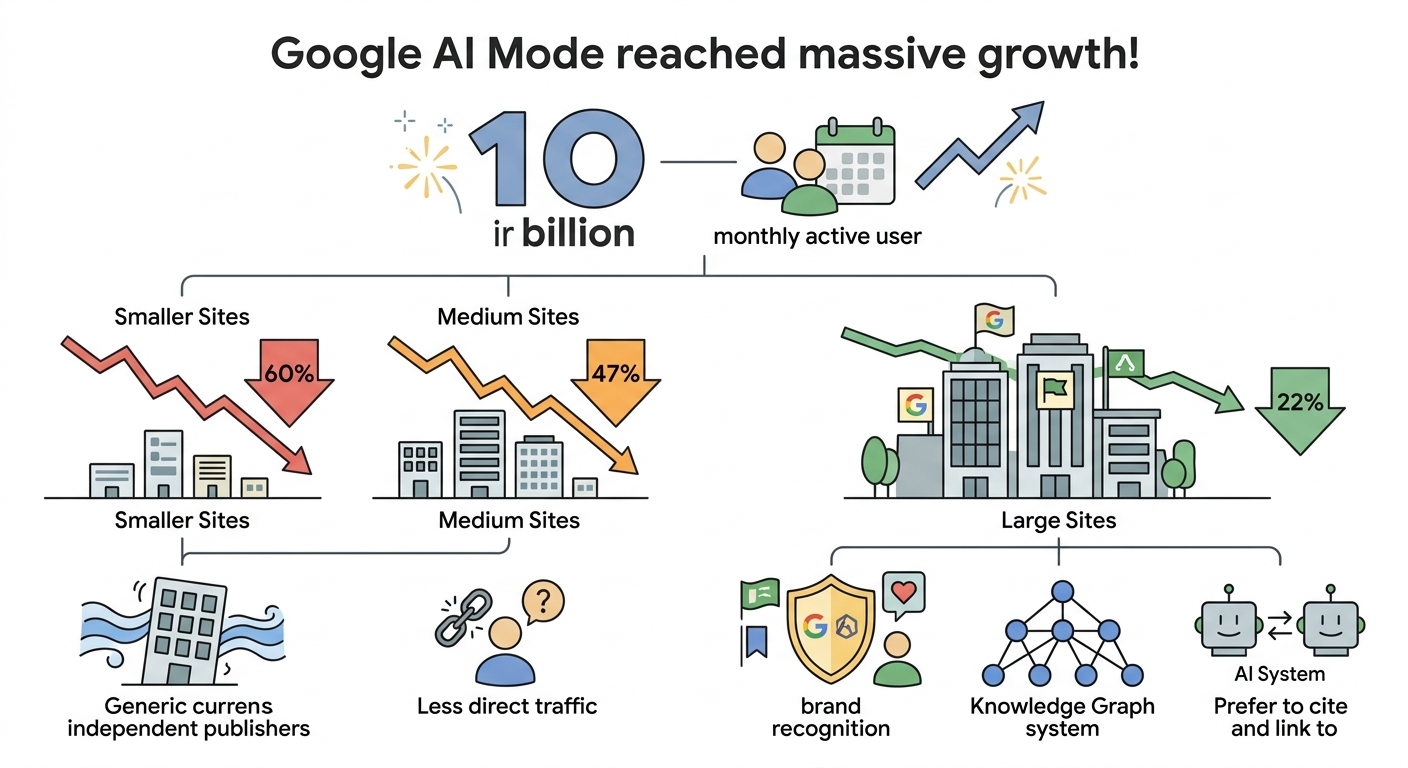
Google confirmed AI Mode crossed one billion monthly active users at I/O 2026. The headline is impressive. The distribution of impact underneath it is not.
The traffic data being published this week tells a story of two very different publisher experiences depending on site size — and the implications for independent digital publishers are stark.
Sites with between 1,000 and 10,000 daily average page views saw search traffic down 60% in 2025. Medium sites with 10,000 to 100,000 daily page views were down 47% in search. Large sites with more than 100,000 page views were down only 22%.
The smaller the site, the larger the traffic loss. This is not accidental. Larger sites have brand recognition that drives direct traffic, Preferred Sources selections from established readers, and the kind of entity clarity in Google’s Knowledge Graph that makes AI systems more likely to cite them.
Smaller sites have none of those structural advantages, and AI search’s shift toward trusted, recognisable sources has removed the keyword-ranking equaliser that previously allowed a small expert site to compete with a large brand on specific queries.
The Structural Reason Small Sites Are Losing More
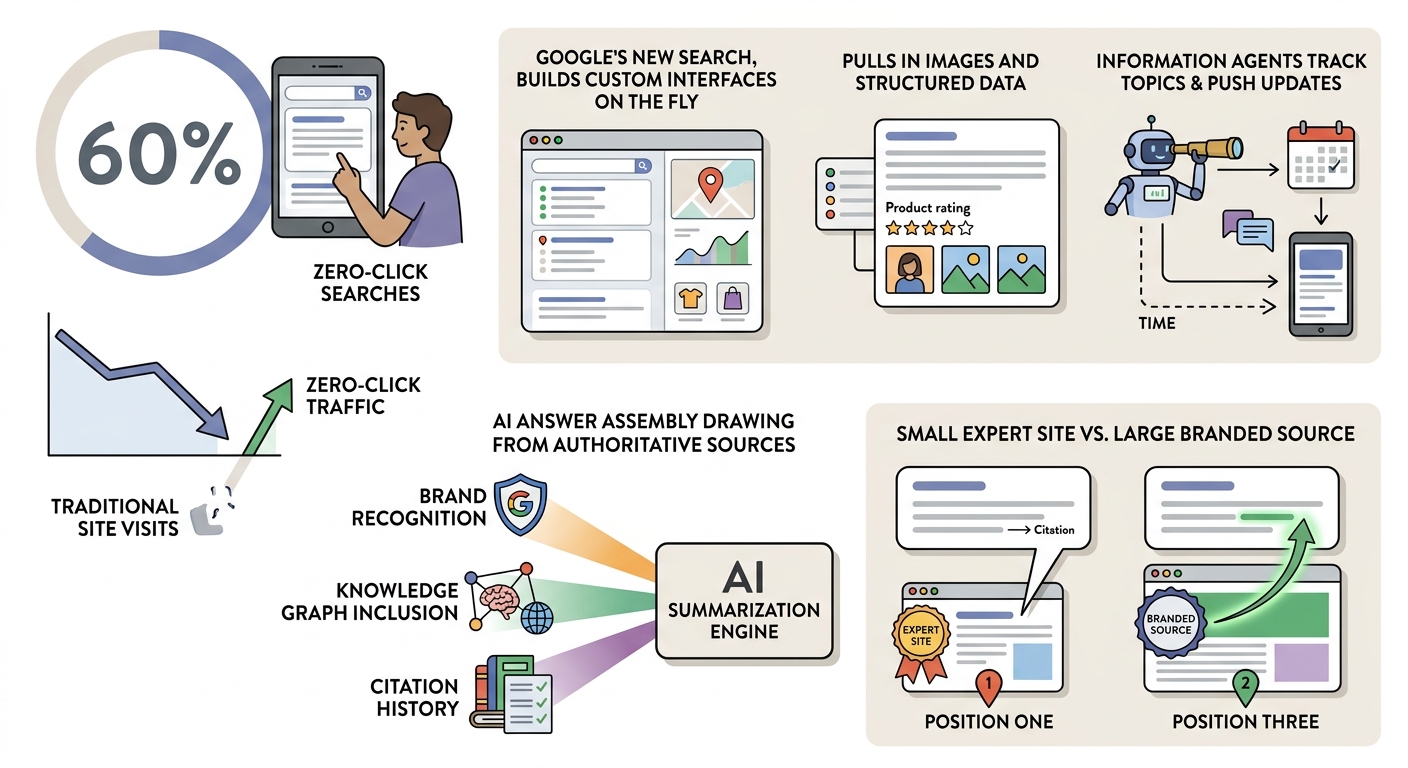
Zero-click searches now account for 60% of queries. Google’s new Search does not just answer questions — it builds custom interfaces on the fly, pulls in images and structured data, and offers information agents that can track topics over time and push updates to users. Every one of those features reduces the need to click through to a source.
When Google assembles an AI answer, it draws from sources its quality systems recognise as authoritative. Brand recognition, Knowledge Graph inclusion, and citation history all influence that selection.
A small site that ranks position one for a keyword is still being bypassed by the AI answer assembled above it — and that AI answer is more likely to cite the large branded source at position three than the small expert site at position one, because the large branded source passes more trust signals.
What Small Publishers Can Do That Big Ones Cannot
This sounds catastrophic for small publishers. It is genuinely difficult. But small publishers have one significant advantage over large ones: speed of adaptation.
A large publisher with hundreds of staff and established content workflows takes months to change direction. A small publisher with two or three people and a clear understanding of their audience can pivot in weeks.
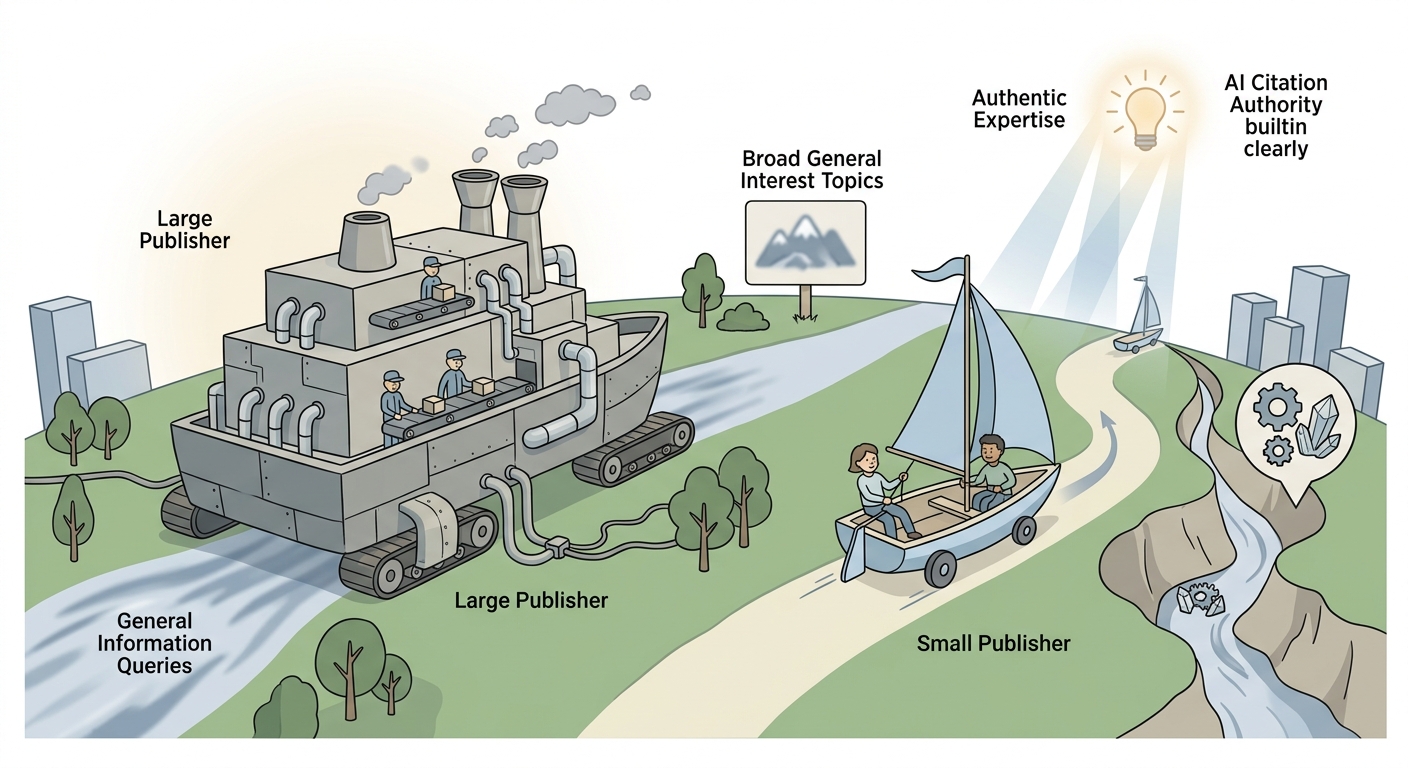
The pivot that is working for small publishers who are navigating this well: stop competing with large brands on broad informational queries, and go narrower and deeper into niche areas where large publishers do not have genuine expertise.
A small site with real specialist knowledge in a specific niche can build AI citation authority in that niche faster than a large general-interest site can manufacture it. The niche has to be real — not keyword-manufactured, but genuinely underserved by the large players.
💬 Reddit — r/blogging small publisher traffic loss discussions: 🔗 https://www.reddit.com/r/blogging/search/?q=small+publisher+traffic+loss+Google+AI+2026
🐦 X/Twitter — independent publisher reactions to AI Mode billion user milestone: 🔗 https://x.com/search?q=Google+AI+Mode+billion+users+small+publishers+traffic&f=live
💬 Quora — how can small websites compete with big brands in Google AI search: 🔗 https://www.quora.com/search?q=small+website+compete+Google+AI+search+big+brands+2026
Quick Links: