The Customer That Changed the Proxy Market
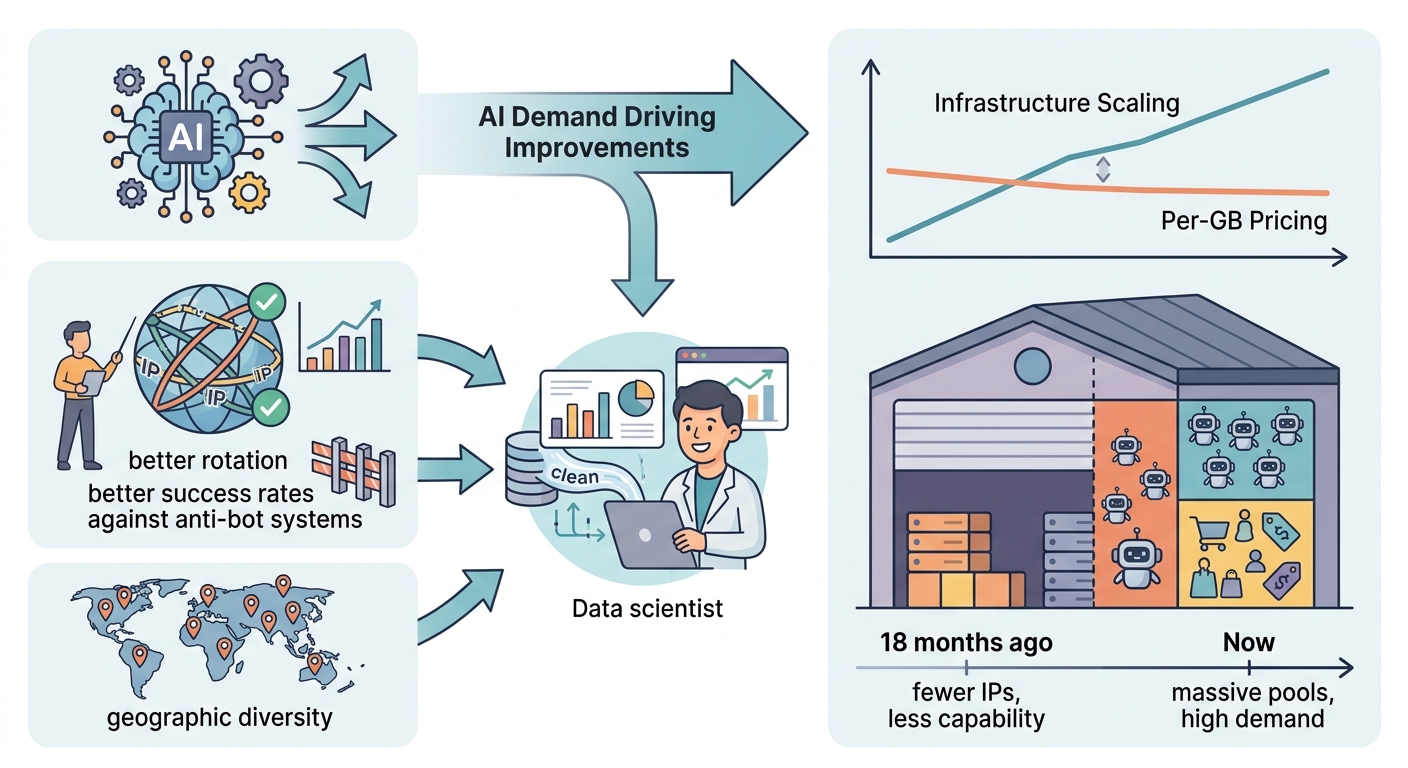
The proxy services market has a new dominant customer category in 2026, and understanding it explains price movements, availability patterns, and infrastructure investment decisions across the entire industry. That customer is AI companies — specifically, AI companies collecting fresh web data for model training, fine-tuning, and real-time grounding.
AI-related demand has affected the proxy server market profoundly, with major proxy providers growing by 50% or more year-over-year. For some providers, AI has become the largest vertical by volume of customers, as AI companies move toward more frequent data refreshes and build increasingly complex real-time systems.
The AI data collection use case is different from traditional proxy use cases in ways that matter for other customers in the market. AI companies need enormous volumes of data, refreshed continuously, from geographically diverse sources.
They are not scraping a competitor’s pricing page once a week. They are crawling broad swathes of the web on continuous refresh cycles, generating proxy volume that dwarfs what any single traditional customer would generate.
This demand has driven infrastructure investment that has benefited the whole market — more IP diversity, better rotation systems, more geographic coverage — while also creating pricing pressure in residential IP pools as supply struggles to keep pace.
What This Means for Business Proxy Users
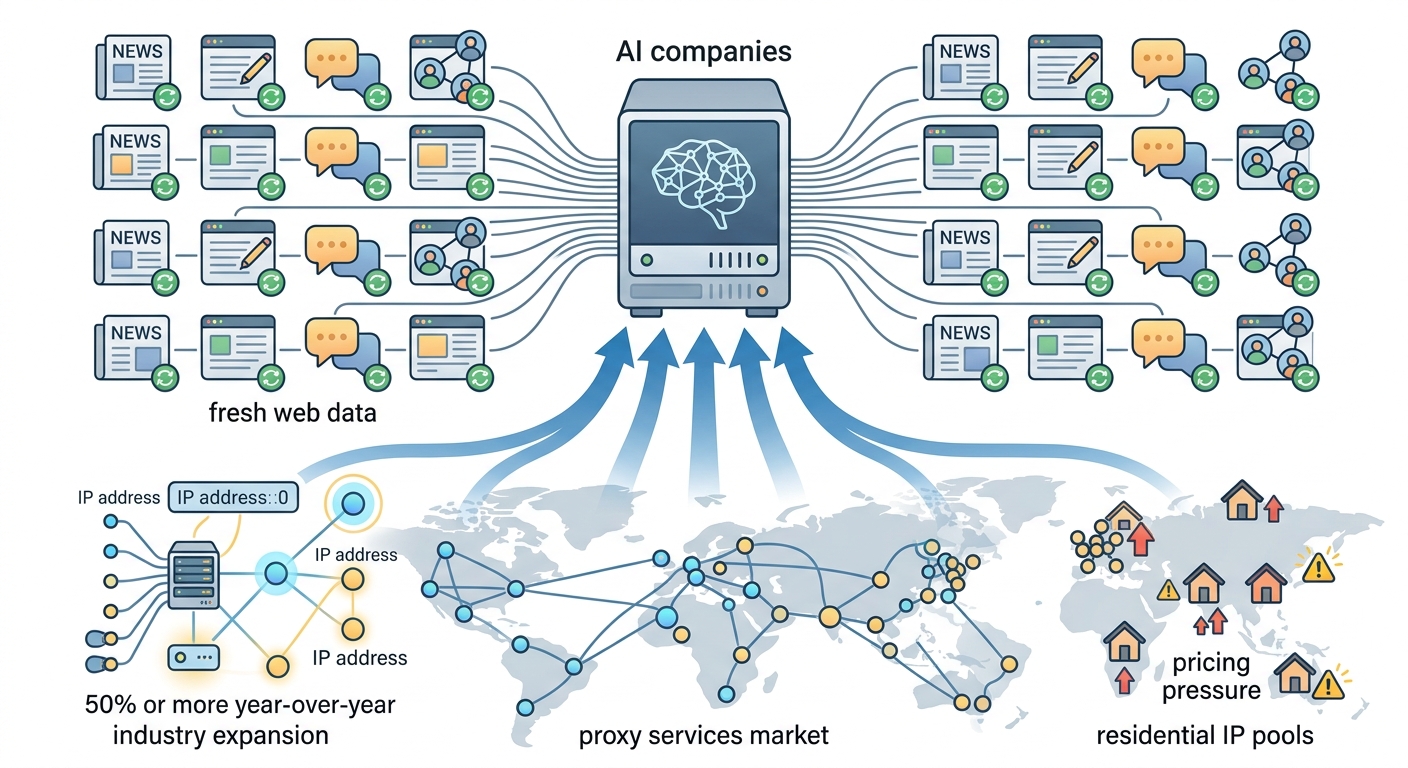
If you are using proxy services for competitive intelligence, price monitoring, or data collection, the infrastructure improvements driven by AI demand are working in your favour.
The residential proxy networks available today are significantly more capable than they were 18 months ago — better rotation, better geographic diversity, better success rates against modern anti-bot systems — because AI companies needed that capability and providers built it.
The pricing pressure is more nuanced. Per-gigabyte pricing on residential proxies has remained relatively stable because provider infrastructure has scaled alongside demand.
But IP pool availability for specific geographic targets at specific times can be tighter than it was before AI companies began consuming large portions of the available residential IP inventory.
The Technical Reality of Anti-Bot in 2026
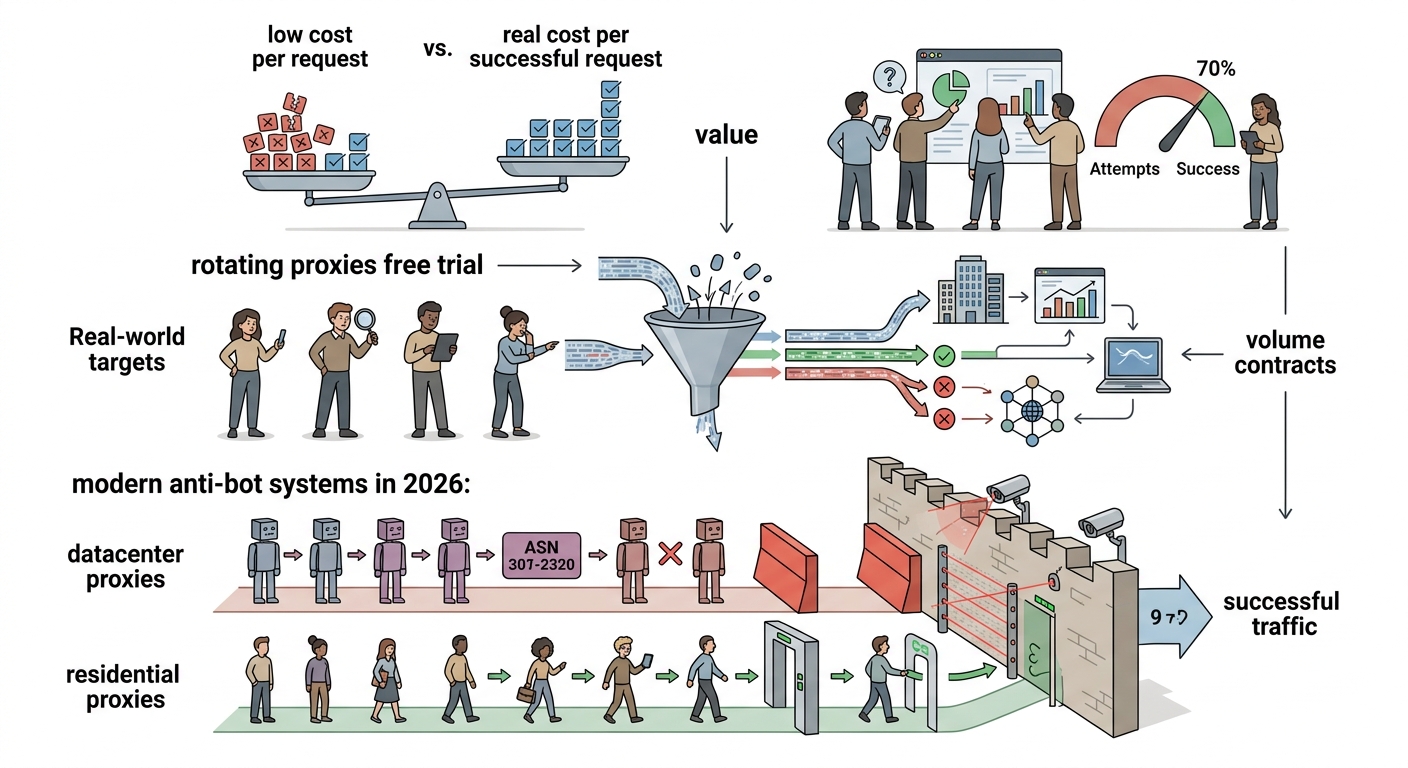
The question for serious proxy buyers is less “how cheap can it be?” and more “what is the real cost per successful request?” A rotating proxies free trial is now a hygiene factor for serious buyers — teams want to test on real-world targets before committing to volume contracts.
Anti-bot systems in 2026 are significantly more sophisticated than they were two years ago. The gap between datacenter and residential proxy success rates has widened as Cloudflare, DataDome, and custom enterprise bot protection have gotten better at identifying datacenter ASN ranges.
For any target with modern bot protection, residential proxies are the baseline requirement, not the premium option.
💬 Reddit — r/webscraping on AI company proxy demand and market impact: 🔗 https://www.reddit.com/r/webscraping/search/?q=proxy+market+AI+company+demand+2026
🐦 X/Twitter — data professionals discussing proxy market changes driven by AI: 🔗 https://x.com/search?q=proxy+market+AI+training+data+2026&f=live
💬 Quora — why are proxy services more expensive in 2026: 🔗 https://www.quora.com/search?q=why+proxy+services+expensive+AI+demand+2026
Quick Links: