
As of 2026, David Pakman has an estimated net worth of about $3 million to $12 million, based on public estimates that differ a lot. The Argentine-American host earns from The David Pakman Show on YouTube, radio, TV and podcasts. Paid memberships, ad deals and two bestselling books add to his income.
| Quick facts | Details |
|---|---|
| Net worth | About $3 million to $12 million (public estimates vary) |
| Full name | David Pakman |
| Born | February 2, 1984 |
| Age | 42 |
| Birthplace | Buenos Aires, Argentina |
| Nationality | Argentine-American (US citizen since age 16) |
| Source of wealth | The David Pakman Show, YouTube, memberships, ads, books, speaking |
| Known for | Hosting The David Pakman Show, calm progressive commentary |
| Education | University of Massachusetts Amherst (BS), Bentley University (MBA) |
| Partner | Keeps his partner’s name private |
| Children | Two daughters |
Who Is David Pakman
David Pakman is an Argentine-American political commentator, media entrepreneur and author. He is the founder and host of The David Pakman Show, a progressive news and commentary program. The show airs on radio, on TV through Free Speech TV and online on YouTube and podcast apps.
He started the show as a college student and has owned and run it himself for about two decades. His YouTube channel now has close to 3.7 million subscribers and billions of views. He is known for a calm, fact-focused style, even when he appears on shows whose audiences disagree with him.
David Pakman Net Worth
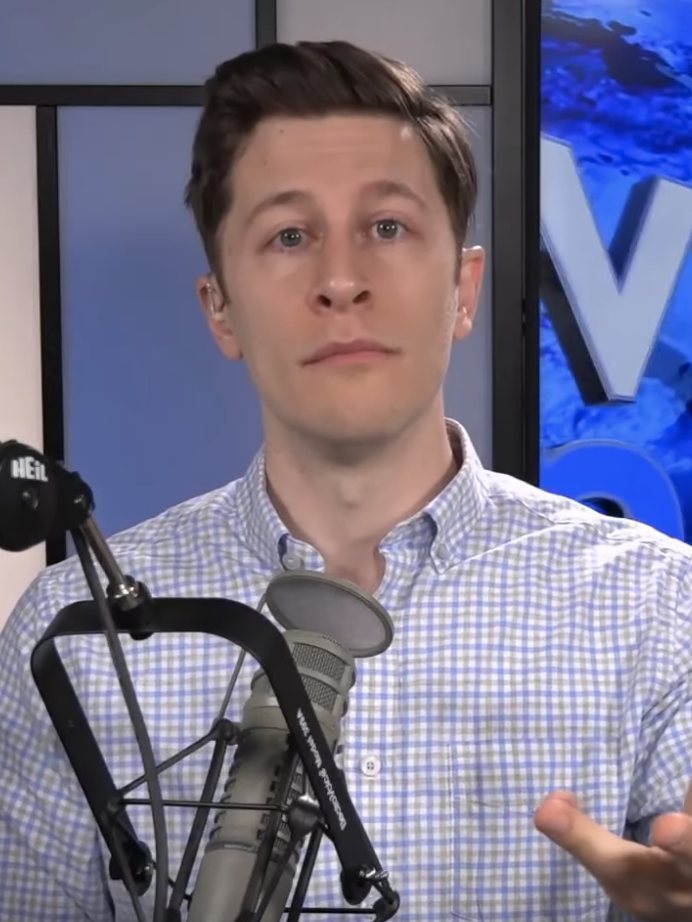
David Pakman’s net worth is about $3 million to $12 million. Some wealth sites put him at around $3 million to $5 million, while YouTube-based models of his show reach $8.5 million to almost $12 million. One social-data model lands near $10.5 million.
The old version of this page said $7.2 million and claimed that figure came from Wikipedia, Forbes and Business Insider. None of those outlets has published a net worth for him, so that claim has been removed. Pakman has never shared his own finances, so every number is an estimate.
Why The Estimates Differ So Much
Most of his money is tied to a private company: his own show. Nobody outside the business knows its exact revenue, costs or how much he keeps as profit. That is why the lowest and highest estimates are millions of dollars apart.
Low estimates tend to count only what he might have saved as a host. High estimates value the whole show as a business, using YouTube views and membership numbers. We show the full range and explain it, instead of picking one figure as fact.
Where His Money Comes From
| Income source | What it is | Role in his net worth |
|---|---|---|
| YouTube ads | Ad revenue from a channel with close to 3.7 million subscribers | One of three main streams |
| Direct ad deals | Sponsors he sells to directly for the show and podcast | One of three main streams |
| Memberships | Paid plans on his website, from $7 a month to a $1,500 lifetime pass | One of three main streams |
| Radio, TV and podcast | Syndication, Free Speech TV and podcast platforms | Extra reach and income |
| Books | Three children’s books and two New York Times bestsellers | Advances and royalties |
| Substack and speaking | Paid newsletter, talks and live events | Smaller, growing streams |
Early Life And Education
David Pakman was born on February 2, 1984, in Buenos Aires, Argentina, into an Argentine Jewish family. His father is a psychiatrist and his mother is a teacher. He has a brother and a sister.
The family moved to the United States when he was five years old. He grew up in Northampton, Massachusetts, and became a US citizen at 16. He has said his family was always talking about politics at home.
After Northampton High School, he studied economics and communications at the University of Massachusetts Amherst. He later earned an MBA from Bentley University in Waltham, Massachusetts. That business training helped him run his show as a company, not just as a hobby.
Career Highlights And Milestones
Pakman built his career slowly, one platform at a time. His path runs from a college radio show to one of the biggest independent political channels on YouTube. Here are the main steps.
The show began in August 2005 on WXOJ-LP, a small community station known as Valley Free Radio in Northampton. It was first called Midweek Politics with David Pakman, and he was only 21 and still in college. He later said the show started almost as a hobby.
The program grew into national radio syndication and at one point aired on more than 100 stations. It then moved to national TV through Free Speech TV on DirecTV and Dish Network. Along the way, it was renamed The David Pakman Show.
Building A YouTube Business
Meeting Cenk Uygur of The Young Turks at a media conference pushed Pakman to try YouTube. He launched his channel in September 2009 and posted new clips every single weekday. He has said that this steady schedule, more than any viral moment, is what made the channel grow.
The channel went from about 780,000 subscribers in 2019 to close to 3.7 million today. It has published tens of thousands of videos, and he records an hour-long daily show that is cut into short clips. Growth was especially strong during the pandemic.
Surviving The Adpocalypse
When YouTube cut ad pay for many news channels in 2017, a period creators call the adpocalypse, Pakman’s show was hit like many others. He responded by pushing paid memberships, which give fans ad-free and bonus content. In a 2019 interview with TheWrap, he said the show was by then mostly funded by memberships.
He has long argued that people who want media free from advertiser pressure should pay for it directly. That idea is now a core part of his business. It also protects him when platforms change their rules.
How The Daily Show Works
The David Pakman Show is an hour-long program that comes out Monday through Friday. Pakman has said he often records several episodes ahead, finishing the week’s taping by Thursday. The full show goes to members and podcast apps, while YouTube gets short clips on single stories.
New clips start going up each afternoon, so fans know when to expect fresh videos. He mixes news about Donald Trump and Congress with policy stories and long interviews with scientists, writers and politicians. That steady flow of clips is what keeps his channel’s views and ad income high.
Big Interviews And Guest Spots
Pakman has appeared twice on The Joe Rogan Experience and on the Lex Fridman Podcast. He has also been a guest on Piers Morgan Uncensored, Democracy Now, the PBD Podcast, CNN, Fox News and HLN. These appearances put him in front of audiences who would not usually watch a progressive show.
California Governor Gavin Newsom has also appeared on his show, in an interview about Stephen Miller that drew a public reply from the White House communications director. Later, the White House listed him on its website as a “media offender.” He used the attention to grow his audience even more.
Income Sources And Assets
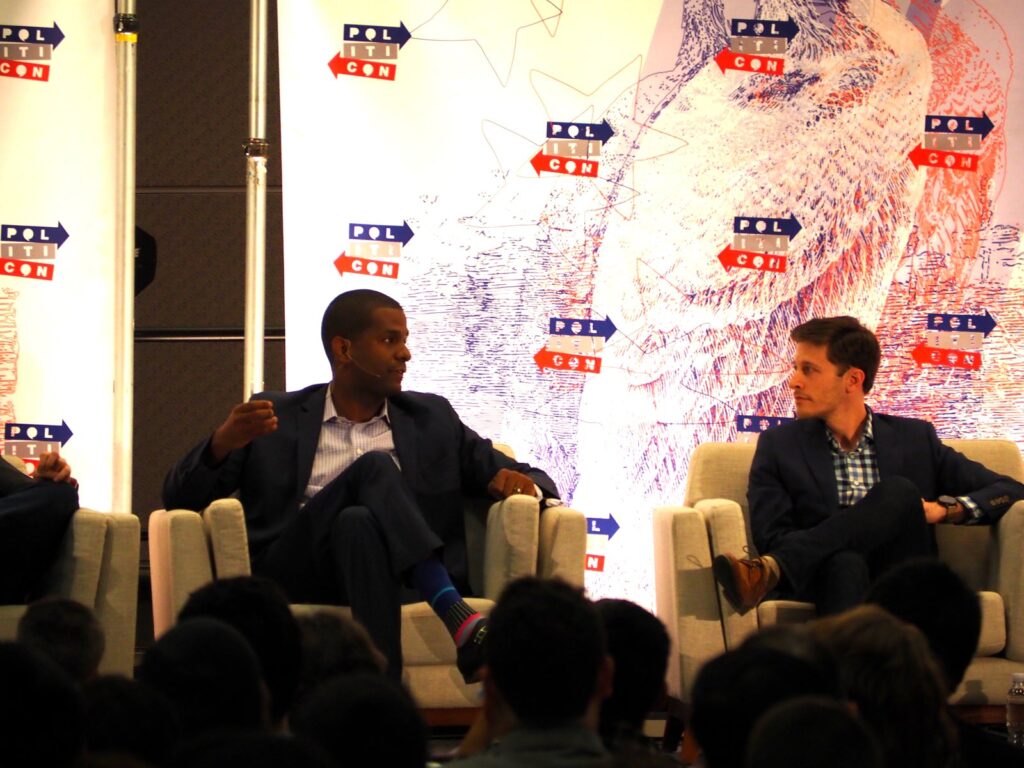
Pakman has said his main income streams are fairly even. In an NBC News profile, he named direct sales to advertisers, platform ads such as YouTube and paid memberships. Books, his newsletter and speaking add more on top.
YouTube And Platform Ads
YouTube pays creators a share of the ads shown on their videos. Analytics trackers give very different numbers for his channel, from tens of thousands of dollars to more than $2 million a year from ads alone. These are models based on views, not numbers he has confirmed.
Memberships
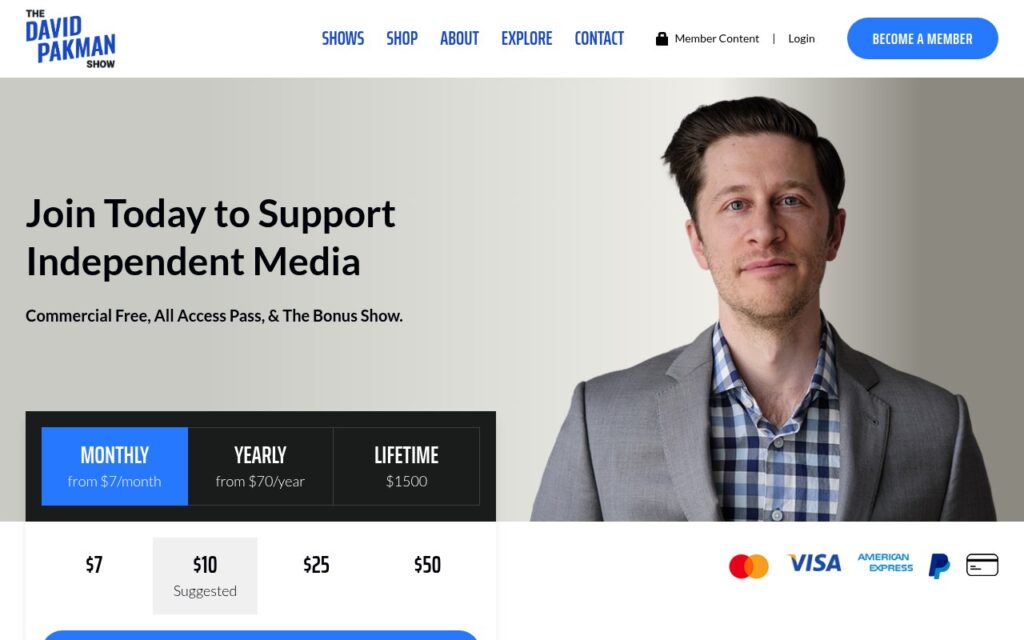
His website sells monthly plans from $7, yearly plans from $70 and a $1,500 lifetime membership. Members get the show without ads, bonus episodes and other extras. Because fans pay him directly, this money does not depend on YouTube’s ad rates.
Sponsors And Podcast Distribution
Pakman sells some ad slots directly to sponsors, instead of only using platform ads. The show also runs as a podcast and on radio, which brings in more listeners and more ad space. Free Speech TV gives it a TV audience as well.
A Lean Team
The show is run like a small company. Pakman has said the team is himself plus three full-time staff and some part-time contractors. His first employees were his younger brother and one of his best friends.
A lean team means lower costs, so more of the money the show makes can stay in the business or go to him. Much of the show is recorded in a studio in his home. That keeps costs low compared with big media companies.
Why Independent Progressive Shows Earn Differently
An NBC News report noted that conservative online hosts often have more donor and media backing than progressive ones. A media professor quoted in that report said progressive creators mostly have to live and die by the algorithm and their own audiences. That makes direct payments from fans even more important for a show like his.
Pakman has also said that, at his current level of success, moving to a TV network no longer appeals to him. He prefers the freedom of owning his show and setting his own schedule. That choice means his wealth grows with his own business, not with a network salary.
Books, Brand, And Business Ventures
Pakman has turned his show into a wider media brand. Books, a newsletter and live events now sit alongside the daily program.
- Children’s books: Think Like a Detective and Think Like a Scientist teach kids critical and scientific thinking, and Think Like a Voter explains how elections work.
- The Echo Machine: his first book for adults, about how right-wing media and disinformation shape American politics, published by Beacon Press. It became a New York Times bestseller.
- Pay Attention: his newest book, from Harper, about how algorithms and media wars shape what people believe. He said on X that it became an instant New York Times bestseller.
- Substack newsletter: a newsletter where he writes longer essays and shares show updates.
- Live events and talks: he speaks at colleges, conferences and book events, including a New York event hosted by Don Lemon for his newest book.
Two bestselling books in a row show that his audience will follow him beyond YouTube. Book advances and royalties are likely a growing part of his income.
Is David Pakman The Same As The Venture Capitalist?
No, and this is a common mix-up. There is a different David Pakman who works in venture capital, known for his work at Venrock and the crypto fund CoinFund. Stories about NBA Top Shot or crypto investing are about that investor, not the political host.
The old version of this page linked to some of those investor stories by mistake, and they have been removed.
The David Pakman on the rest of this page is the host of The David Pakman Show. You can see him in the photos above and in the videos further down.
Political Views And On-Air Style
Pakman calls himself a progressive social democrat. He backs progressive policies and is a frequent critic of Donald Trump and the Republican Party. He also covers science, media literacy and disinformation.
What sets him apart is his tone. He rarely shouts or gets into heated fights, and he often starts with his main point and then explains how he got there. He even wrote a free guide on making arguments without burning bridges with people who disagree.
Awards And Achievements
Pakman’s biggest achievement is building one of the largest independent progressive shows in the United States without a big media company behind him. The Reuters Institute at the University of Oxford named him in its Digital News Report as one of the alternative voices with large audiences on YouTube.
He has also written two New York Times bestsellers for adults. His show has kept a daily schedule for about two decades, which few independent media businesses manage.
Personal Life
Pakman has a partner and two daughters. He keeps his family life mostly private. He has said that running his own show lets him set his own schedule and spend time with his children.
He has said he is secular and does not believe in God, though he does not rule it out. Outside of politics, he is a big chess fan. To avoid burnout, he tries to skip news and social media from late Thursday until Sunday evening.
YouTube is Pakman’s home base, with close to 3.7 million subscribers on The David Pakman Show channel. He posts on X under the official handle @dpakman, where he has about 273,000 followers. He is also active on Instagram, TikTok and Substack.
In this recent post from his official X account, he thanks his readers after his newest book became an instant New York Times bestseller. It shows how he uses his social reach to grow his book sales.
David Pakman In Videos
These videos from the original article show the show’s daily format. One is a segment on Bernie Sanders and Joe Manchin, and the other is a full episode of The David Pakman Show.
Lessons Or Key Takeaways
Pakman’s career offers useful lessons for any creator who wants to build an independent media business. These are the main ones.
- Be consistent: he credits a steady daily schedule, not viral hits, for his growth.
- Own your platform: he has owned his show from the start, so he keeps control and the profits.
- Get paid directly: memberships protect his income when platforms change ad rules.
- Keep costs low: a small team and a home studio let him stay profitable.
- Stay calm: his measured tone helps him reach people who do not share his views.
For more profiles of political figures, read about Chuck Schumer, Jim Jordan and Stacey Abrams. You can also compare his path with radio and TV star Ryan Seacrest.
Frequently Asked Questions
What is David Pakman’s net worth?
David Pakman’s net worth is about $3 million to $12 million, based on public estimates. He has never shared his real numbers, so the range is wide.
How does David Pakman make money?
He makes money from The David Pakman Show through YouTube ads, direct sponsor deals and paid memberships. He also earns from books, his newsletter and speaking.
How much does David Pakman make from YouTube?
YouTube analytics trackers give very different estimates, with some going above $2 million a year from ads. These are models based on views, and his real ad income is private.
Where is David Pakman from?
He was born in Buenos Aires, Argentina, and moved to the United States at age five. He grew up in Northampton, Massachusetts, and became a US citizen at 16.
Is David Pakman married?
He has a partner and two daughters, according to interviews. He keeps details about his family private.
What books has David Pakman written?
He wrote three children’s books, Think Like a Detective, Think Like a Scientist and Think Like a Voter. His adult books, The Echo Machine and Pay Attention, both became New York Times bestsellers.
Is David Pakman the venture capitalist?
No, the venture capitalist David Pakman is a different person. The political host on this page runs The David Pakman Show and does not work in venture capital.
Conclusion
David Pakman’s net worth of about $3 million to $12 million comes from building his own media business from a college radio show. YouTube ads, sponsor deals and paid memberships drive his income, and two bestselling books add more. Because he owns the show outright, his real wealth depends on how much that business is worth.
He keeps a daily show going while writing books and growing his audience. To see how another online creator built a brand on YouTube and Twitch, read about Valkyrae’s net worth.

Jitendra Vaswani is a well-known expert in SEO and AI-driven digital marketing. He has spoken at international events and founded Digiexe, a digital marketing agency, and AffiliateBooster, WordPress plugin designed specifically for affiliate marketers. With over 10 years of experience, Jitendra has helped many businesses succeed online. His bestselling book, Inside A Hustler’s Brain: In Pursuit of Financial Freedom, with over 20,000 copies sold globally, underscores his influence and commitment to empowering digital marketers.