What Actually Happened to HubSpot and Why It Matters
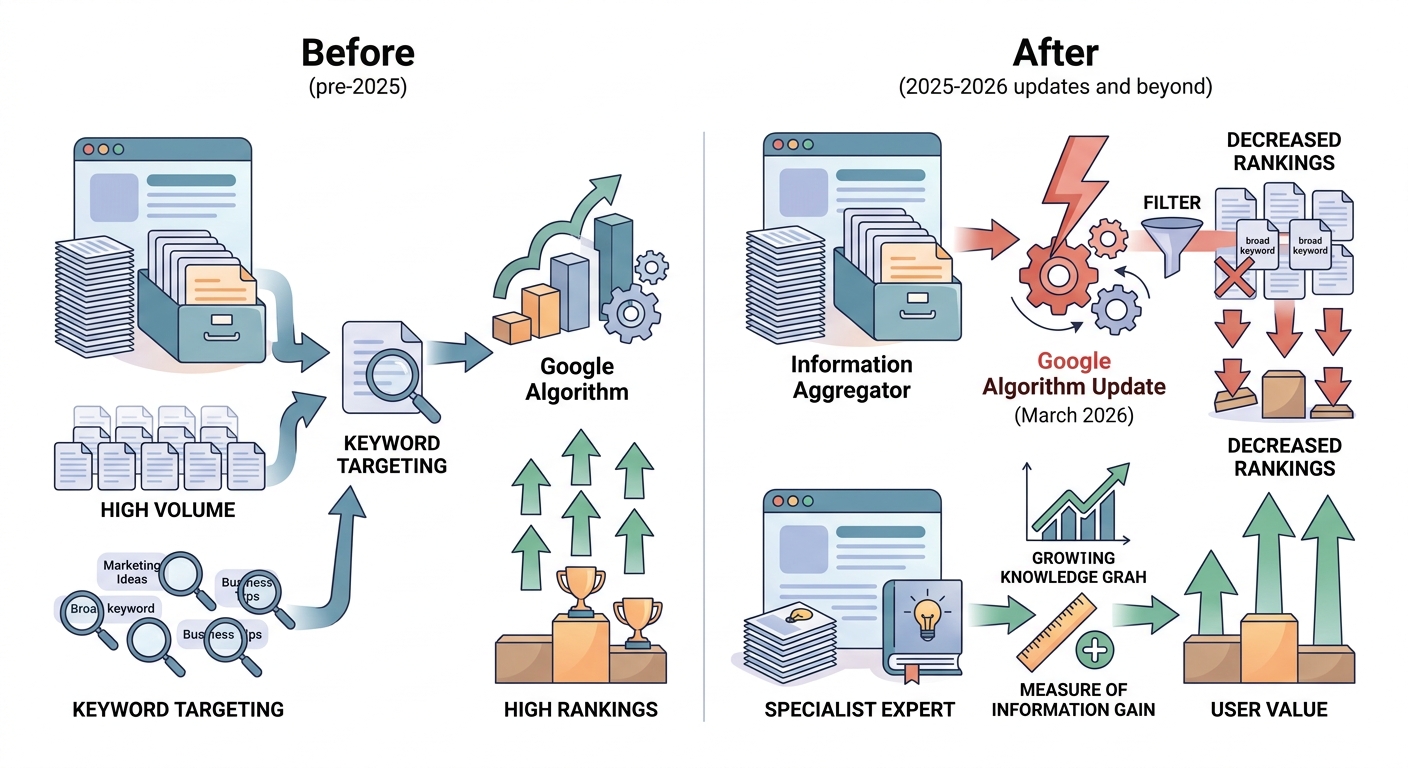
HubSpot — once the gold standard for content marketing at scale — lost an estimated 70–80% of its organic traffic over the 2025–2026 Google algorithm update cycle. The cause is not a technical penalty or a manual action. It is a strategic failure: years of publishing broad, keyword-targeted content at high volume with weak connections to genuine product expertise and user value.
Google’s evolving algorithm — most recently the March 2026 Core Update, which shifted nearly 80% of top-3 positions — is now actively penalising sites that function as information aggregators without a primary value proposition. HubSpot’s content worked when Google rewarded volume and domain authority. It does not work in an environment where Information Gain — how much genuinely new knowledge you add — is a primary ranking signal.
The Opposite Strategy That Is Actually Working Right Now
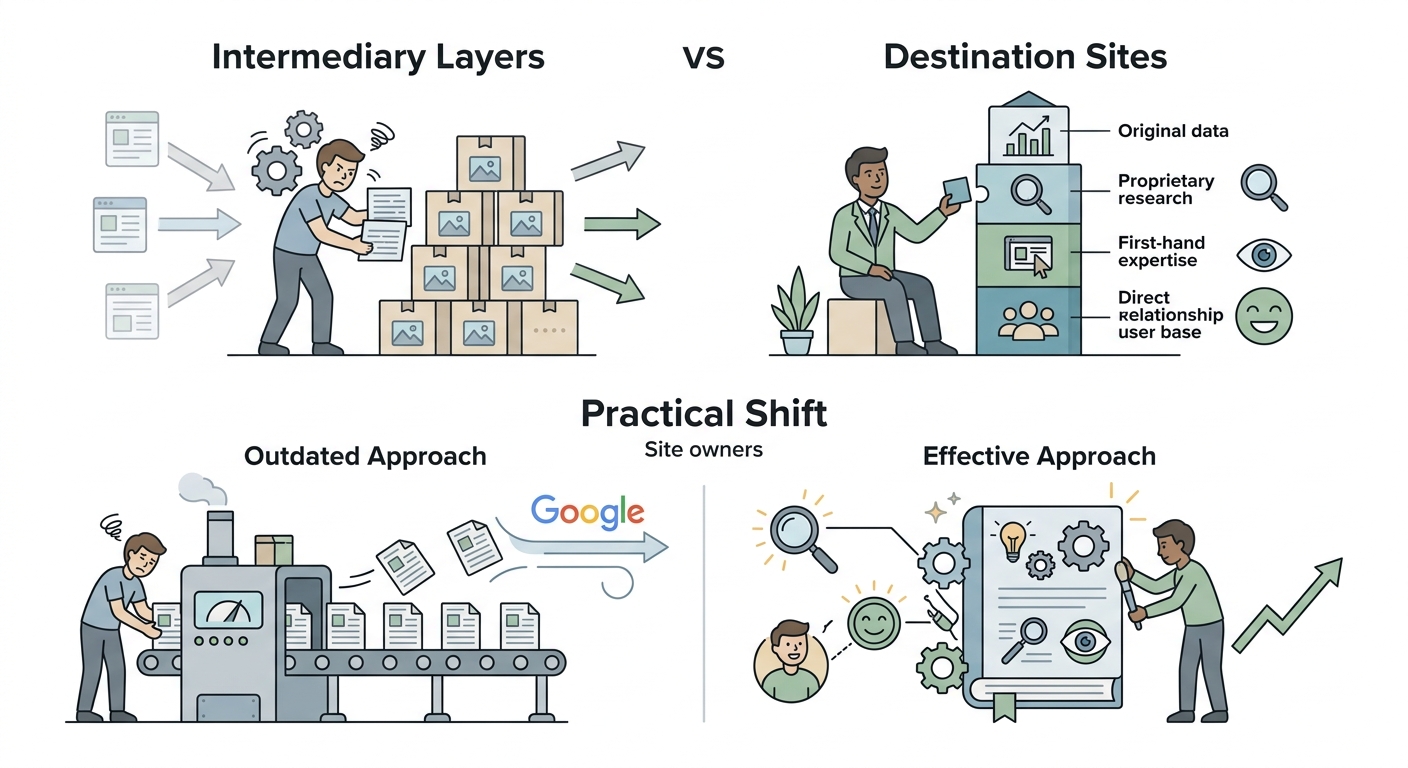
The pattern among March 2026 winners is consistent: they are destination sites, not intermediary layers. They own the data, the expertise, or the primary relationship. For SEO practitioners and site owners, the practical shift is clear. Publish less. Make each piece original and irreplaceable.
Focus on the specific intersection of your genuine expertise and your audience’s specific problems. One article with original research, first-hand testing, and expert analysis outperforms ten articles that summarise what other people have already written. This is not a new principle — it is an old principle that Google’s systems are finally sophisticated enough to enforce at scale.
AI Citation Is Now the Third Track in SEO — And Most Teams Are Still on Two
Why LLM Visibility Has Become a Real Metric
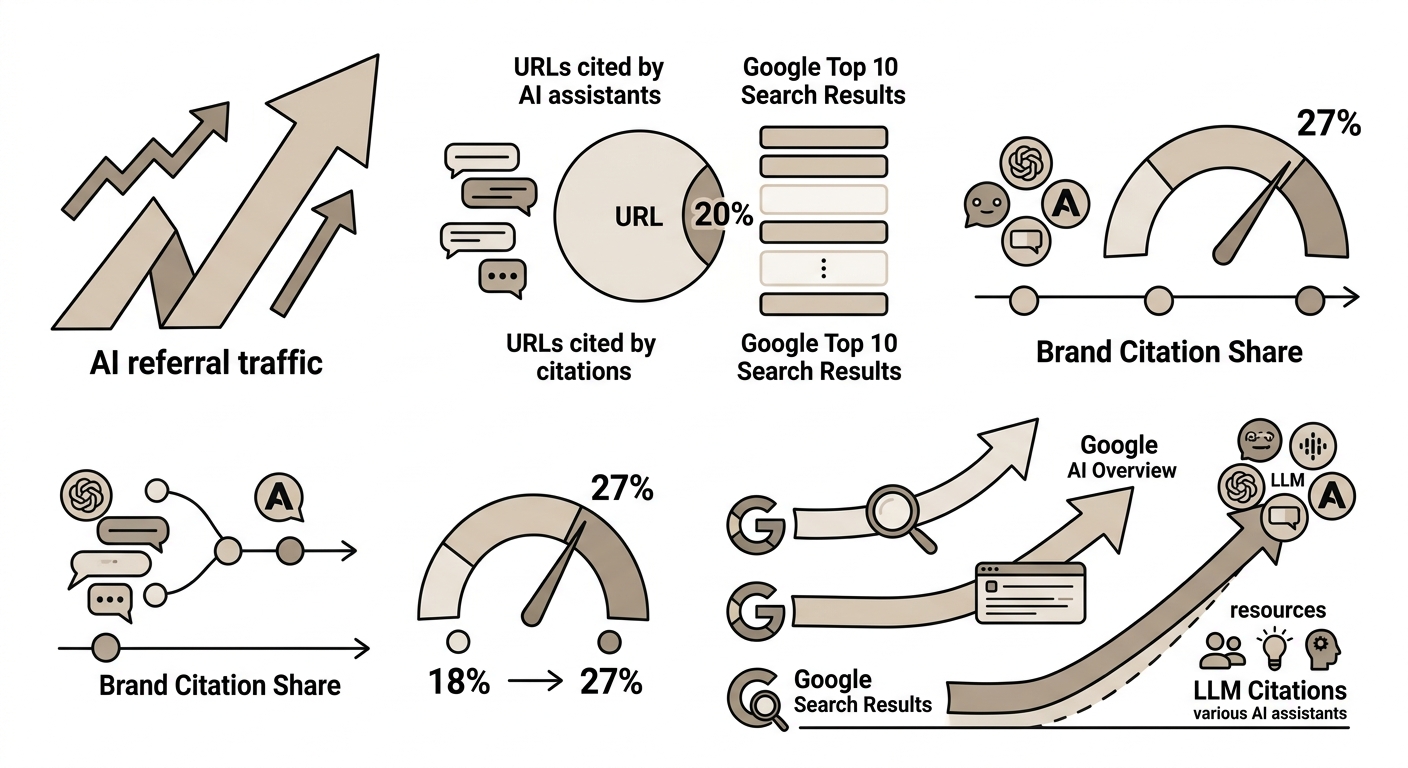
AI referral traffic is growing at 527% year-over-year. Only 20% of URLs cited by ChatGPT and Perplexity also rank in Google’s top 10 for the same query. Brand citation share inside ChatGPT, Claude, and Perplexity averaged 27% on tracked brand queries by April 2026 — up from 18% in late 2025. These numbers describe a genuine parallel channel that is developing independently of Google rankings and is now large enough to measure and influence.
Most SEO teams are optimising for two tracks: Google rankings and Google AI Overview citation. The third track — LLM citation in ChatGPT, Claude, and Perplexity — is growing faster than both and is almost completely under-resourced.
What Optimising for LLM Citation Actually Looks Like
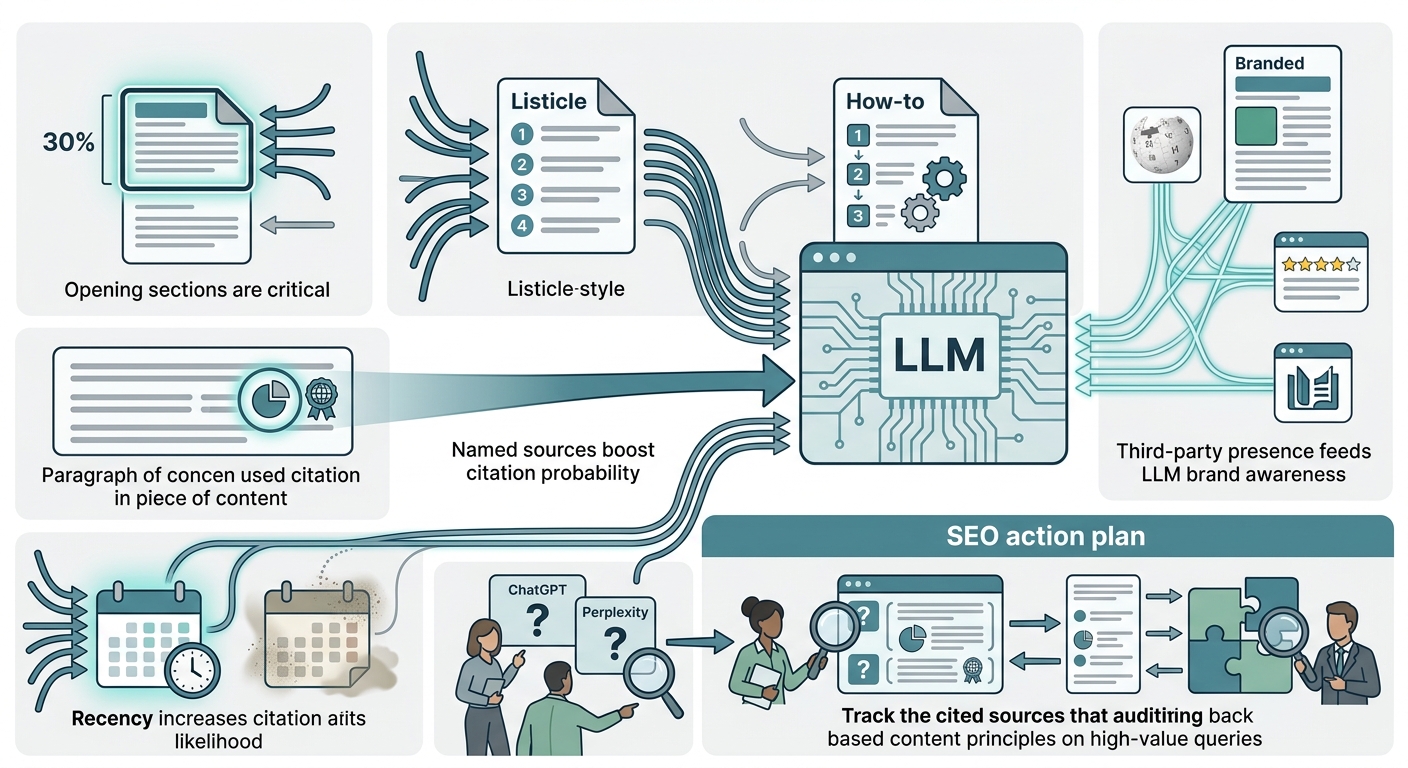
The content signals that improve LLM citation are becoming clearer from research: 44% of all LLM citations come from the first 30% of a piece — opening sections matter enormously. Listicles cite at 25% vs 11% for how-to content. Statistics with named sources dramatically improve citation probability. Content updated within 2 months is 28% more likely to be cited. And brand mentions on authoritative third-party platforms — Wikipedia, G2, Trustpilot, industry publications — feed directly into LLM brand knowledge.
For SEO teams ready to invest in the third track, the audit starts with identifying your highest-value queries in ChatGPT and Perplexity and checking whether you appear — then reverse-engineering why the sources that do appear are being cited.
Quick Links: