
As of 2026, ChatGPT is better for creating and rewriting content, while Grammarly is better for polishing what you have already written. ChatGPT drafts, explains and brainstorms. Grammarly corrects grammar, tone and clarity right where you type. Most writers get the best results using both: ChatGPT for the first draft, Grammarly for the final check.
Last updated: October 12, 2026. Prices checked on OpenAI’s and Grammarly’s official websites and help centers.
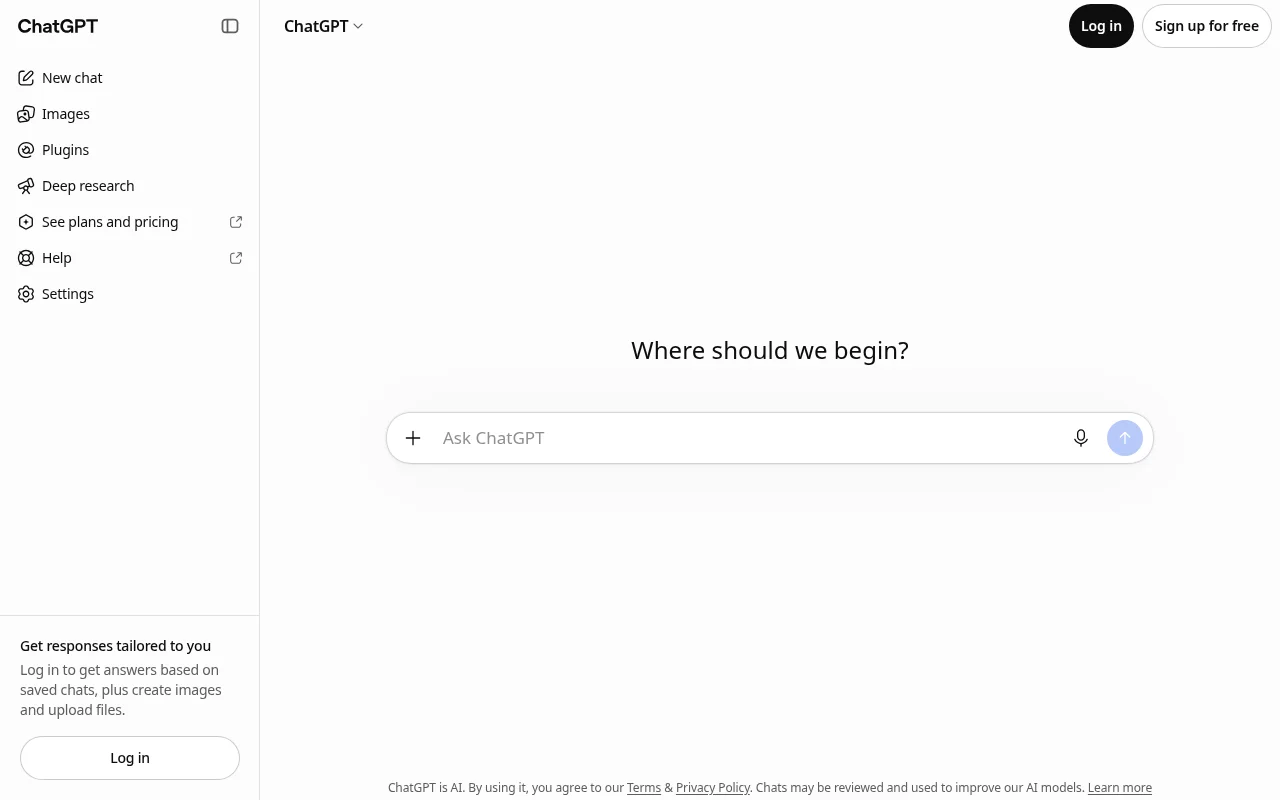
ChatGPT vs Grammarly: Quick Verdict
| If you want to… | Pick | Why |
|---|---|---|
| Write a first draft from scratch | ChatGPT | It generates full articles, emails and outlines from a prompt |
| Fix grammar, spelling and punctuation as you type | Grammarly | It works inside Gmail, Google Docs, Word and other apps where you type |
| Brainstorm ideas, titles and outlines | ChatGPT | It is a conversation, so you can push back and refine |
| Keep a consistent tone and brand voice across a team | Grammarly | Style guides, brand tones and snippets on Pro |
| Research, summarize and analyze files | ChatGPT | Web search, file uploads, data analysis and deep research |
| Check for plagiarism and AI-generated text | Grammarly | Pro includes a plagiarism checker and AI detector |
| Prove your work is your own (students) | Grammarly | Authorship shows how a document was written |
| Spend the least money | Both have free plans | ChatGPT Go is $8/month; Grammarly Pro is $12/month billed annually |
What Is the Difference Between ChatGPT and Grammarly?
The simplest way to think about it:
- ChatGPT is a general AI assistant. You ask, it answers. It can write a blog post, explain a concept, write code, analyze a spreadsheet or plan a trip. Writing is one of hundreds of things it does.
- Grammarly is a writing assistant. It sits inside the apps where you already write and suggests corrections and improvements in real time. It also has generative AI features now, but its core job is to make your own writing clearer and correct.
Both tools have moved toward each other. ChatGPT can proofread anything you paste into it. Grammarly can generate text from prompts. But their strengths are still different, and that is what this comparison is about.
There is one more change you should know about. Grammarly is now part of Superhuman. The company formerly called Grammarly now operates as Superhuman, a suite that includes Grammarly, Superhuman Mail, Superhuman Docs (formerly Coda) and the Superhuman Go AI assistant. In 2026, Superhuman also acquired GPTZero, the AI detection company.
What Changed for ChatGPT and Grammarly in 2026
Both products changed a lot over the past year, so older comparisons are out of date. The biggest updates:
ChatGPT
- ChatGPT Go went worldwide on January 16, 2026, at $8 a month in the US. OpenAI said it would test ads on the Free and Go tiers, while Plus, Pro, Business and Enterprise stay ad-free.
- New models. ChatGPT now runs on the GPT-6 family, and OpenAI introduced GPT-6.1 Sol at DevDay on September 29, 2026.
- More Pro tiers. Pro now comes in three monthly tiers: $100, $200 and $500. The new Pro 500 plan has the highest usage, at 25 times the Plus allowance, according to OpenAI.
- New ways to work. DevDay 2026 added Dots (always-on agents), Pages for shared documents and collaborative slides on Pro and business plans.
Grammarly
- The company became Superhuman. Grammarly is now one product in the Superhuman suite, alongside Superhuman Mail, Superhuman Docs (formerly Coda) and the Superhuman Go assistant.
- Grammarly Pro replaced Premium and Business for web customers, with team features for up to 149 members.
- GPTZero joined Superhuman. The deal was announced on June 23, 2026 and completed by September 30, 2026, adding GPTZero’s AI detection to Superhuman’s authenticity tools.
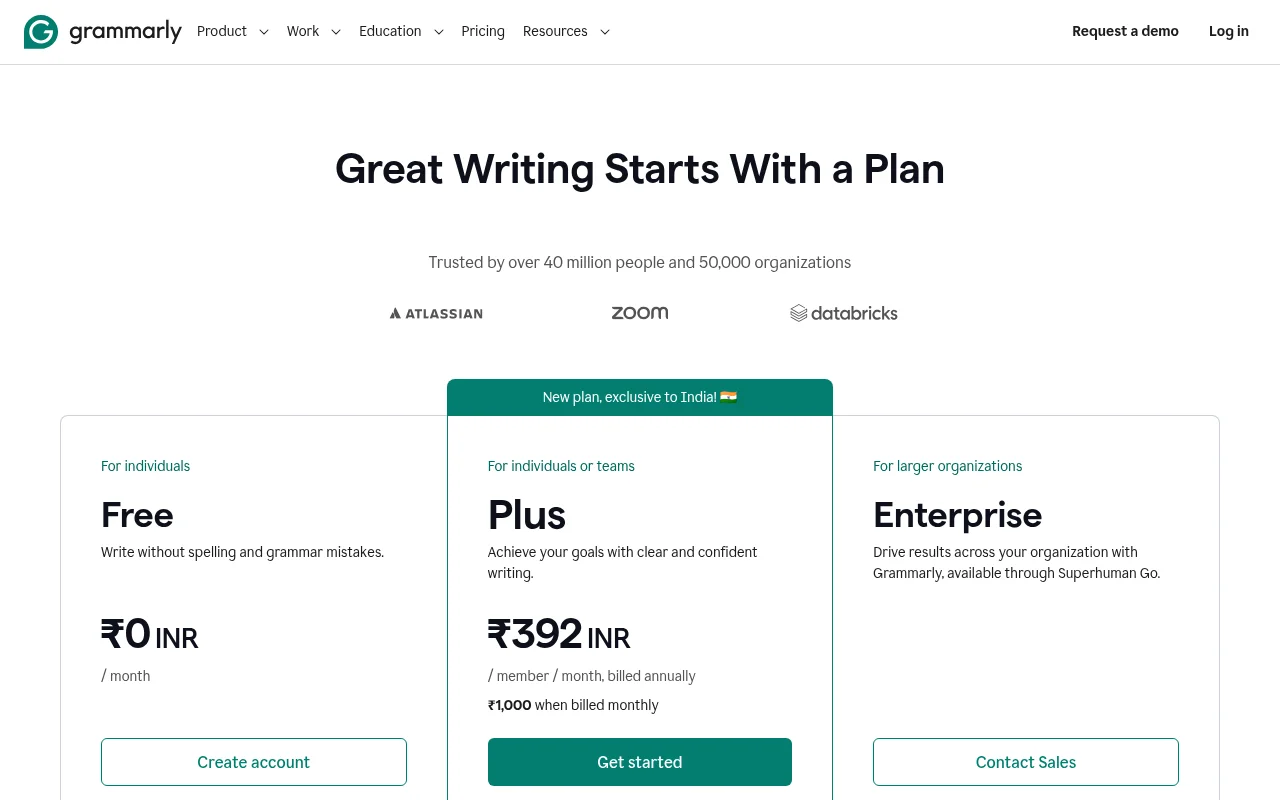
- A cheaper India plan. Grammarly now shows an India-only Plus plan at ₹392 per member per month billed annually.
ChatGPT vs Grammarly: Feature Comparison
| Feature | ChatGPT | Grammarly |
|---|---|---|
| Main purpose | General AI assistant | Writing assistant |
| Grammar and spelling checks | Yes, when you paste text and ask | Yes, automatic and real time |
| Works inside other apps | Desktop app, browser and plugins; not inline in every text box | Browser extensions, Windows and Mac apps, Microsoft Office, Google Docs, iPhone and Android apps |
| Full article generation | Yes, strong | Yes, with prompt limits |
| Tone adjustment | Yes, on request | Yes, one-click tone suggestions (Pro) |
| Plagiarism checker | No | Yes (Pro) |
| AI detector | No | Yes, free web tool and in Pro |
| Authorship tracking | No | Yes |
| Web search and research | Yes, with deep research | Limited |
| File uploads and data analysis | Yes | No |
| Image generation | Yes | No |
| Voice conversations | Yes | No |
| Team style guides and brand tones | Custom GPTs and projects | Yes (Pro and Enterprise) |
| Free plan | Yes | Yes |
| Lowest paid plan | Go, $8/month | Pro, $12/month billed annually |
| Annual billing | Not available for Go, Plus or Pro | Yes |
Sources: ChatGPT pricing page, OpenAI Help Center, Grammarly plans page, Grammarly Support.
What Is ChatGPT?
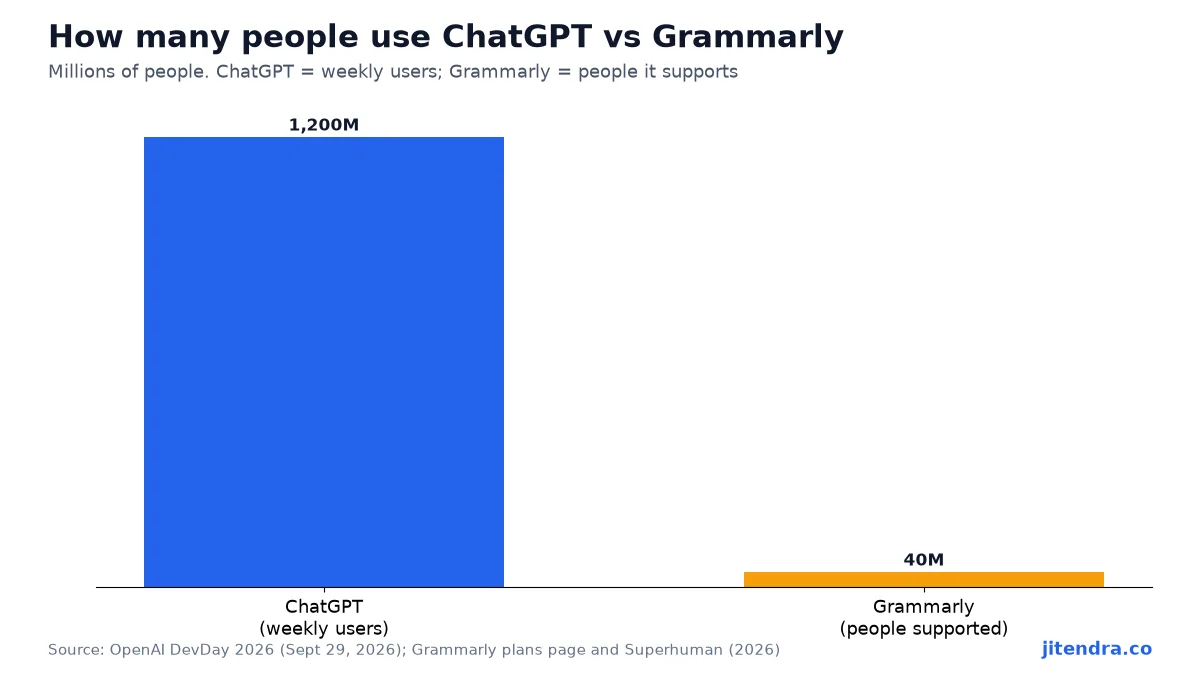
ChatGPT is OpenAI’s AI chatbot. OpenAI said at its DevDay event on September 29, 2026 that ChatGPT reaches 1.2 billion weekly users. It runs on OpenAI’s GPT-6 family of models, and its paid plans add more advanced reasoning, longer memory and bigger usage limits.
For writers, the useful features are:
- Drafting full articles, emails, scripts and social posts
- Rewriting and summarizing text in any tone
- Brainstorming outlines, titles and angles
- Researching with web search and deep research
- Uploading files such as PDFs, documents and spreadsheets
- Projects and custom GPTs to save your instructions and brand voice
- Canvas-style document editing with Pages on Pro and business plans
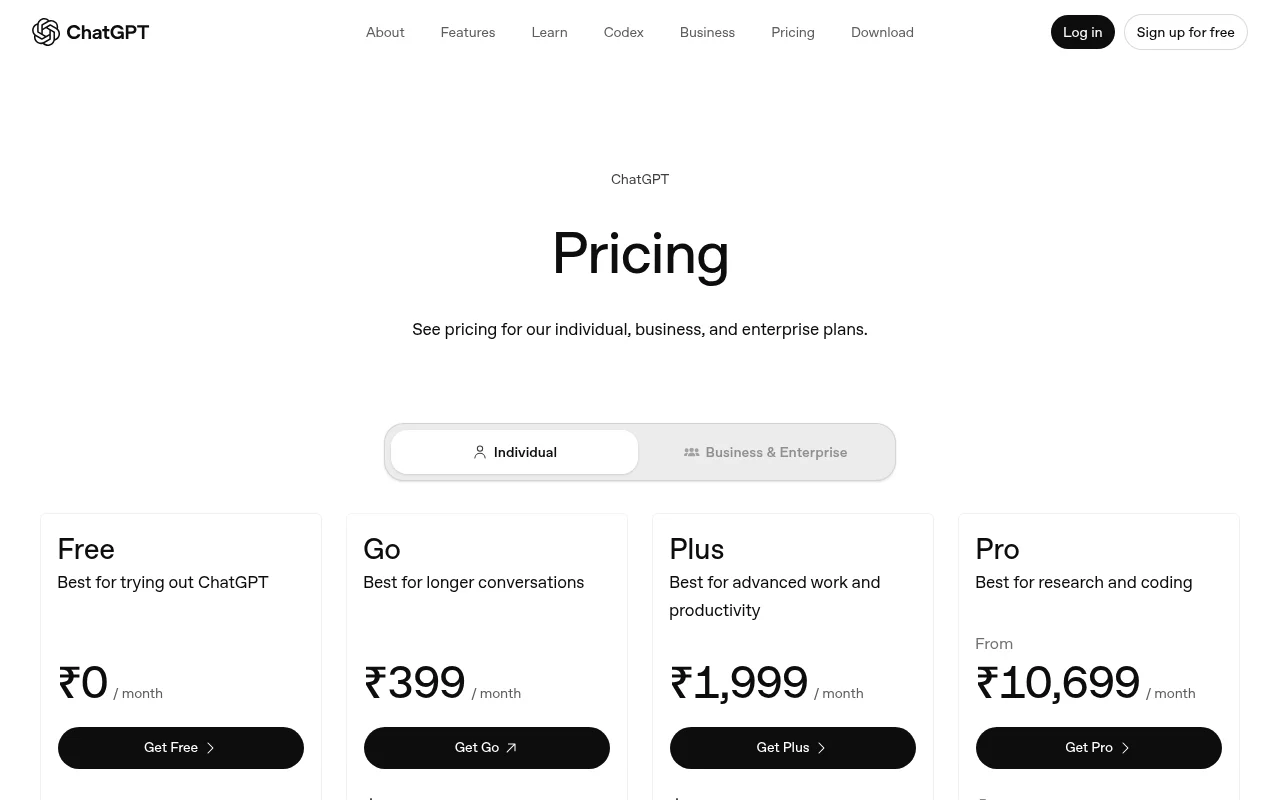
ChatGPT pricing
| Plan | Price (US) | Key limits and features |
|---|---|---|
| Free | $0 | Unlimited everyday text chats with GPT-6, limited uploads, images, voice and deep research |
| Go | $8/month | More messages with tools, more uploads, more image creation, longer memory. May include ads |
| Plus | $20/month | Advanced reasoning with GPT-6, expanded deep research, projects, scheduled tasks and custom GPTs |
| Pro | $100, $200 or $500/month | Three usage tiers, Pro reasoning, maximum deep research and memory |
| Business and Enterprise | Contact OpenAI | Admin controls, SSO, data residency and compliance features |
Sources: ChatGPT pricing page, OpenAI Help Center (“What is ChatGPT Plus?”, “What is ChatGPT Go?”, “About ChatGPT Pro tiers”), OpenAI announcement of ChatGPT Go (January 16, 2026).
OpenAI says Go, Plus and Pro are billed monthly only. There is no annual discount.
India pricing: ChatGPT’s official pricing page, viewed from India in October 2026, shows Go at ₹399 a month, Plus at ₹1,999 a month and Pro from ₹10,699 a month. Go first launched in India in August 2025, with UPI payments.
What Is Grammarly?
Grammarly is an AI writing assistant that has been around since 2009. Its plans page says it is trusted by over 40 million people and 50,000 organizations. It checks your writing as you type in browsers, email, Google Docs, Microsoft Word and many other apps.
For writers, the useful features are:
- Real-time grammar, spelling and punctuation corrections
- Clarity and conciseness suggestions
- Tone detection and one-click tone adjustments
- Full-sentence rewrites
- Generative AI prompts to draft, reply and rewrite
- Plagiarism checker and AI detector
- Authorship, which records how a document was written
- Team style guides, brand tones, snippets and analytics
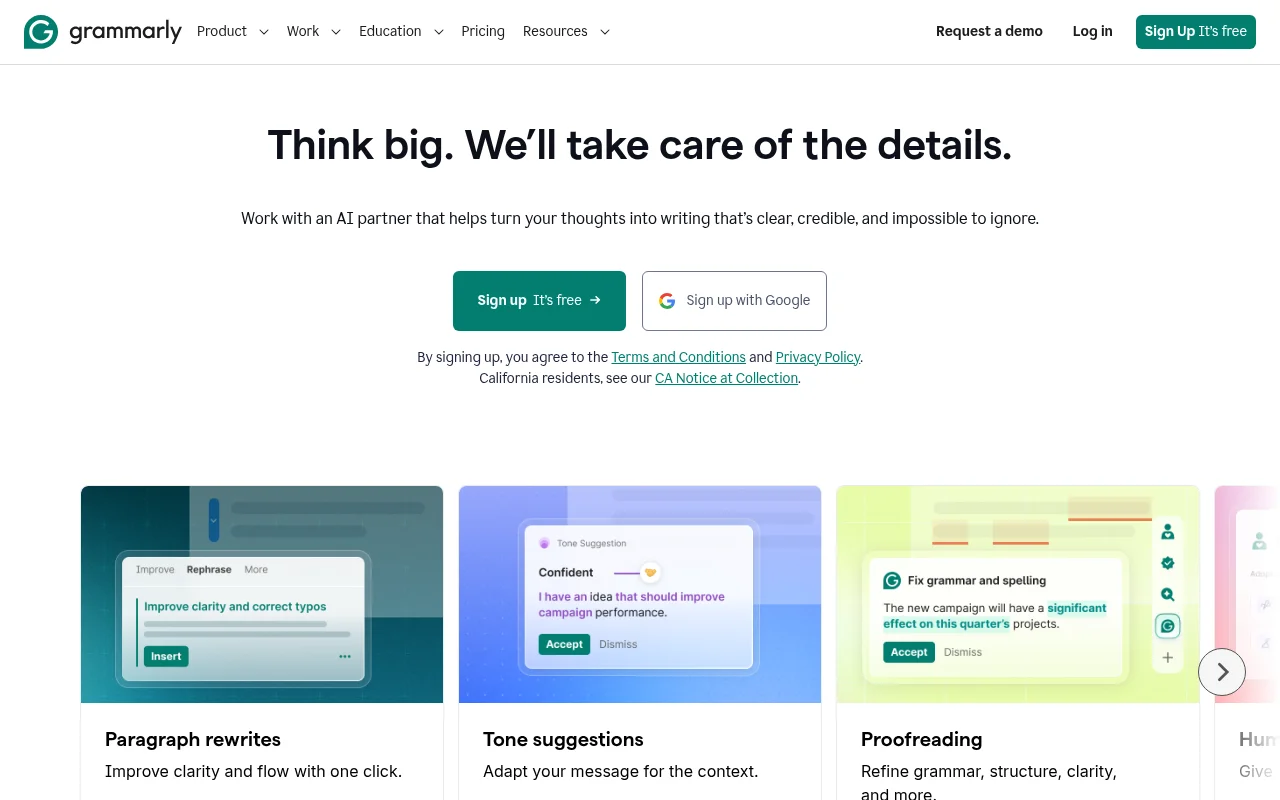
Grammarly pricing
| Plan | Price | Key limits and features |
|---|---|---|
| Free | $0 | Spelling and grammar fixes, tone detection, 100 AI prompts a month |
| Pro | $12 per member/month billed annually ($144/year); $30 billed monthly; $60 per quarter | Full-sentence rewrites, tone adjustments, plagiarism checker, AI detector, 2,000 AI prompts per member a month, up to 149 seats |
| Enterprise | Custom | Unlimited prompts, SSO, data loss prevention, BYOK encryption, custom roles |
| Superhuman Pro (suite) | $12 per member/month billed annually; $15 billed monthly | Superhuman Go, Grammarly and Docs. The annual plan includes Grammarly Pro; on monthly billing, Grammarly Pro is a $15 add-on |
Sources: Grammarly Support (“How much does Grammarly Pro cost?”, “Learn about Grammarly Pro”, “Introducing the Superhuman suite”).
India pricing: Grammarly shows a separate India-only Plus plan at ₹392 per member per month billed annually, or ₹1,000 billed monthly, with 2,000 AI prompts and plagiarism and AI detection. It is paid through local payment methods.
ChatGPT vs Grammarly Free Plans Compared
If you do not want to pay yet, both free plans are useful. Here is what you get without spending anything.
| Free plan feature | ChatGPT Free | Grammarly Free |
|---|---|---|
| Grammar and spelling fixes | Yes, when you paste text and ask | Yes, automatic as you type |
| AI writing and rewriting | Unlimited everyday text chats with GPT-6 | 100 AI prompts a month |
| Tone help | Yes, on request | Shows your writing tone |
| File uploads | Limited | No |
| Image creation | Limited | No |
| Deep research | Limited | No |
| Works inside other apps | Through its own apps and plugins | Browser extension, desktop and mobile apps |
| Plagiarism check | No | No (Pro only) |
Sources: ChatGPT pricing page and Grammarly plans page, October 2026.
For most students and casual writers, using both free plans together covers almost everything: Grammarly catches mistakes as you type, and ChatGPT helps when you are stuck on structure or ideas.
ChatGPT vs Grammarly Pricing Compared
| ChatGPT | Grammarly | |
|---|---|---|
| Free plan | Yes | Yes |
| Cheapest paid plan (US) | Go: $8/month | Pro: $12/month billed annually |
| Most popular paid plan | Plus: $20/month | Pro: $30/month billed monthly |
| Top plan | Pro 500: $500/month | Enterprise: custom |
| Annual discount | No | Yes, about 60% vs monthly |
| India price | Go ₹399, Plus ₹1,999, Pro from ₹10,699 a month | Plus: ₹392/month billed annually, ₹1,000 monthly |
| Team plans | Business and Enterprise | Pro (up to 149 seats) and Enterprise |
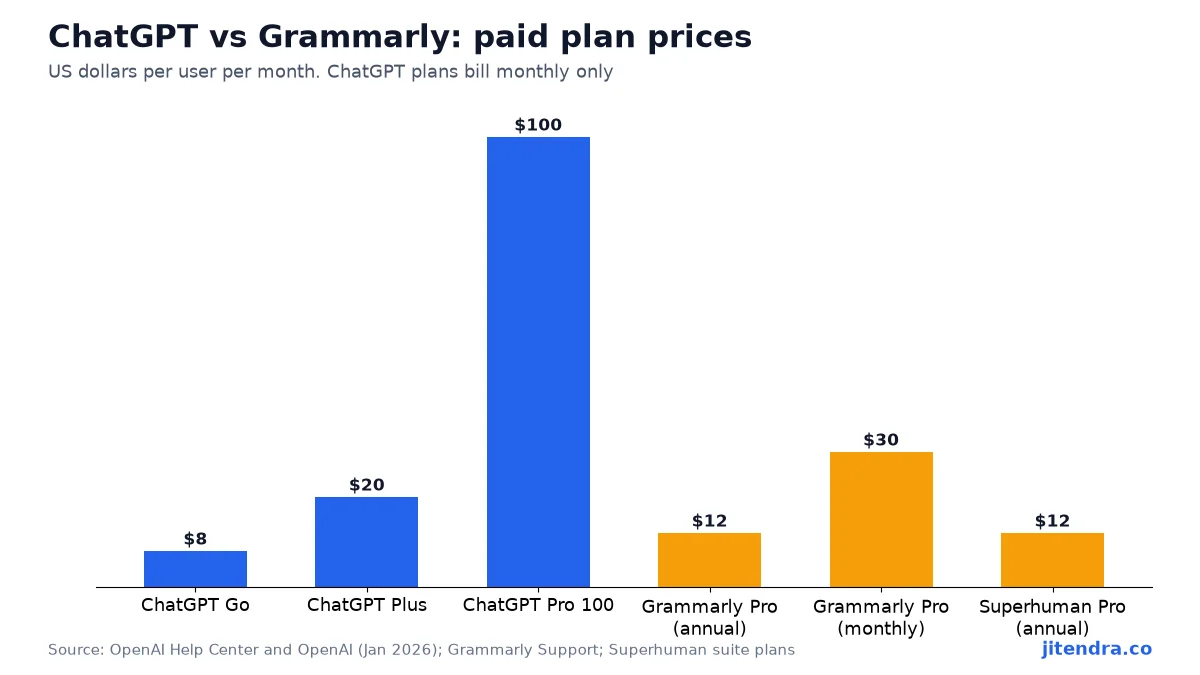
Value for money: If you pay yearly, Grammarly Pro at $12 a month costs less than ChatGPT Plus at $20. But ChatGPT Go at $8 is the cheapest paid plan of the two, and even ChatGPT Free can proofread text well. If your budget allows only one tool, choose based on what you do most: creating new content (ChatGPT) or correcting your own writing (Grammarly).
Is ChatGPT Better Than Grammarly for Grammar Checking?
No. For day-to-day grammar checking, Grammarly is the better tool. Here is why:
- It works where you write. Grammarly underlines mistakes inside Gmail, Google Docs, LinkedIn and Word. With ChatGPT, you have to copy text in, ask for corrections, and paste it back.
- It shows each change. Grammarly explains every suggestion, so you can accept or reject it and learn from it. ChatGPT often rewrites a whole paragraph, and you may not notice what changed.
- It keeps your voice. Grammarly makes the smallest fix needed. ChatGPT tends to “improve” your style, which can make your writing sound generic.
ChatGPT is still a good proofreader when you give it clear instructions. A prompt like “Fix only grammar and spelling errors. Do not change my wording. List each change you made” works well for longer documents.
Which Is Better for Writing Blog Posts and SEO Content?
As an SEO consultant, this is the use case I care about most. My honest view: ChatGPT helps you start, Grammarly helps you finish, and neither replaces your own expertise.
How I would use them for a blog post:
- Research and outline with ChatGPT. Ask it to list the questions people search for, then compare that with real search data. Never trust a list of “keyword volumes” from a chatbot.
- Write the draft yourself, or edit an AI draft heavily. Add your own experience, examples and data. That is what readers and search engines reward.
- Polish with Grammarly. Use it for clarity, tone and consistency, especially if a team of writers works on the same site.
- Check originality. Grammarly Pro’s plagiarism checker catches accidental copying from sources.
Google’s guidance says it rewards helpful, high-quality content however it is produced. What hurts rankings is publishing lots of thin, unedited AI text. My blogging statistics page shows how competitive content has become, and my conversation with Koray Tuğberk on semantic SEO explains why depth and topical coverage matter more than word count.
If you want your content to show up inside AI answers too, listen to my episodes on the new rules of ChatGPT SEO and how to rank inside ChatGPT AI search.
ChatGPT vs Grammarly for Students
For students, the choice is less about features and more about academic integrity.
- ChatGPT is excellent for understanding a topic, getting feedback on an argument or practicing for an exam. Submitting ChatGPT’s writing as your own breaks most schools’ rules.
- Grammarly is generally safer for coursework because it corrects your own writing. It also offers Authorship, which records how your document came together: what you typed, what you pasted and what AI generated. If a teacher ever questions your work, that record is strong evidence.
AI detectors are not perfect. A 2023 Stanford study found that seven detectors wrongly flagged 61.22% of essays written by non-native English speakers as AI-generated. If you write in English as a second language, keeping a record of your writing process matters even more. I cover this in detail in my guide to the best AI detector tools.
ChatGPT vs Grammarly for Work Emails and Business Writing
- Grammarly wins for everyday emails. It catches mistakes before you hit send and suggests a more confident or friendly tone in one click, right inside Gmail or Outlook.
- ChatGPT wins for hard emails. Need to turn a messy set of notes into a clear project update, or write a tricky reply to a client? ChatGPT handles that better because it can reason about the situation.
- For teams, Grammarly Pro adds style guides, brand tones and snippets, so everyone writes the same way. ChatGPT Business adds shared projects, admin controls and company knowledge.
ChatGPT vs Grammarly for Non-Native English Writers
Many of my readers in India write in English as a second language, so this matters a lot.
- Grammarly is built for this. It explains why something is wrong, so you learn the rule instead of just getting a fixed sentence. Its India plans page also highlights a feature to “write fluently in English,” and its tone suggestions help you sound natural in emails to clients abroad.
- ChatGPT is a great tutor. You can ask, “Why is this sentence wrong?” or “Explain the difference between ‘since’ and ‘for’ with examples.” It will explain in simple words and even reply in Hindi or another language if you ask.
The risk with ChatGPT is over-reliance. If it rewrites every sentence, your writing starts to sound like ChatGPT, not like you. That can also trigger AI detectors at school or with clients. Use it to learn, then write in your own voice and let Grammarly polish it.
How to Use ChatGPT as a Grammar Checker
If you only have ChatGPT, you can still get good proofreading results with clear prompts. Here are four I use:
- Minimal edits: “Fix only grammar, spelling and punctuation in the text below. Do not change my wording or style. Then list every change you made.”
- Learn as you go: “Find the grammar mistakes in this paragraph. For each one, explain the rule in one simple sentence.”
- Tone check: “Is this email polite and professional for a client in the US? Suggest small changes only.”
- Consistency check: “Check this article for inconsistent spelling (US vs UK English), capitalization and number formats.”
The key is to tell ChatGPT what not to change. Without that, it tends to rewrite more than you need.
- For ideas and hooks, ChatGPT is faster. Ask for ten opening lines for a LinkedIn post or five caption ideas for a reel, then pick and edit the best one.
- For the final post, Grammarly is safer. It catches typos in the browser before you post, and a public typo on LinkedIn is more embarrassing than one in a private draft.
- For brand voice across a team, Grammarly Pro’s brand tones and style guides keep everyone consistent.
Privacy: ChatGPT vs Grammarly
Both companies offer business plans with stronger privacy controls, but the defaults differ.
- ChatGPT: On the Free, Go, Plus and Pro plans, OpenAI’s pricing page says content is used to train its models, with an opt-out available. Business and Enterprise plans add SSO, data residency options and compliance features.
- Grammarly: Grammarly’s plans page lists enterprise-grade privacy and security, with extra controls on Enterprise such as data loss prevention, BYOK (bring your own key) encryption and custom roles.
My rule: never paste confidential client data, passwords or unreleased financial information into any AI tool unless your company has approved it.
Pros and Cons
ChatGPT
Pros
- Writes full drafts in seconds
- Explains, researches and analyzes files
- One tool for writing, coding, images and voice
- Strong free plan; Go is only $8 a month
Cons
- Not built into every text box you use
- Can rewrite too much and flatten your voice
- Can state wrong facts confidently, so you must check everything
- No annual discount
Grammarly
Pros
- Real-time corrections wherever you type
- Clear explanations for every suggestion
- Plagiarism checker, AI detector and Authorship
- Team style guides and brand tones
- Cheaper than ChatGPT Plus on annual billing
Cons
- Limited for creating long content from scratch
- AI prompt limits (100 a month free, 2,000 on Pro)
- Best features need Pro
- Monthly billing is expensive at $30
Can You Use ChatGPT and Grammarly Together?
Yes, and that is what I recommend for most bloggers and marketers. A simple workflow:
- Use ChatGPT to research, outline and create a rough draft.
- Rewrite the draft in your own words and add your experience.
- Run Grammarly over the final text for grammar, tone and clarity.
- Run Grammarly’s plagiarism check before publishing.
If you want more free tools to round out your setup, see my list of the best free AI apps.
My Verdict: ChatGPT or Grammarly?
- Choose ChatGPT if you create a lot of new content, need research help, or want one AI tool for many jobs.
- Choose Grammarly if most of your work is writing your own emails, reports or essays and you want them clean and professional without leaving your app.
- Use both if writing is your job. The free plans are enough to start, and together they cover the full process from idea to final draft.
For me, Grammarly is the safety net and ChatGPT is the thinking partner. I would not publish anything that has not been read by a human who knows the topic, whichever tool helped write it.
FAQs About ChatGPT vs Grammarly
Is ChatGPT better than Grammarly?
It depends on the task. ChatGPT is better for writing new content, brainstorming and research. Grammarly is better for correcting grammar, spelling and tone as you type. Many writers use both.
Can ChatGPT replace Grammarly?
For occasional proofreading, yes. You can paste text into ChatGPT and ask it to fix errors. But it does not check your writing inside every app in real time, and it tends to rewrite more than needed, so Grammarly is still better for daily use.
Is Grammarly free?
Yes. Grammarly Free fixes spelling and grammar, shows your tone and includes 100 AI prompts a month. Grammarly Pro costs $12 per member per month billed annually or $30 billed monthly.
How much does ChatGPT cost in 2026?
ChatGPT has a free plan. Paid plans are Go at $8 a month, Plus at $20 a month and Pro at $100, $200 or $500 a month in the US. All are billed monthly. In India, the pricing page shows Go at ₹399, Plus at ₹1,999 and Pro from ₹10,699 a month.
Can I use ChatGPT and Grammarly together?
Yes. A common workflow is to research and draft with ChatGPT, rewrite the draft in your own words, then run Grammarly for grammar, tone and plagiarism checks before you publish or submit.
Is Grammarly owned by ChatGPT or OpenAI?
No. Grammarly is part of Superhuman, the company formerly called Grammarly. It is not owned by OpenAI. Superhuman also owns Superhuman Mail, Superhuman Docs and GPTZero.
Which is better for students, ChatGPT or Grammarly?
For coursework, Grammarly is usually safer because it improves your own writing and its Authorship feature records how you wrote. ChatGPT is great for learning and feedback, but submitting its text as your own breaks most schools’ rules.
Is Grammarly worth it if I already pay for ChatGPT Plus?
For many people, yes. ChatGPT Plus is great for drafting and research, but Grammarly checks everything you type in real time across your apps, and Pro adds a plagiarism checker and AI detector. If you mostly write emails and documents, Grammarly Free plus ChatGPT Plus may be enough.
Sources
- OpenAI, ChatGPT pricing page (checked October 2026, India view)
- OpenAI Help Center, “What is ChatGPT Plus?”, “What is ChatGPT Go?” and “About ChatGPT Pro tiers”
- OpenAI, “Introducing ChatGPT Go, now available worldwide” (January 16, 2026)
- OpenAI, “DevDay 2026 Recap” (September 29, 2026)
- TechCrunch and The Indian Express, ChatGPT Go launch in India (August 2025)
- Grammarly plans page (India view, checked October 2026)
- Grammarly Support, “How much does Grammarly Pro cost?” and “Learn about Grammarly Pro”
- Grammarly Support, “Introducing the Superhuman suite”
- Superhuman blog, “GPTZero is Now Part of Superhuman” (September 30, 2026)
- Liang, W. et al., “GPT detectors are biased against non-native English writers,” Patterns (2023)
- Google Search Central, guidance on AI-generated content (February 2023)

Jitendra Vaswani is a globally recognized expert in SEO and AI-driven digital marketing. He has spoken at leading international events and is the founder of Digiexe, a results-driven digital marketing agency; Venuelabs, a platform that helps brands amplify their voice with expert PR and marketing solutions; and AffiliateBooster, an affiliate marketing news site. With over a decade of hands-on experience, Jitendra has empowered countless businesses to thrive online. His bestselling book, Inside A Hustler’s Brain: In Pursuit of Financial Freedom, has sold more than 20,000 copies worldwide, reflecting his influence and dedication to helping digital marketers achieve success. Follow Jitendra on Instagram, X/Twitter, Facebook, and LinkedIn.