
Ranking #1 on Google used to be the goal. In 2026, the real question is: does ChatGPT know who you are? If your brand isn’t the answer, you’re invisible.
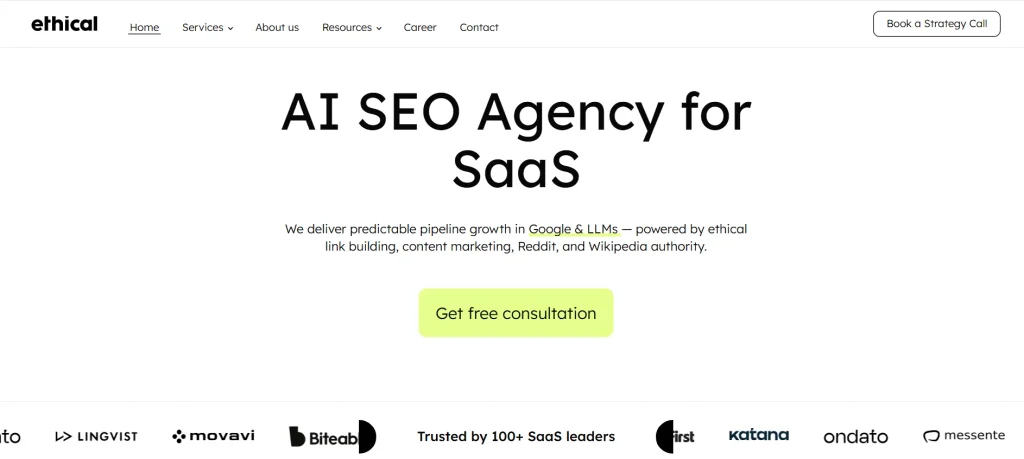
In the latest episode of Inside A Hustler’s Brain, I sat down in person in Delhi with Konstantin Sadekov, CEO and co-founder of Ethical SEO, an Estonia-based SEO agency for SaaS companies.
With 12+ years in B2B sales and marketing and a US MBA, Konstantin helps SaaS brands get cited by ChatGPT, Perplexity and Google AI Overviews.
It was his first time in India (on his way to speak at an SEO event in Shenzhen), and he was generous with frameworks you can apply tomorrow.
Quick Facts: Konstantin Sadekov
| Detail | Info |
|---|---|
| Guest | Konstantin Sadekov |
| Role | CEO and co-founder of Ethical SEO |
| Agency | Estonia-based SEO agency for SaaS companies |
| Experience | 12+ years in B2B sales and marketing, US MBA |
| Helps brands get cited by | ChatGPT, Perplexity, Google AI Overviews |
| Host | Jitendra Vaswani |
| Podcast | Inside A Hustler’s Brain (YouTube) |
In This Episode, We Unpacked
- Why SEO is now brand first: be the answer, not a blue link
- Why traditional SEO still works in smaller local markets
- How vector embeddings and consensus shape your brand entity
- Why listicle guest posts are his #1 tactic right now
- Why you can’t “rank” in LLMs, only appear more often
- How his agency uses AI, and the hallucination that cost him a night’s sleep
- Agentic search: writing content for AI, not just humans
- Bankruptcy at 27, and his advice on money and happiness
Watch the Full Konstantin Sadekov SEO Episode
Konstantin Sadekov on SEO in 2026: Be the Answer, Not a Blue Link
What is brand-first SEO?
In Konstantin Sadekov’s view, it means building a brand so that when people search for a solution, your company is the answer. It replaces the old goal of being one of the top 10 blue links that attract traffic.
Konstantin’s agency works mostly with SaaS and software companies. In the past, the goal was to be one of the top 10 blue links and attract traffic. Now, he says, you have to build a brand, so that when people search for a solution, you are the answer.
“I never say that I’m an SEO. I always say I’m a marketer.” -Konstantin Sadekov
He sees LLMs as “a conversational layer on top of the search index”. To be featured by them, you still need to be in the index, and that’s classic SEO.
Does Traditional SEO Still Work in Smaller Markets?
There’s a twist for smaller markets. Konstantin is from Estonia (population about 1.3 million), and many Google features reach Europe late. For lots of local-language queries there are no AI Overviews at all, so old-school SEO still works well. English-speaking markets like the US and UK need brand-first thinking.
The words he wants every marketer to know: brand searches, brand mentions, co-occurrence, information gain and consensus.
What Is Entity Consensus? Why Your Messaging Must Never Wobble
What is entity consensus?
Konstantin Sadekov explains that your entity (who you are to an AI) is formed by vector embeddings, which are numerical representations of meaning. When someone prompts an LLM, the query is turned into numbers and compared to entities using similarity measures. If your positioning differs across the web, the AI gets confused about who you are.
This was the most technical, and most useful, part of our talk. Konstantin explained that your entity (who you are to an AI) is formed by vector embeddings, numerical representations of meaning. When someone prompts an LLM, the query is turned into numbers and compared to entities using similarity measures.
If your positioning differs across the web, the AI gets confused about who you are. So:
- Keep the same positioning on your website, social media, review platforms and YouTube
- Don’t change your messaging every six months. Old guest posts and PR keep sending the old signal
- Watch the context around your brand mentions in link building, because that context becomes part of your meaning
- Remember editors may charge to update old articles, and a pricey Forbes-style placement is hard to change
He gave a simple example: “We are an AI SEO agency for SaaS businesses.” That story, mission and vision should be consistent everywhere.
If you want another expert view on this shift, read my interview with Liam Quirk on the new rules of ChatGPT SEO.
Why Are Listicle Guest Posts the Konstantin Sadekov SEO Tactic Working Best Right Now?
What is a listicle guest post?
It is a guest post in list format, such as “top tools” or “best solutions”, published on another website. Konstantin Sadekov says these posts give you a backlink, can send customers if they rank for commercial terms, and become training data for LLMs.
Konstantin’s agency works with enterprise clients, including one that raised a $2 billion funding round, and does link building for one of the top two SEO tools. Serious brands won’t use exact-match-domain tricks, he says, but listicle guest posts work brilliantly because they help in three ways:
- You get a backlink
- If the post ranks for a commercial term, it sends potential customers
- It becomes training data for LLMs
Listicles on your own site can work too, but be careful. Overly self-promotional lists can look like abuse and also feed training data to competitors.
He shared a story from his beauty business: one guest post in a big newspaper was live for a day before going into the archive. Because it stayed indexed, it now shows up when people ask for the top solutions in their country.
Can You Rank in ChatGPT? Appear More Often, Don’t Chase Position One
What is the right metric for LLM visibility?
According to Konstantin Sadekov, it is how often your brand appears across many prompts, not a single “rank”. Personalisation and chat history make answers vary from person to person.
Because of personalisation and chat history, LLM answers vary from person to person. Konstantin referenced research showing that even the same person prompting the same thing 10 times gets different results.
So stop chasing “position one” in ChatGPT. The metric that matters is how often your brand appears across many prompts.
For a different angle on getting cited by AI search, check out Anirudh Agarwal of GetMentions.ai.
How Does Ethical SEO Use AI? (And Where It Fails)
Konstantin uses AI “as much as possible”, including Claude Code, MCP connections that pull data from tools like Ahrefs and Semrush, and even a connection to his team’s time tracker for performance reporting. He’s part of the Authority Hackers community, which he recommended for learning.
But he’s blunt about hallucinations. While building an ROI forecast for a client, he asked an LLM where a number came from. Its answer, roughly: I came up with it because it sounds good. He worked until 4 a.m. redoing it.
“It’s an assistant. And it quite often comes up with ridiculous things.” -Konstantin Sadekov
What Is Agentic Search? Write for AI, Not Just Humans
What is agentic search?
Konstantin Sadekov describes it as a stage where a personal AI assistant does the shopping for you. You say you’re running a marathon, it shows a couple of shoes, you pick one, and it goes to the website, buys them and arranges delivery. Content must therefore be easy for AI to extract.
Konstantin believes search is moving into an agentic era. That means content needs to be easy for AI to extract, sometimes more important than UX or CRO. His practical tips:
- Information gain: add new data or a new angle, or there’s no reason for AI to cite you
- Make retrieval cheap: AI answers cost far more to serve than 10 blue links, so use clear structure and tables
- Separate paragraphs for separate topics in product descriptions
- Cover query funnels: answer the follow-up questions AI predicts (“Can I run in these when it rains?”)
He also urged businesses not to depend on one channel. A single Google update can wipe out an affiliate business overnight. I shared that my own affiliate sites now drive traffic with Google Ads and Bing Ads too.
A Reality Check on the AI Hype
Interestingly, Konstantin’s last job as an employee was at an AI and machine learning development company, and he once gave a seminar to Uzbekistan’s government on AI in the public sector.
Even so, he’s sceptical of some of the hype. He wonders how much of the AGI talk is linked to fundraising and IPO plans, noting that a $20 subscription can cost far more than that to run. Writing an article is easy for AI now. Finding unique data and creative angles is the hard part.
His business strategy borrows from Jeff Bezos: plan around what won’t change. That’s why he’s moving toward combinations of physical businesses and technology, including his beauty business.
For more on keeping an agency winning in this era, read Adam Chronister on SEO agency success in the LLM world.
Bankruptcy at 27, Hugs and Happiness
When I asked about the first time he felt he’d “made it,” Konstantin shared something few people talk about publicly. About 10 years ago, at 27, his first business went bankrupt. It went through the courts and “almost broke” him.
His dad helped him through it. He went to the US for his master’s, came back to marketing and SEO, and slowly rebuilt his confidence with the agency he runs today.
His friends from school stuck with him through it all, and he values people who care about “who you are,” not money.
- Best advice: a prospect stopped his sales pitch and told him, “It’s not about me.” Every presentation should be about the other person
- Money and happiness: “Happiness is in the moment.” Money is a tool, not the goal
- Recent highlight: a four-day silent, phone-free Art of Living retreat where he jumped in rain puddles like a child
- How to make the world better: “Hug each other more often.”
Key Takeaways From the Konstantin Sadekov SEO Interview
- Be the answer: build a brand, not just rankings
- Smaller local markets still reward traditional SEO
- Keep your positioning identical everywhere to build entity consensus
- Listicle guest posts give links, traffic and LLM training data
- Measure how often you appear in AI answers, not a single “rank”
- Add information gain and structure content so AI can extract it cheaply
- Use AI heavily, but verify every number
- Don’t depend on one channel, because one Google update can wipe out a business
- Plan around what won’t change, a strategy he borrows from Jeff Bezos
FAQs About Konstantin Sadekov and SEO
Konstantin Sadekov is the CEO and co-founder of Ethical SEO, an Estonia-based SEO agency for SaaS companies. He has 12+ years in B2B sales and marketing and a US MBA.
His approach is brand first: build a brand so that when people search for a solution, you are the answer rather than one of ten blue links. You still need to be in the search index, so classic SEO matters, but brand searches, brand mentions and consensus now drive visibility.
Entity consensus means your brand is described the same way across your website, social media, review sites, guest posts and PR. Konstantin explains that AI forms your entity through vector embeddings, so inconsistent positioning confuses the system about who you are and what you do.
Listicle guest posts earn a backlink, can drive potential customers if they rank for commercial terms, and become training data that LLMs may cite. He warns that overly self-promotional listicles on your own site can look like abuse and may also feed training data to competitors.
Konstantin says not really. Because of personalisation and chat history, answers vary by person, and even the same person prompting the same thing 10 times gets different results. The goal is to appear as often as possible across many relevant prompts, not to hold a single position.
Information gain means adding new data, a new angle or new structure that doesn’t already exist online. Konstantin says that without it, an AI system has little reason to cite your content. Finding unique data and creative angles is the hard part now, since AI makes writing easy.
Agentic search is where a personal AI assistant researches and buys for you. Konstantin’s example: you tell it you’re running a marathon, it shows a couple of shoes, you pick one, and it buys and arranges delivery. Content therefore needs clear structure, tables and answers to follow-up questions.
He uses AI as much as possible, including Claude Code and MCP connections to Ahrefs, Semrush and his team’s time tracker. He also warns about hallucinations: an LLM admitted it made up a number for a client ROI forecast, and he redid the work until 4 a.m. He treats AI as an assistant.
Final Thoughts on the Konstantin Sadekov SEO Playbook
The Konstantin Sadekov SEO playbook comes down to this: be the answer. Build a brand, keep your messaging consistent everywhere, earn mentions through listicle guest posts, add information gain, and structure content so AI can use it. Use AI heavily, but verify every number.
If this conversation with Konstantin Sadekov gave you even one idea, share it with a friend who needs it today. One conversation can change someone’s life.
About Inside A Hustler’s Brain: Inside A Hustler’s Brain is an interview podcast on YouTube hosted by Jitendra Vaswani, featuring founders, marketers and creators sharing their journeys, strategies and lessons.
Subscribe & Follow Jitendra Vaswani
Subscribe to Inside A Hustler’s Brain on YouTube and follow Jitendra Vaswani on Facebook, LinkedIn, Twitter and Instagram.
More Inside A Hustler’s Brain Interviews You’ll Love
- Google’s AI Mode Changed SEO Forever : My Chat With Jes Scholz
- $0 to $13M: How Lawrence Hitches Scaled Studio Hawk With AI SEO
- Cindy Krum on Mobile SEO + AI Mode The Secret Playbook
- This ChatGPT SEO Hack Beats 99% of SEOs ft. Amit Tiwari
If this conversation with Konstantin Sadekov gave you even one idea, share it with a friend who needs it today. One conversation can change someone’s life. 💬
Subscribe & Follow Jitendra Vaswani Everywhere
Subscribe to Inside A Hustler’s Brain on YouTube and Follow Jitendra Vaswani on Facebook, LinkedIn, Twitter, Instagram, everywhere.

Jitendra Vaswani is a well-known figure in the SEO and affiliate marketing communities. He is regarded as a legitimate authority due to his deep knowledge and game-changing contributions to the field. He is the founder of Digiexe.com, a digital marketing agency, and VenueLabs.com, a full-service PR marketing agency. His strategic acquisition of AffiliateBooster.com has further solidified his status as a leader, bringing forth groundbreaking solutions that are revolutionizing affiliate marketing. Follow Jitendra on Instagram, Facebook, and LinkedIn