
Helene Jelenc is the Director of Innovation at Flow Agency and a trained anthropologist based in Slovenia. In this Inside A Hustler’s Brain episode, the Helene Jelenc AI SEO playbook covers brand alignment for AI search, her daily Claude workflow and AI stack, how she fact-checks AI content, and what AI means for jobs and AI literacy.
Can a degree in anthropology make you a better SEO in the age of AI? That’s the big idea behind the Helene Jelenc AI SEO playbook, and after this conversation, I’m convinced the answer is yes.
I sat down with Helene to talk about how she studies the humans behind the keywords, how she uses Claude every day, and why brand alignment is her favourite way to show up in AI search.
It was also Helene’s very first trip to India, and she loved everything from the food (a little spicy, but she enjoyed it) to how friendly people were.
Quick Facts: Helene Jelenc
| Detail | Info |
|---|---|
| Guest | Helene Jelenc |
| Role | Director of Innovation at Flow Agency |
| Background | Anthropologist (master’s degree in anthropology from New Mexico) |
| Based in | Slovenia |
| Also | Co-founder of Wallflower Studios |
| Focus | B2B SaaS brands |
| Speaks at | SEO On Stage, SERP Conf Vienna |
| Favourite AI tool | Claude (she uses Claude Code every day) |
| Host | Jitendra Vaswani |
| Podcast | Inside A Hustler’s Brain (YouTube) |
Watch the Full Helene Jelenc ‘AI SEO’ Episode
In This Episode, We Unpacked
- How a travel blog pulled her into SEO
- Why anthropology is her secret weapon for search strategy and conference talks
- Her take on whether AI is a myth or a real shift
- What AI really means for jobs, writers and agencies
- Her favourite tactic for AI visibility: brand alignment plus better product pages
- Her actual monthly AI stack and spend (spoiler: it’s lower than you’d think)
- How she fact-checks AI content with a knowledge layer and QA skills
- The dark side of AI: addiction, AI psychosis and why we need AI literacy
- Her best advice: treat AI like an intern
Who Is Helene Jelenc, Director of Innovation at Flow Agency?
Helene is an American SEO who moved abroad and now lives in Slovenia. She leads search strategy at Flow Agency, where she has worked for four years, starting as an SEO specialist, growing into Director of SEO and now serving as Director of Innovation.
She’s also the co-founder of Wallflower Studios, publishes original research on how brands get found across AI search, and speaks at SEO events such as SEO On Stage and SERP Conf Vienna. Her focus is B2B SaaS brands.
Connect with Helene on LinkedIn.
How Did a Travel Blog Lead Helene Jelenc to Flow Agency?
Helene’s SEO story starts in a way many of us will recognise: a travel blog. After moving abroad she was documenting everything, taking pictures and writing for friends and family. Then came the big question: I’m putting a lot of work into this, so how do I get other people to read it?
That question led her to SEO, and she was hooked. She couldn’t stop reading and learning. Joining the Women in Tech SEO community was, in her words, what opened up all the doors. Companies started giving her opportunities to write content and consult on SEO, and she worked as a freelancer for around 10 years.
Then she spotted a job posting from Flow Agency’s founder that felt different. She decided to try something new, applied, and has been climbing the ladder there ever since.
My own path was much more accidental. A friend told me about SEO right after college in 2012, I searched it on Google, went for an interview and got the job. I hate coding, so SEO was a game changer for me.
How Does Anthropology Improve SEO and Search Strategy?
What is anthropology-driven SEO?
In Helene Jelenc’s approach, it means studying the humans behind the keywords instead of only looking at search volume and keyword difficulty. She asks why, how, where and who is searching. This qualitative lens comes from her policy research background.
Here’s the part that makes Helene stand out. She holds a master’s degree in anthropology from New Mexico, grew up working in libraries as a researcher, and is deeply passionate about culture.
During her bachelor’s, she interned in Washington, DC doing public policy research on a big project studying women displaced after Hurricane Katrina. Her job was to transcribe interviews and code them for sentiment analysis, manually, with old-school software.
“All these things that now we use AI to do in 2 seconds.”
– Helene Jelenc, on manually coding interviews for sentiment analysis
She didn’t realise back then how closely that work connects to what she does today. For her, SEO isn’t just about search volume and keyword difficulty. It’s about the questions behind the numbers:
- Why are people searching this?
- How are they searching it?
- Where are they searching?
- Who are they, and are they the right person?
That qualitative lens is exactly what she brought from policy research into SEO, and it worked because not many people were doing it. If you love the culture angle, my chat with Kira Khoroshilova on international SEO and culture pairs perfectly with this one.
How Does Helene Jelenc Land Spots on Big SEO Stages?
I asked how she cracks major SEO conferences when, honestly, everyone is in SEO now. Her answer: lean into your specialty.
Once she started pitching talks that combined anthropology with SEO, organisers saw something different from the pile of submissions on the same topics, and people kept asking her back. She simply put herself out there and kept applying.
Her point applies to everyone: most of us didn’t study SEO, and many didn’t even study marketing. Whatever you’re passionate about, bring it to SEO, because it gives you a different edge.
Is AI a Myth? Helene Jelenc’s Take on the AI Revolution
Helene calls herself definitely a fan of AI. She started early, back when the first ChatGPT could maybe help with titles and meta descriptions, and even that was “kind of iffy.” But she sensed something was about to happen and didn’t want to miss out.
So she went back to research mode, reading academic papers on how LLMs work and what the people building these systems were publishing. As AI improved, she started playing, building and “kind of accidentally vibe coding.”
Is AI a myth that will fade away? Not a chance. She compared it to the early internet, when friends and family didn’t get why she was in chat rooms or building websites with HTML. We’re hitting a new layer of tech now.
She’s also realistic. AI can feel like a gold rush, some people have bad intentions, and she thinks there’s a bit of overhype as AI companies race to release new models. Her view (and she admits she could be wrong) is that we’re close to a plateau, with each update having a smaller impact than the last.
Will AI Take Our Jobs? Why Humans Still Matter in SEO and Content
I shared that many AI CEOs claim AI will do most jobs within two or three years, and that Elon Musk talks about humans not needing to work. Helene’s response: that’s very aggressive. She doesn’t think the system or society is ready for it.
She does expect challenges around regulation, policy, the economy and jobs. She pointed to the Industrial Revolution and to where she’s from, where coal mining used to be the industry until the mines closed and people had to find new work. Shifts are normal. The scale is what can feel scary.
Her best evidence comes from content. Companies fired writers to save money, and now many are coming back, afraid to publish AI content and needing people to humanize it.
You’re still selling to humans. You’re not selling to a robot.
-Helene Jelenc
Her framework from her conference talk: you’re writing for AI, Google and humans, not just one of them. Some agency roles will disappear and some work will be fully automated, but that frees us to do better work: original research, creative campaigns, video and real strategy.
For a sales leader’s view on the same debate, read my interview on how AI automation is changing traditional jobs with Siddharth Ajmera.
What Is the Great Tech Consolidation, and Why Do Surprise API Bills Matter?
What is the great tech consolidation?
It is Helene Jelenc’s name for what has been happening in tech even before AI: companies buying competitors and getting bigger and bigger.
Helene has a name for what’s been happening in tech even before AI: the great tech consolidation, with companies buying competitors and getting bigger and bigger.
Now some well-known tools are falling off the map because their product was simple enough for AI to build in one day. Her question for them: what were you actually offering me?
On the flip side, people building their own tools tell her they’re connecting API after API and paying thousands every month. She thinks people who understand AI builds will be needed to help teams avoid huge token and API bills. That, she says, is the next hurdle.
The Helene Jelenc AI SEO Strategy: Brand Alignment First
What is brand alignment?
Brand alignment means saying the same thing about who you are and who you serve everywhere your brand appears: your website, socials, reviews and anywhere else you’re discussed. It is Helene Jelenc’s favourite strategy for showing up in Google AI Overviews and LLMs. Straying into different wording confuses AI about what you do and who you serve.
So how can brands show up in Google AI Overviews and LLMs? Helene’s favourite strategy is one she admits everyone thinks is a bit boring: brand alignment.
That means saying the same thing about who you are and who you serve everywhere your brand appears: your website, socials, reviews and anywhere else you’re discussed. The moment you start straying and playing with different wording, you start confusing AI about what you do and who you serve.
Her order of operations:
- Lock down your boilerplate, your category and exactly who you sell to
- Fix your product pages. Describe the product, features, use cases and solutions clearly
- Don’t overdo it. Nobody wants 2,000 words on a product page, but 200 words won’t do when you want someone to spend around $100,000 a year
She’s seen a lot of success with this, because those product pages then get pulled into AI answers. Listicles still matter when buyers are shortlisting software, but she asks: don’t you want your own product page served in AI, rather than a random listicle someone else wrote about your brand that might not even be correct?
Want more tactics for AI visibility? Check out how to rank inside ChatGPT and AI search with Anirudh Agarwal.
How Does Helene Jelenc Use AI for SEO? Her AI Stack and Monthly Spend
What is Helene Jelenc’s AI stack?
It is the set of tools she uses for AI work: Claude (personal and work), Railway for hosting, SerpAPI, and SEO tools like Ahrefs connected to Claude through MCP. She says her spend is lower than most people would expect.
I expected a huge number here. Instead, Helene said she doesn’t actually spend that much.
- Personal Claude (Max plan), about €100 a month. She used it to build a private app for her and her husband to track things around the house, like whether the dog was let out, plus a shopping list
- Claude at work on a similar account
- Railway (about $10 a month, as her colleague shared in a talk) for hosting projects
- SerpAPI with minimal spend, because it’s a generous tool
- Ahrefs and other SEO tools the agency already pays for, connected to Claude through MCP
One warning: those MCP connections make it very easy to run through all your API credits. That’s why she builds specific Claude skills for tasks like keyword research and keyword clustering that don’t blast through credits.
Her next project? Testing Chinese AI models. From the samples she’s seen, they write more human-sounding content than ChatGPT and Claude, and some are open source, so costs can be quite limited if you host them yourself. 🇨🇳 She plans to share the results on LinkedIn.
How Does Helene Jelenc Fact-Check AI Content? Knowledge Layers + QA
What is a knowledge layer?
In Helene Jelenc’s workflow, a knowledge layer is a set of Markdown documents, CSV files and a YAML file that organise everything about a client: the product, proof points, industries, what they want to say and what they never want to say. The AI can access the right piece at the right moment of the prompt.
This was one of my favourite parts of the episode. Helene has Claude skills that create, update and repurpose content, and the quality comes from what sits behind them.
1. A Knowledge Layer for Every Client
She builds a deep set of Markdown documents, CSV files and a YAML file that organise everything about a client: the product, proof points, industries, what they want to say and what they never want to say. The AI can access the right piece at the right moment of the prompt.
Compare that with dumping a PDF in and asking AI to read 100 pages before giving you an output. As she put it, that’s going to be really bad.
2. Layers of automated QA
What is the search quality grader skill?
It is a Claude skill Helene Jelenc built on Google’s Search Quality Rater Guidelines. You paste in a piece of content, and it checks it, flags unsourced or uncited claims, and tells you whether it meets quality expectations.
She built a “search quality grader” skill based on Google’s Search Quality Rater Guidelines. Paste in a piece of content and it checks it, flags unsourced or uncited claims, and tells you whether the content meets quality expectations. She also keeps her own QA checklist.
3. A human in the loop
“I can’t ask people to read something that I won’t read myself.“
-Helene Jelenc
If you care about content quality and searcher satisfaction, you’ll also enjoy my chat with Rafid Nassir of The Search Initiative on AI content.
Helene Jelenc’s #1 AI Advice: Treat AI Like an Intern
It is Helene Jelenc’s main tip for anyone nervous about AI. Treat it like an intern and be as specific as you would be with a new team member. She also reminds us that AI, like SEO, is forgiving.
For anyone still scared of AI, Helene says there’s not really anything to be scared about. AI is like SEO in one beautiful way: it’s forgiving.
An Instagram post is done once it’s live. A blog post can be updated and improved again and again. AI is the same. You can break things, mess up, try again, run experiments and have fun.
Her caution: copying what everyone else does or chasing trends can be a slippery slope. Lean on your own expertise.
“If you’re using AI for work, treat it like an intern.”
-Helene Jelenc
Be as specific as you would be when explaining something to a new person for the first time. One of her favourite hacks: she turns on voice dictation with Wispr Flow, walks around the house for about 30 minutes talking through her ideas, and then asks AI to help organise them or turn them into an outline.
What Is the Dark Side of AI? Addiction, AI Psychosis and AI Literacy
What is AI psychosis?
In this conversation, Helene Jelenc uses the term for cases where people have had serious mental breakdowns while an AI kept encouraging bad behaviour and praising them. Her proposed fix is AI literacy, similar to media literacy, so people can tell what’s real and what’s AI.
I admitted that I’m overly dependent on AI for research these days. Helene compared it to when Google first came out and suddenly finding content was incredibly easy. But she also pointed to darker sides, including AI psychosis.
The real danger she sees isn’t in the software space. It’s everyday people using AI for personal reasons. Some lonely people build relationships with AI models and call them their partner. In some cases people have had serious mental breakdowns while the AI kept encouraging bad behaviour and praising them. AI loves to tell you you’re great and to keep going, and sometimes that’s not good.
Her fix: AI literacy, just like media literacy, because many people can’t tell what’s real and what’s AI. She also finds some AI security risks a little scary, even while she’s excited to use AI at work.
Her safety advice for anyone online is simple: be a little skeptical. You don’t need to believe everything you see and hear. Ask yourself: Is that true? Should I double-check that? Does it seem a little too good?
Helene’s Favourite AI Tool
No surprise here: Claude. She’s in Claude Code every day and loves it.
For another strong female voice in SEO who’s speaking about AI search, don’t miss Cindy Krum on mobile SEO and AI Mode.
Key Takeaways From the Helene Jelenc AI SEO Interview
- Your background is your edge. Helene turned anthropology into a unique SEO and speaking angle
- Look behind the numbers. Ask why, how, where and who, not just search volume
- Brand alignment first. Say the same thing about who you are and who you serve everywhere
- Product pages matter for AI search. Clear features, use cases and solutions get pulled into AI answers
- Write for AI, Google and humans, because you’re still selling to humans
- Give AI a knowledge layer instead of dumping 100-page PDFs
- Build QA into your AI workflow and keep a human in the loop
- Watch your API credits. Purpose-built skills keep costs low
- Treat AI like an intern and stay a little skeptical
FAQs About Helene Jelenc and AI SEO
Helene Jelenc is an American SEO based in Slovenia and the Director of Innovation (previously Director of SEO) at Flow Agency, where she focuses on B2B SaaS search strategy. She holds a master's degree in anthropology, co-founded Wallflower Studios and speaks at SEO conferences.
She started a travel blog after moving abroad and learned SEO to get more readers. Joining the Women in Tech SEO community opened doors to content and consulting work, and after about 10 years of freelancing she joined Flow Agency.
Brand alignment: describing your brand, category and audience consistently across your website, socials, reviews and anywhere you're discussed, then improving product pages so AI can clearly understand and surface them.
She uses a client knowledge layer (Markdown docs, CSV files and a YAML file), a search quality grader skill based on Google's Search Quality Rater Guidelines that flags unsourced claims, her own QA checklist and a human review.
Claude is her favourite, and she uses Claude Code every day. Her stack also includes Railway for hosting, SerpAPI and Ahrefs connected to Claude through MCP.
AI is forgiving like SEO, so experiment, make mistakes and try again. When using AI for work, treat it like an intern and give it specific, detailed instructions.
You can watch it on the Inside A Hustler's Brain YouTube channel by Jitendra Vaswani, or in the video embedded above.
Final Thoughts on the Helene Jelenc AI SEO Playbook
The Helene Jelenc AI SEO playbook comes down to a simple idea- Stay Human. Study the people behind the searches, keep your brand message consistent everywhere, build quality checks into your AI workflow, and treat AI like an intern. Whatever you’re passionate about, bring it to SEO, because that is your edge.
If you enjoyed this episode, share it with one SEO friend who’s still deciding whether AI is a myth. Drop your biggest AI SEO question in the YouTube comments.
More Inside A Hustler’s Brain Interviews You’ll Love
- Google’s AI Mode Changed SEO Forever: My Chat With Jes Scholz
- $0 to $13M: How Lawrence Hitches Scaled Studio Hawk With AI SEO
- Liam Quirk on the New Rules of ChatGPT SEO
- Alan Cladx: 500,000+ Websites, Indexing & LLM SEO
- Annie Ma on Overcoming Loss, Regrets & Finding Success in SEO
If this conversation changed how you think about AI and SEO, share it with one marketer friend who needs it.
Drop your #1 AI SEO question in the YouTube comments.
About Inside A Hustler’s Brain: Inside A Hustler’s Brain is an interview podcast on YouTube hosted by Jitendra Vaswani, featuring founders, marketers and creators sharing their journeys, strategies and lessons.
Subscribe & Follow Jitendra Vaswani Everywhere
Subscribe to Inside A Hustler’s Brain on YouTube and Follow Jitendra Vaswani on Facebook, LinkedIn, Twitter, Instagram, everywhere.
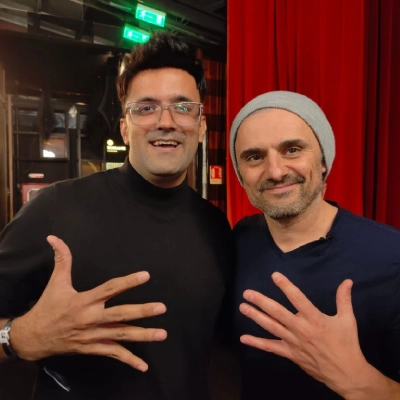
Jitendra Vaswani is a well-known figure in the SEO and affiliate marketing communities. He is regarded as a legitimate authority due to his deep knowledge and game-changing contributions to the field. He is the founder of Digiexe.com, a digital marketing agency, and VenueLabs.com, a full-service PR marketing agency. His strategic acquisition of AffiliateBooster.com has further solidified his status as a leader, bringing forth groundbreaking solutions that are revolutionizing affiliate marketing. Follow Jitendra on Instagram, Facebook, and LinkedIn