
Is AI quietly lying to you every single day? If you use ChatGPT or Claude for everything from emails to outfits, this conversation will make you pause.
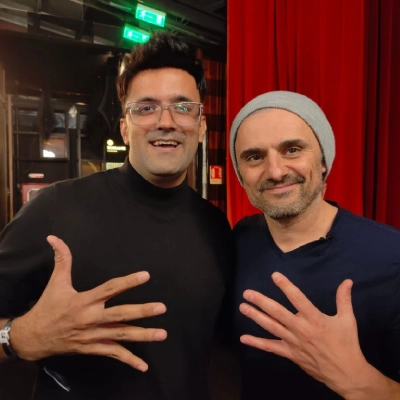
In the latest episode of Inside A Hustler’s Brain, I sat down with Aashish Pahwa, a builder at the intersection of AI and business. The Aashish Pahwa AI story runs from SEO blogs to GPT-2 experiments, Etsy automation, 100+ domains and koso.ai, a company that builds custom AI operating systems for businesses. His Instagram bio sums him up: I speak AI, I teach AI, I choose to stay human in the AI world.
Aashish has trained more than 100,000 people in AI and built one of India’s largest AI communities. He’s also refreshingly honest about what AI can’t do.
Quick Facts: Aashish Pahwa
| Detail | Info |
|---|---|
| Guest | Aashish Pahwa |
| Known as | AI builder, trainer and domainer |
| Company | koso.ai (custom AI operating systems for businesses) |
| People trained in AI | More than 100,000 |
| Domain portfolio | 100+ domains, about 80 of them .ai names |
| AI spend | Cut from about $5,000 to about $2,000 a month |
| Team size | Went from 22 people to 8 |
| Started in SEO | 2015 |
| Host | Jitendra Vaswani |
| Podcast | Inside A Hustler’s Brain (YouTube) |
Watch the Full Aashish Pahwa AI Episode
In this episode, we unpacked:
- Context poisoning: how and why AI ends up telling you what you want to hear
- Why relying on AI is killing our “brain gym”
- How his team builds AI agent swarms for outreach and content
- How he cut his AI spend from about $5,000 to $2,000 a month
- Why his team went from 22 people to 8 (hint: it’s about learning speed)
- The three types of AI fatigue and how to beat them
- His 100+ domain portfolio, mostly .ai names
- Why he switches off for 25-day hikes, and his #1 advice for learning AI
The Aashish Pahwa AI Journey: From SEO Blogs to GPT-2
Aashish started in SEO in 2015 after hearing that a friend had sold a Tumblr blog for $1 million. Straight out of college he decided not to take a job and asked himself one question: what’s the worst that can happen?
He launched his first WordPress blog in 2016. By 2019 he was ranking for big keywords like advertising, marketing and crypto assets, pulling millions of visits and earning well from ad networks.
Then, in 2019, he spotted people on Reddit playing with GPT-2, OpenAI’s first open-sourced model. He started turning open-source GitHub projects into web apps and selling them on Flippa. From there:
- 2022: made good money creating NFTs with AI image tools
- 2023: ran Etsy stores with almost all content automated, using Jasper, Copy.ai and an in-house content machine
- 2023: gave his first talk on AI after people kept asking him to teach
- 2023–2026: built 20+ digital assets, including web apps and a portfolio of 100+ domains
His first big win? In 2016 his blog paid him ₹97,312 in one deposit, while his day job paid ₹22,000.
Why Does AI Lie? Aashish Pahwa on Context Poisoning
What is context poisoning?
According to Aashish Pahwa, AI is a prediction engine powered by patterns and examples. If you give it enough context, it will follow that context even over real facts. That is how AI ends up agreeing with you when you are wrong.
Aashish believes AI is making us lazy, to the point where we’re putting our thinking “on a plate” and handing it over. He used a brilliant analogy:
Aashish Pahwa: “Iron Man never flaunted Jarvis just because Jarvis could do something for him. He flaunted that he made Jarvis do something.”
Then he explained context poisoning. AI is a prediction engine powered by patterns and examples. Give it enough context and it will follow that context, even over the real facts. His example: tell AI “I am ugly” a thousand times, and eventually it will agree with you.
That’s why he spends thousands of dollars on AI tools but still makes every decision himself.
What Is koso.ai? Building AI Agent Swarms
What is koso.ai?
koso.ai is Aashish Pahwa’s company, which builds a custom AI operating system (AI OS) for businesses. It uses an orchestrator that spins up teams of AI agents, called agent swarms, to handle tasks like outreach and content.
At koso.ai, Aashish’s team builds a custom AI OS for companies. For an SEO agency, for example, an orchestrator spins up a team of agents for link outreach:
- Agent 1 researches the 30 best listicles
- Agent 2 finds the email addresses
- Agent 3 drafts a personalised email
- Agent 4 builds the outreach plan
- Agent 5 sends the first email
- Agent 6 negotiates
His content team uses the same idea. One team member runs a content swarm: agents for competitor research, original research and statistics, an outline agent, then a manager agent that makes the writer agent produce, humanise and publish each article section by section. Other swarms create featured images and explainer videos.
The result? One person handles content for 20 web assets. The secret is documentation. Aashish says he can hire someone and have them productive within a week because everything is written down.
How Did Aashish Pahwa Cut His AI Bill From $5,000 to $2,000?
In January, Aashish was spending about $5,000 a month on AI subscriptions and APIs (up to $10,000 including his team). After re-budgeting he’s down to around $2,000.
The biggest lever was moving some workloads from closed models to cheaper Chinese models. He said work that might cost around $100 in Claude API usage can be done for a few rupees on a cheaper model with similar quality for his use case.
His other money-saving tip: if you can spend $4,000–5,000 on hardware, buy a powerful GPU laptop or PC and run models locally. The animations in his recent presentation were generated on his own laptop, about 15 minutes each.
He also shared a painful lesson: his single most expensive day was an $8,000 API bill after a team member accidentally pushed an API key and no spending limit was set. Always set limits!
Why Did Aashish Pahwa’s Team Go From 22 People to 8?
What are “cheetahs”?
It is Aashish Pahwa’s name for his fastest learners. In his view, learning speed matters more than what AI can do for you.
When I asked if he had let people go because of AI, Aashish was direct: his team went from 22 to 8. But not because AI took their jobs. It was because they refused to learn.
“It’s the speed of learning that matters more than what AI can do for you.” – Aashish Pahwa
He calls his fastest learners cheetahs. I’ve had the same experience in my own company. If you want a deeper look at this shift, read my conversation with LinkedIn sales leader Siddharth Ajmera on AI and traditional jobs.
What Is AI Fatigue? How to Beat It (Not Just Brain Rot)
What is AI fatigue?
Aashish Pahwa describes AI fatigue as feeling overwhelmed by how much is happening in AI. He splits it into three types: keep-up fatigue, supervision fatigue and AI slop fatigue.
I admitted that I sometimes feel overwhelmed by how much is happening in AI. Aashish calls it AI fatigue, and says it comes in three forms:
- Keep-up fatigue: trying to follow everything, which leads to procrastination
- Supervision fatigue: spending more time supervising AI than doing the work
- AI slop fatigue: consumer fatigue from all the AI content we’re flooding the internet with
His fix: know your line of sight. Plan the human steps to your goal first, then decide which AI tool or workflow fits each step.
Will AI Take Every Job? Why “Human Currency” Is Next
What is “human currency”?
In this conversation, it is Aashish Pahwa’s bet that human communities, where people pay to meet other people, will grow in value as AI automates screen-based work.
Aashish says he barely “works” anymore. He mostly supervises. Even some of his LinkedIn conversations are handled by an AI agent that qualifies prospects.
But he thinks predictions that humans won’t need to work are only partially true. Humans hold the wallets, and a prediction model can’t feel or make decisions the human way. Anything on a computer screen is being automated. The physical world, not yet.
“Either learn AI or learn how to make money with humans without AI.” – Aashish Pahwa
His bet for when AI takes over: human communities, where people pay to meet other people, just like we did at the event where we recorded. He also admitted he left some AI companion projects midway for ethical reasons, because people got too attached.
Aashish Pahwa’s 100+ Domain Portfolio And the $50,000 Offer
Aashish is also a domainer. About 80 of his 100+ domains are .ai names. He usually sells in the four-to-five-figure range; his last notable sale was memeism.com for $10,000, and he received a $50,000 inquiry for koso.ai.
If domains interest you, check out my interview with Kalin Karakehayov on making six figures with aged domains.
Failures, Peace and Advice for Learning AI By Aashish Pahwa
Aashish opened up about his toughest moments. His biggest personal setback was losing his mother. His worst career day came when hackers flooded one of his earning websites with spam search pages and traffic collapsed within days. Instead of crying, he went looking for something new, and that’s how he found AI in 2019.
For peace, he works for about three months, then goes on 20–25 day hikes with his phone switched off. He’s had close calls with bears, lightning and a glacial river, and says he’s most peaceful in nature.
Aashish Pahwa’s Advice for Learning AI
- Start like a child. AI is a new era, so treat every new tool like a toy
- Be human smart first. If you can explain a task to a human, you can explain it to AI
- Start with super apps like Claude or ChatGPT: projects, skills, connectors, then agentic workflows, then APIs
- Play for yourself, not your company, and don’t expect ROI until you’ve mastered it
“ROI follows, my brother.” – Aashish Pahwa
He learned n8n by automating his own daily tasks, then got paid to automate other people’s. Today a listed Indian company takes 50–60 AI product videos a week from him, produced on local models. He’s even making his own wedding invite with AI.
Want more AI growth stories? Read how Rohan Chaubey approaches AI growth hacking and how Pavan Agrawal earns lakhs monthly with AI SEO.
Key Takeaways From the Aashish Pahwa AI Interview
- AI is a pattern-following prediction engine. Feed it biased context and it will repeat it back
- Use AI heavily, but keep decisions human
- Agent swarms plus strong documentation let one person run content for 20 sites
- Audit your AI stack. Cheaper models and local hardware can cut costs dramatically
- Always set API spending limits
- Learning speed matters more than any tool
- Know your line of sight. Plan the human steps first, then choose the AI tool
- Human communities and real connection will become more valuable
FAQs About Aashish Pahwa
Aashish Pahwa is an AI builder, trainer and domainer who has trained over 100,000 people in AI. He runs koso.ai, which builds custom AI operating systems and agent swarms for companies.
According to Aashish, it's when you give AI so much context that it starts following that context instead of real facts. Because AI predicts from patterns, repeated input can push it to agree with you even when you're wrong.
He said he was spending about $5,000 a month in January and cut it to around $2,000 a month after re-budgeting, partly by switching some work to cheaper models.
Yes. His team went from 22 people to 8, but he says it was because some people refused to learn, not because AI directly took their jobs.
Be human smart first, start like a child, play with tools for yourself, begin with super apps like Claude or ChatGPT, and don't expect ROI until you've mastered the tool.
More Inside A Hustler’s Brain Interviews You’ll Love
- AI Automation Hacks From WordPress.com : Are You Ready? ft. Ronnie Burt
- How Did Kulwant Nagi Rebuild His Life with AI? The Untold Story
- Interview With Craig Campbell Top SEO Strategies For 2026
- The Google AI Tools That Will CHANGE Everything ft. Matt Ludwig Product Marketer at Google.com
If this conversation with Aashish Pahwa gave you even one idea, share it with a friend who needs it today. One conversation can change someone’s life.
Final Thoughts on the Aashish Pahwa AI Interview
The Aashish Pahwa AI interview comes down to one idea: use AI heavily, but keep the decisions human. Know that AI follows the context you give it, build documented workflows, set spending limits, and put learning speed above any single tool. As he puts it, ROI follows.
If this conversation with Aashish Pahwa gave you even one idea, share it with a friend who needs it today. One conversation can change someone’s life.
About Inside A Hustler’s Brain: Inside A Hustler’s Brain is an interview podcast on YouTube hosted by Jitendra Vaswani, featuring founders, marketers and creators sharing their journeys, strategies and lessons.
Subscribe & Follow Jitendra Vaswani Everywhere
Subscribe to Inside A Hustler’s Brain on YouTube and Follow Jitendra Vaswani on Facebook, LinkedIn, Twitter, Instagram, everywhere.
Jitendra Vaswani is a well-known figure in the SEO and affiliate marketing communities. He is regarded as a legitimate authority due to his deep knowledge and game-changing contributions to the field. He is the founder of Digiexe.com, a digital marketing agency, and VenueLabs.com, a full-service PR marketing agency. His strategic acquisition of AffiliateBooster.com has further solidified his status as a leader, bringing forth groundbreaking solutions that are revolutionizing affiliate marketing. Follow Jitendra on Instagram, Facebook, and LinkedIn