
Cindy Krum is the Founder and CEO of MobileMoxie and has been doing SEO since 2003. In this Inside A Hustler’s Brain episode, recorded live in Phuket, the Cindy Krum mobile SEO and AI Mode conversation covers where brand discovery moved, entity-first indexing, barnacle SEO, TikTok-first brand launches and her views on AI.
Where does brand discovery happen in 2026? If your answer is still “Google,” this conversation will change how you think about SEO.
In this episode of Inside A Hustler’s Brain, recorded live in Phuket, I sat down with Cindy Krum, Founder & CEO of MobileMoxie. She’s been doing SEO since 2003 and was one of the first people talking about mobile SEO and entity optimization.
Cindy is refreshingly direct, on everything from affiliate sites to AI avatars.
Quick Facts: Cindy Krum
| Detail | Info |
|---|---|
| Guest | Cindy Krum |
| Role | Founder and CEO of MobileMoxie |
| Doing SEO since | 2003 |
| Known for | Early work on mobile SEO and entity optimization |
| MobileMoxie tools | SERP Analyzer, PageScope and an app ranking tool |
| Core view | Brand discovery is no longer happening in Google |
| Preferred term | Barnacle SEO (instead of parasite SEO) |
| Recorded | Live in Phuket |
| Host | Jitendra Vaswani |
| Podcast | Inside A Hustler’s Brain (YouTube) |
Watch the Full Cindy Krum Mobile SEO Episode
In This Episode, We Unpacked
- How Cindy saw the mobile shift before almost anyone
- Why AI favours big brands and where discovery moved
- Why YouTube and short-form video now shape AI answers
- Cindy’s TikTok-first playbook for new brands
- Entity-first indexing explained
- Barnacle SEO vs. relying on your website
- The biggest mobile SEO mistake and why she built MobileMoxie
- Her honest take on AI, jobs and “cognitive surrender”
How Did Cindy Krum See the Mobile SEO Shift Before Almost Anyone?
Cindy started in SEO around 2003 after building websites, back when SEO and PPC were often done by the same person. After her first SEO raise, she bought a fancy phone that could get online, and she noticed that mobile Google results were bad and very different.
She read mobile development blogs and saw that even top mobile developers were recommending things she knew were bad for SEO. So she started writing up what they were getting wrong.
When a conference couldn’t find anyone to speak on mobile SEO, she volunteered. On stage, she talked about using style sheets to make one site work on mobile and desktop, before “responsive design” even had a name, as a better option than a separate .mobi site.
Why Does AI Favour Big Brands, and Where Did Brand Discovery Move?
Cindy has mixed feelings about AEO and GEO. Users probably like AI Overviews and Gemini, but AI is undercutting the SEO industry and the websites that depended on search traffic.
Because AI looks for consensus across the web, ubiquitous brands like Coca-Cola and McDonald’s look like the only answer, even when they aren’t. The algorithms aren’t yet good at surfacing useful things that aren’t the biggest brands.
The big shift: people used to go to Google to discover new things. Now they search only after finding a brand somewhere else, like TikTok or Instagram. “Brand discovery isn’t happening in Google anymore.“
Why Do YouTube and Short-Form Video Shape AI Answers?
If your job is to get traffic, remember you can SEO more than Google. Cindy’s conference talk covered SEO for Instagram, especially short- and long-form video.
She points out that Google quietly added a short-form video tab to its top navigation, aggregating TikTok, Instagram, YouTube Shorts and LinkedIn videos. Once something gets its own tab, it’s usually integrated more deeply into the main results soon.
According to Cindy, YouTube is the most-cited source for AI Overviews and ChatGPT, followed by Reddit. Video helps you look like a bigger brand than you are and influences AI, which is going multimodal.
For more on the video side, read Milan Smets on running profitable YouTube channels.
What Is Cindy Krum’s Playbook for Launching a New Brand?
Selling something new? Cindy’s advice: start on TikTok and open a TikTok Shop. People pay $30 for energy gum or “magic toothpaste” because a compelling video went viral. You don’t even need a website; you only need to rank in TikTok’s algorithm.
Once people know your brand, they start searching for it, and if you have a website, that’s when it starts ranking and showing up in AI Overviews. Then take what works on TikTok and try it on YouTube Shorts, Instagram Reels and even LinkedIn.
What about Google Business Profiles and review sites? Those are the basics; you can’t start a business without them. But to win, you need to be more strategic than the basics.
On CMS choice, she doesn’t push WordPress or Shopify. Her clients have already chosen, and platform migrations are hard and can go very wrong, so she works with what they have.
What Is Entity-First Indexing? Cindy Krum Explains
Cindy was one of the first people talking about entity optimization. When Google announced mobile-first indexing, she argued it was really entity-first indexing.
Google had been crawling as a mobile phone for years and didn’t need a separate index for mobile, but it would need one for entity understanding and relationships, which became what Google calls the topic layer.
Entities save Google time: once it learns an entity’s relationships in one language (father, mother, daughter, son), it can apply them in every language, improving translation and language processing everywhere.
For more on this topic, read Koray Gübür on topical authority and semantic SEO.
Are Affiliate Sites Still Profitable? Cindy Krum on Barnacle SEO
What is barnacle SEO?
It is Cindy Krum’s preferred term for what many call parasite SEO: getting your brand talked about on other trusted sites across the web. She calls it one of the strongest strategies for LLMs, because an LLM trusts others talking about you more than you talking about yourself.
Are affiliate sites still profitable? Cindy’s answer is blunt: “No, I don’t think they are.” They’re not a good place to start, especially if you’re trying to rank in Google or YouTube, where many affiliate YouTubers were removed in what felt like a YouTube version of the Helpful Content Update.
Her advice to affiliates: move into influencer marketing on TikTok and Instagram. Instead of spinning up websites for clicks, create videos and posts that earn followers, engagement and ManyChat click-throughs that convert.
She dislikes the term “parasite SEO” and prefers barnacle SEO, which she calls one of the strongest strategies for LLMs. An LLM synthesizes the whole web and trusts others talking about you more than you talking about yourself.
“Using your website as the single linchpin to your brand visibility online is a horrible strategy right now.” Spread your brand across the web, then reflect it on your site.
For more, read Charles Floate on parasite SEO.
What Is the Biggest Mobile SEO Mistake, and Why Did Cindy Krum Build MobileMoxie?
The biggest mistake Cindy sees: companies that build apps without corresponding websites. Every app should have a website that mirrors it, so search results can deep-link into the app for people who have it and fall back to the web for people who don’t. Apps retain and convert better, but you shouldn’t be invisible in search.
Why build her own tools? Standard tools like Ahrefs and Semrush use a ranking API that Google has publicly said is a little bit wrong. “That made me mad.”
MobileMoxie’s tools use layered systems to show real results for a specific phone, language setting and geo coordinate, down to the address. The suite includes the SERP Analyzer, PageScope and an app ranking tool.
Has she added AI to them? Not yet. AI changes so fast that you’d keep reworking the implementation, and she doesn’t think it would add value for how people use her tools.
What Does Cindy Krum Think of AI, Jobs and “Cognitive Surrender”?
What is cognitive surrender?
In Cindy Krum’s words, it is what can happen when you cannot tell if a photo or video is real: people eventually just give up on knowing what’s real.
Cindy uses AI for brainstorming and building out ideas, but she worries about people getting lazy. Talking to other people is where the biggest epiphanies come from.
She’s concerned about AI’s environmental and security impacts, and about cognitive surrender: when you can’t tell if a photo or video is real, people eventually just give up on knowing what’s real.
On brand AI avatars: “It’s probably good for SEO, but it’s probably not good for the world.” She points to AI models selling clothes, which worsens body-image problems: “It’s selling lies.”
I told her I’ve replaced many content writers with AI. She agreed that employees can be hard and expensive, but hopes people reskill to run and audit AI, with human supervision over its output. Her deeper issue is that AI isn’t net new: “It’s only rehashed or recycled.” She’s a solopreneur with part-time developers. “If I thought AI could do it, I wouldn’t be selling it.”
For another perspective, read Ronnie Burt on AI automation at WordPress.com.
Women in SEO and Cindy Krum’s Lightning Round
When Cindy started, she was often one of the few women, and one of the youngest, in the room. There are now many fantastic women in the industry, but she’s still disappointed by conferences without balanced agendas. Her message: “Don’t be afraid to be okay instead of perfect.”
- One person to bring back: her first dog
- Last 24 hours: something fun but dangerous like skydiving, then great food, chocolate and wine
- Best advice: assume things are possible, and assume you’ll succeed
- Worst advice: her dad telling her not to start her company in 2008, during the recession: “Go get a job”
- Introvert or extrovert: an extrovert with SEOs, an extreme introvert otherwise
- Biggest fear: AI going bad, especially in war machines
- Proudest moment: running a 10K, more than writing her book (rated 4.5 stars on Amazon)
- Can money buy happiness? “Money can buy ease and access, but happiness comes from an inside place.”
- Balance: traveling internationally every other week, so it’s “not balance, but a routine”
Key Takeaways From the Cindy Krum Interview
- Brand discovery has moved from Google to TikTok, Instagram and LLMs
- YouTube and Reddit are the sources AI cites most, according to Cindy
- New brands should go viral on TikTok first
- Entities are the backbone of how Google understands the web
- Barnacle SEO beats relying on your website alone
- Every app needs a mirrored website for search
- Use AI with human supervision; she says it can’t think new thoughts
- Assume you’ll succeed. Be okay instead of perfect
FAQs About Cindy Krum and Mobile SEO
Cindy Krum is the Founder and CEO of MobileMoxie. She has done SEO since 2003 and is known for early work on mobile SEO and entity optimization. She also created MobileMoxie’s tools, including the SERP Analyzer, PageScope and an app ranking tool. This interview was recorded live in Phuket.
It covers how Cindy saw the mobile shift early, why she thinks AI favours big brands, where brand discovery moved, why YouTube and short-form video shape AI answers, her TikTok-first playbook for new brands, entity-first indexing, barnacle SEO, the biggest mobile SEO mistake and her views on AI.
According to Cindy, when Google announced mobile-first indexing, it was really entity-first indexing. Google needed a separate index for understanding entities and their relationships, which became what it calls the topic layer. Once Google learns an entity’s relationships in one language, it can apply them in every language.
It is Cindy’s preferred term for parasite SEO: getting your brand talked about on other trusted sites across the web. She calls it one of the strongest strategies for LLMs, because an LLM synthesizes the whole web and trusts others talking about you more than you talking about yourself.
She doesn’t think so. She says they are not a good place to start, especially if you are trying to rank in Google or YouTube. Her advice to affiliates is to move into influencer marketing on TikTok and Instagram and create videos and posts that earn followers and engagement.
She says it isn’t happening in Google anymore. People used to go to Google to discover new things, but now they search only after finding a brand somewhere else, like TikTok or Instagram. She says YouTube is the most-cited source for AI Overviews and ChatGPT, followed by Reddit.
Building apps without corresponding websites. Cindy says every app should have a website that mirrors it, so search results can deep-link into the app for people who have it and fall back to the web for people who don’t. Apps retain and convert better, but you shouldn’t be invisible in search.
She uses AI for brainstorming but worries about people getting lazy and about cognitive surrender, where people give up on knowing what’s real. She says AI is only rehashed or recycled and hopes people reskill to run and audit it. Her biggest fear is AI going bad, especially in war machines.
Final Thoughts on the Cindy Krum Mobile SEO Interview
The Cindy Krum mobile SEO conversation shows how far the playbook has moved: brand discovery now starts on TikTok, Instagram and YouTube, entities power how search understands the web, and your website should not be your only linchpin. Spread your brand across the web, mirror your apps with websites, supervise AI and don’t be afraid to be okay instead of perfect.
If Cindy’s take on where discovery happens now got you thinking, share this with someone still betting everything on their website.
More Inside A Hustler’s Brain Interviews You’ll Love
- Interview with Koray Tuğberk on AI and Programmatic SEO Secrets
- Mobile Marketing Talks With Ofir Brill from Tune.com at India Affiliate Summit 2015
- How AI KILLED 80% of His Affiliate Income ft. Anil Agarwal Every Affiliate Marketer Must Watch
- $0 to $13M: How Lawrence Hitches Scaled Studio Hawk With AI SEO
If Cindy’s take on where discovery happens now got you thinking, share this with someone still betting everything on their website.
Subscribe & Follow Jitendra Vaswani Everywhere
Subscribe to Inside A Hustler’s Brain on YouTube and Follow Jitendra Vaswani on Facebook, LinkedIn, Twitter, Instagram, everywhere.
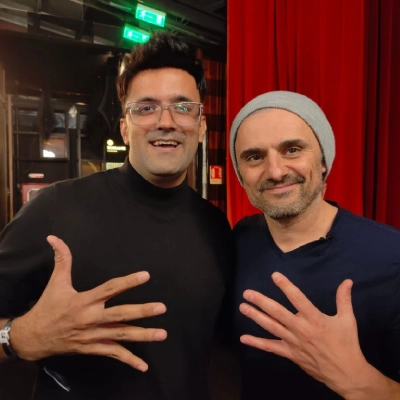
Jitendra Vaswani is a well-known figure in the SEO and affiliate marketing communities. He is regarded as a legitimate authority due to his deep knowledge and game-changing contributions to the field. He is the founder of Digiexe.com, a digital marketing agency, and VenueLabs.com, a full-service PR marketing agency. His strategic acquisition of AffiliateBooster.com has further solidified his status as a leader, bringing forth groundbreaking solutions that are revolutionizing affiliate marketing. Follow Jitendra on Instagram, Facebook, and LinkedIn